KEWI: Putting skills and research at the heart of Kenya’s water future
Sponsored by Kenya Water Institute
Kenya’s growing investment in dams, water-supply networks and wastewater infrastructure is creating a parallel need for skilled professionals who can operate, maintain and improve the systems being built.
The Kenya Water Institute (KEWI) is responding by combining technical training with applied research, industry collaboration and innovation aimed at strengthening the capacity of the water sector. The goal is to ensure that the people operating the country’s expanding water infrastructure have the practical skills required to sustain the investments.
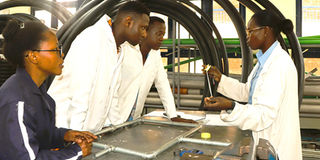
The state corporation trains mid-level professionals for work ranging from laying and maintaining water pipes to operating distribution networks, utilities and wastewater treatment facilities.
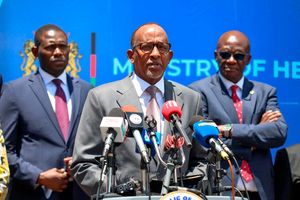
“Kenya’s water sector is growing very fast,” says KEWI’s Director and Chief Executive Officer, Dr Solomon Leiro Letangule, EBS, pointing to government and development partner investments in dams, water distribution networks and wastewater facilities, as well as the growing involvement of private investors in the sector. He continues: “The question is: How do we ensure that these investments are sustainable? How do we ensure they are bankable? That is where the skills come in, because you need the requisite skills to protect and safeguard those investments.”
KEWI’s training pipeline supplies thousands of technicians to the sector. Successive graduations have produced at least 1,000 graduates, with the last three cohorts averaging about 1,300 each. The graduates go on to work with water service providers across the country, including private water companies.
The institute is also adapting its programmes as technology changes the way water is supplied, measured and managed.
While noting that the institute is home to the National Non-Revenue Water (NRW) Management Centre of Excellence, Dr Letangule cites leak-detection technology that can identify underground leaks without having to remove pipes; smart metering, which can improve the accuracy of water measurement; and new testing equipment that reduce the time needed for some water-quality tests from two or three days, to as little as two or three minutes.
Other technologies being incorporated into the sector include digital meter test benches, more durable piping systems, energy-efficient pumps and solar-powered systems.
These developments are particularly relevant as utilities seek to improve efficiency and manage operating costs.
KEWI is also seeking to develop solutions suited to local conditions through research and collaboration with industry. Towards this, the institute will host the 5th National Water and Sanitation (WATSAN) Skills Competition on November 23-27, 2026, organised in collaboration with the Ministry of Water, Sanitation and Irrigation (MWSI), the Water and Sanitation Providers Association (WASPA), and the Women in Water and Sanitation Association (WIWAS).
The event will precede the institute’s 38th graduation ceremony. It will offer students a platform to demonstrate tangible innovations to water and sanitation challenges and give industry stakeholders an opportunity to witness the capabilities and relevance of emerging talents.
WATSAN Skills Competition aligns with the WorldSkills approach, and brings together Water Service Providers, Training Institutions, Sector and Industry Practitioners and other stakeholders, to strengthen linkages and promote Competency-Based Education and Training (CBET).
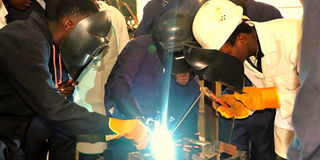
This event is a reflection of the concerted efforts KEWI is making towards mainstreaming practical research components in its curriculum. With the adoption and rollout of the CBET model, KEWI has shifted towards competency-based education, with programmes comprising about 40 percent theory and 60 percent practical work.
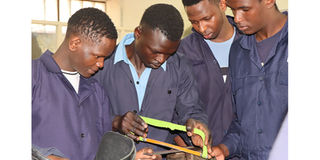
The model is already creating opportunities for graduates. Dr Letangule says companies have hired students after seeing their innovations. One student –Michelle Nanjala – was part of a team that represented Kenya at the WorldSkills Lyon 2024 competition in France.
Research is part of KEWI’s mandate, alongside training, consultancy and outreach. Dr Letangule says the institute uses feedback from the water sector and training-needs assessments to identify areas where new skills and solutions are required. For example, KEWI has developed wastewater-management technology using relatively simple materials rather than expensive machinery. It has also worked with pump manufacturer Wilo East Africa, with students developing a solution that was incorporated into pumps to improve their energy efficiency. “We are at the centre of creativity and innovation,” Dr Letangule says, pointing out that KWEI is encouraging greater confidence in locally developed solutions. “We need to encourage our young people and our institutions to develop local solutions,” he stresses.
Partnerships with organisations, including the Japan International Cooperation Agency, the African Development Bank and Gatsby Africa, have helped the institute update its technology and teaching methods, and strengthened its links with international expertise.
Importantly too, KEWI is incorporating climate and risk management into its training as the water sector prepares for increasingly variable conditions. According to Dr Letangule, strengthening preparedness and early-warning systems will be important, alongside measures such as properly designed and managed rainwater harvesting.