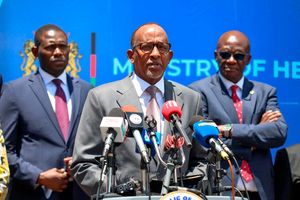
Tanathi targets wider water access across four counties
Sponsored by Tanathi Water Works Development Agency
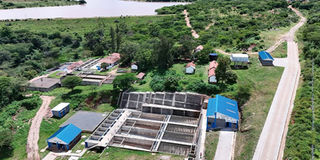
A view of the Machakos Water Supply Project by Tanathi.
By Pauline Kairu
Tanathi Water Works Development Agency (Tanathi) is targeting a significant expansion of water and sanitation services across four counties as it advances Kenya’s ambitions under Sustainable Development Goal 6 (SDG 6), which calls for clean water and sanitation for all.
Serving Kajiado, Makueni, Machakos and Kitui counties, which have a combined population of approximately 5.3 million people, the agency aims to increase water coverage from the current 52 percent to 70 percent; sewerage coverage from 18 percent to 40 percent; and sanitation coverage from 80 percent to 89 percent, under its 2023–2027 strategic plan.
Several completed projects are already contributing to these efforts. The Mavoko Drinking Water Supply Project, funded by the governments of Belgium and Kenya, is operational and benefits approximately 500,000 residents. Its components include a water treatment plant with a capacity of 10,000 cubic metres per day, rehabilitated water infrastructure and new storage facilities.
Other completed projects include the Emali Town Water Supply Project, which serves approximately 5,000 people, and the Kaewa-Kangonde-Kanyonyo Water Supply Project, which benefits another 5,000 residents. The Mavoko water and sewerage pipeline extensions serve approximately 15,000 people, while the Mavoko Sewerage Project provides sewerage services to 6,700 residents.
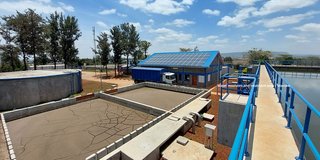
Mavoko Treatment Plant.
Tanathi is also advancing major investments expected to extend services to more communities. The Machakos Water Supply Project, reported at 89 percent completion according to the agency, includes a treatment plant with a capacity of 10,000 cubic metres per day, 57km of distribution pipelines and 10 boreholes. Once completed, it is expected to supply clean water to 260,000 residents.
The associated Machakos Sewerage Project was reported at 91 percent completion by the agency. It includes a wastewater treatment plant designed to handle 12,500 cubic metres per day and 60km of trunk and lateral sewer lines, with the capacity to serve 50,000 people. Meanwhile, the Mwala Cluster Water Supply and Sanitation Project, reported at 95 percent completion, is expected to provide clean water to 55,000 residents.
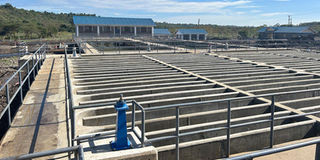
Mwala Water Supply Project.
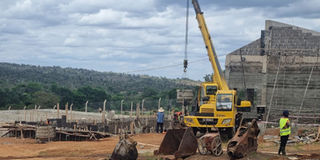
NYS Matuu Water Supply Project.
Further planned investments include the Namanga Water and Sewerage Project, which is expected to serve 150,000 people once implemented, and the Kindaruma-Kiomo-Mwingi Water Supply Project in Kitui County. The latter is designed to serve 164,000 residents, providing water for domestic use, livestock and irrigation. The project is at the technical design stage in the agency’s submission, with the planned infrastructure intended to support household needs as well as agricultural production.
Alongside infrastructure development, Tanathi is prioritising climate resilience and sustainable water-resource management. Measures include equipping boreholes with solar-powered pumps, planting climate-resilient vegetation such as vetiver grass and acacia, and working with the Water Resources Authority and Water Resource Users Associations to improve catchment and basin management. The agency also seeks to regulate water abstraction according to seasonal availability, and maintain minimum river flows, helping protect the resources on which communities depend.
Environmental and social impact assessments form part of Tanathi’s approach to developing water infrastructure, helping identify potential risks to communities and the environment before projects are implemented.
Sanitation investments complement the expansion of water supplies. Tanathi is using conventional wastewater treatment in urban areas while supporting on-site solutions in rural communities. Through the Kenya Water, Sanitation and Hygiene programme, it has supported septic and cesspit tanks and ventilated improved pit latrines in rural schools. The Kitui town wastewater stabilisation ponds treat approximately 2,400 cubic metres of wastewater daily.
Towards 2030, Tanathi plans to expand water-supply and sewerage infrastructure, promote green energy and strengthen the sustainable management of surface water and groundwater.
These priorities support the agency’s goal of extending reliable water and sanitation services while safeguarding water resources for the communities that depend on them.