WASREB lays plan to have water losses cut by half, boost service efficiency
Sponsored by Water Services Regulatory Board
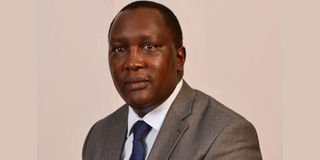
WASREB CEO, Mr Leparan Tialal.
By Pauline Kairu
Kenya could recover substantial volumes of water currently being lost before reaching paying consumers, if service providers improved metering, repaired distribution systems and strengthened their governance and management.
This is according to the Water Services Regulatory Board (WASREB), which is working with other players in the water sector to reduce the national average of non-revenue water from about 48 percent to below 25 percent by 2030. If met, this target could help water utilities conserve supplies and improve their financial position.
Non-revenue water refers to water supplied into a distribution network but not billed to consumers. It can result from leaking pipes, illegal connections, faulty meters and other losses, leaving utilities with less revenue to maintain infrastructure and extend services.
WASREB CEO Leparan Tialal, says better measurement of water entering distribution networks and later what is actually reaching consumers would be important in reducing these losses. “At the consumer level, we also need to make sure that every drop is measured so that we know exactly how much water is being consumed,” he adds.
The regulator is encouraging water service providers to adopt smart metering and automation, while strengthening monitoring of the volumes entering their systems. Reducing losses would allow more of the available supply to reach consumers and improve the revenues utilities collect from the water they distribute.
Beyond efficiency, WASREB is strengthening oversight to ensure water service providers meet basic regulatory requirements covering licensing, tariffs and water quality. “We also want to make sure that all service providers have a licence and they have a tariff and their water has been tested,” Tialal says.
Licensing gives the regulator a formal basis for overseeing providers and monitoring their compliance with operating requirements. Accordingly, WASREB is working to bring smaller providers into the regulatory framework, with requirements covering licensing, tariffs, water-quality testing and reporting.
Water quality is a central part of this oversight. Licensed providers are required to submit regular water-quality reports, while WASREB conducts field inspections to assess compliance with the required standards. The regulator can take action against providers that fail to meet their obligations.
“As we speak now, quite a number of my officers are out in the field. Every year, we must do inspections. And one of the things we monitor is the water quality,” Tialal says.
He described water safety as essential to public health and national development, adding that the regulator takes compliance seriously.
Consumers can also raise complaints about water quality and charges through WASREB’s complaint channels, including its hotline, website and email.
As tariff regulation is another part of its mandate, WASREB is seeking to balance the financial requirements of water service providers against consumers’ ability to pay. Before approving tariff applications, the board conducts public participation to hear from communities likely to be affected by proposed charges. The process considers local livelihoods, the cost of living and the reliability of the service expected in return.
The regulator also promotes pro-poor tariff approaches intended to improve access for low-income and underserved communities.
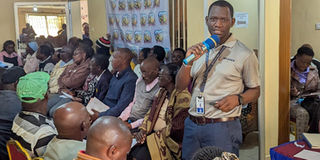
A WASREB official during a past public participation forum organised to explain tariff adjustments.
WASREB relies on the Water Regulation Information System (WARIS), an automated platform through which water service providers submit performance information. The system interfaces with the water service providers. “And they give us reports,” says Tialal.
The information helps the regulator monitor utility performance and identify areas requiring attention. Its oversight also extends to the governance of water companies, including the qualifications and skills expected of board members and considerations around gender and youth representation.
WASREB works with the Kenya Water Institute on capacity building, including governance training intended to strengthen boards’ oversight of management. “For boards, we give them governance training because they must also ask the tough questions to the management of these entities,” Tialal says.
The combined measures are intended to improve accountability, operational efficiency and the sustainability of water service providers. Reducing water losses, monitoring water quality and ensuring tariffs are subject to regulatory oversight are all part of the effort to make water services more reliable and affordable.
For Kenya’s drive towards Sustainable Development Goal 6, stronger regulation is not only about expanding access, but also about ensuring that water providers manage available supplies efficiently, protect consumers and sustain the services on which households and businesses depend.