WRA’s role in ensuring Kenya’s water resources are not depleted
Sponsored by Water Resources Authority
By Pauline Kairu
As demand for water grows, the Water Resources Authority (WRA) is combining science-based allocation, regulation and catchment conservation to protect the resources on which households, agriculture and industry depend.
Kenya’s water security requires more than building dams, expanding water networks and drilling boreholes. It also depends on how available water is shared, how much can safely be abstracted and whether the rivers, wetlands, catchments and aquifers that sustain supplies remain healthy.
WRA has a central role in managing this balance, regulating the use of water resources while working with Water Resources Users Associations (WRUAs) and other institutions to protect the natural systems that support them. Established under the Water Act 2016, the Authority assesses available water resources, issues and enforces water-use permits, monitors compliance and advises the Government on water resource management. Its work spans five basins and 26 sub-basins, providing a framework for managing water according to the conditions of different catchments.
The challenge is to support growing demand from homes, farms, industries and other users without allowing abstraction to exceed what rivers and aquifers can sustainably provide. WRA’s approach to water allocation begins with establishing how much water is available, the amount that must be reserved for basic human needs and the environment, and the balance that can be allocated to other uses. This means that allocation is not determined by demand alone. It must take account of seasonal changes, existing lawful abstractions and the capacity of the resource to replenish itself. For rivers, assessments draw on long-term flow records, catchment modelling and seasonal variability. Groundwater assessments consider recharge, aquifer storage, groundwater-level trends and the relationship between underground reserves and surface water.
The Water Resources Regulations 2025 also provide a framework for protecting river reserves. Where the necessary flow records are available, the reserve should not be less than the naturalised flow exceeded 95 percent of the time.
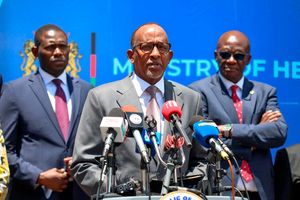
Ag WRA CEO, CPA James Mburu, explains that once the resource available for allocation has been established, the Authority uses a permitting system to regulate abstraction. The framework includes authorisations and permits, with an electronic application system available through eCitizen intended to make the process more efficient, accessible and transparent.
The Authority also requires water users to measure abstraction by installing smart meters and comply with permit conditions. Under the 2025 regulatory framework, it may direct the timing and quantity of abstraction where necessary to promote equitable use. These measures are important in catchments where several users depend on the same river or aquifer. They provide a basis for balancing competing needs while keeping water abstractions within scientifically determined limits.
“But allocation alone cannot secure water supplies if the ecosystems that regulate water availability are degraded,” CPA Mburu points out. “Forests, wetlands, riparian areas and groundwater recharge areas influence how water flows through the landscape, how much enters underground reserves, the quality of water reaching rivers and the severity of floods.”
Protecting the sources that sustain supply
WRA works with county governments, WRUAs, communities and other partners on sustainable land and water management, riparian protection, rehabilitation of degraded areas and the protection of vulnerable water sources.
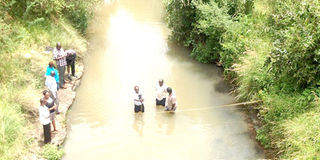
WRUAs are particularly important in bringing resource management closer to communities. They support local monitoring, help resolve conflicts over water use and work with stakeholders to prepare and implement Sub-Catchment Management Plans. The Authority also has powers under the Water Act to designate vulnerable areas for special protection through gazetting, groundwater and catchment conservation, and impose measures necessary to safeguard the resource. For instance, through initiatives around Mwache Dam and other catchment programmes, WRA supports restoration of degraded areas, water harvesting, sustainable land and water management and climate-resilient livelihoods.
The objective is to strengthen the natural systems that sustain water availability while helping communities cope with drought, scarcity and other climate-related pressures.
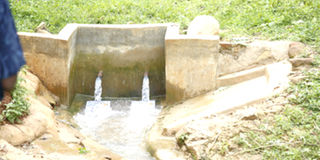
Spring protection.
“Water security does not begin at the tap. It starts in the catchment, wetland, river system and aquifer recharge area,” says the WRA CEO. Protecting these areas is therefore part of securing water for homes, farms and businesses, rather than a separate environmental undertaking.
Controlling pollution to protect water quality
Water security also depends on the quality of the resource, as pollution can reduce the amount of water suitable for use, damage aquatic ecosystems and increase the cost of treating water. WRA requires entities discharging effluent into the environment to obtain the necessary permits and comply with their conditions. According to CPA Mburu, the Authority has also mapped pollution sources and is working with stakeholders, including WRUAs, on more sustainable approaches to solid and liquid waste management.
The work includes addressing pollution from identifiable discharge points as well as non-point sources, which can enter water bodies through runoff from land. By linking water-quality protection to permitting and compliance, the Authority seeks to prevent activities that compromise rivers and aquifers from undermining the wider effort to improve access to reliable water supplies.
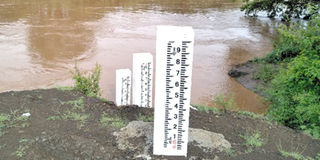
Reliable information underpins both water allocation and the protection of water sources. WRA has upgraded 118 surface-water monitoring stations to transmit data in real time, strengthening the information available for water-resource planning, allocation and flood and drought preparedness. The Authority is also using smart meters and Advanced Metering Infrastructure to improve the measurement of abstraction. The systems are intended to give regulators more reliable information on water use, support compliance, and help identify where withdrawals need closer attention.
Groundwater assessments provide another indication of why resource management must be tailored to local conditions. WRA has classified four aquifer systems at Alarm status, where groundwater over-abstraction is taking place, while 93 are at Alert status, meaning they are approaching a negative water balance. A further 22 are classified as Satisfactory, indicating that they remain in surplus.
The four systems at Alarm status are the Nairobi Aquifer Suite, Lamu Sand Dunes, Timboni and Lake Kenyatta aquifer systems. The figures underline the need to match abstraction to the amount of groundwater available and the rate at which it is replenished.
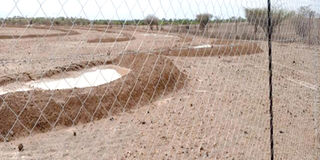
CPA Mburu said WRA is developing aquifer management plans and expanding groundwater assessments through initiatives that include the Horn of Africa Groundwater for Resilience Project. The project includes approximately 60 exploratory boreholes, an upgraded groundwater information system, and measures to protect recharge zones, alongside work on managed aquifer recharge where conditions are suitable.
Securing water for development
For Kenya, the task is to make water available for development while protecting the resource base on which that development depends. Agriculture, industry, urban growth and energy production all require reliable supplies, but their long-term needs cannot be separated from the condition of rivers, catchments and aquifers.
WRA’s work brings these priorities together through resource assessments, allocation plans, permitting, pollution control and sustainable land and water management. Its approach also recognises the importance of cooperation among national and county governments, WRUAS, communities, water users and development.
The Authority says the critical shift is towards managing water scientifically within quantified resource limits. That requires better information on how much water is available, closer measurement of abstraction, protection of vulnerable sources and decisions that account for the needs of both people and ecosystems.
As Kenya works towards Sustainable Development Goal 6 on clean water and sanitation, protecting water resources is essential to making improvements in access sustainable. Water infrastructure can extend services, but lasting water security depends on ensuring that the sources feeding those services remain available and fit for use.