Fourteen State corporations will be converted into commercial enterprises that will operate for profit and be self-sustaining if Parliament approves a new Bill.
The Government Owned Enterprises Bill, 2025 seeks to repeal 14 Acts of Parliament that created the corporations, most of them currently loss-making and heavily reliant on the exchequer for survival.
The Bill is part of a wider plan to overhaul management and streamline operations of State-owned institutions, many of which have struggled with inefficiency, duplication of mandate and debt.
But there are well-off corporations that will also be turned into companies, including the Kenya Airports Authority, Kenya Ports Authority, Kenya Railways Corporation and Agricultural Development Corporation.
Other entities to be converted are Kenya Broadcasting Corporation, Kenya Literature Bureau, National Cereals and Produce Board, National Housing Corporation, Postal Corporation of Kenya, National Mining Corporation, Kenya Meat Commission and the Kenya Post Office Savings Bank.
The Bill seeks to have the State corporations established under specific Acts of Parliament changed into public limited liability companies. There are 18 State corporations in Kenya. Also to be affected are 66 other government owned enterprises.
In the Bill, chairpersons, boards of directors, staff, assets and liabilities of the affected entities will automatically be transferred to the new companies.
“A Government Owned Enterprise shall operate as a commercial entity and shall operate for profit, be self-financing, be self-sustaining, and be accountable to the public through the National Treasury,” the Bill states. “Notwithstanding...a Government Owned Enterprise may, in addition to its commercial functions, perform public service obligations.”
The enterprises that perform public service obligations will operate on a commercial basis, but for the purpose of meeting public service obligations, they will also be funded through the budget.
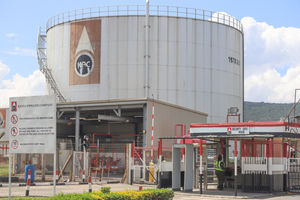
Property belonging to the Kenya Meat Commission.
Photo credit: File | Nation Media Group
The Bill defines a government owned enterprise as a company that is a legal person under the ownership and control of the national government, or the national government or its entity is a shareholder with more than 50 per cent of the share capital. It is also one that has been assigned financial and operational powers to carry on a business activity, and is financed wholly or substantially from sources that do not require annual appropriation by National Assembly, or imposition of a tax, levy or other charge through legislation.
It further stipulates that the enterprises will be managed by a board of directors consisting of a chairperson, who is an independent director, six persons who are independent directors, one person who is a public officer nominated by the National Treasury Cabinet Secretary, one person who is a public officer designated by the relevant CS for the relevant Ministry, and the chief executive officer (CEO).
“This Act shall apply to Government Owned Enterprises established under the Companies Act, Government Owned Enterprises established under the Companies Act before the commencement of this Act ... and enterprises established by other written laws before the commencement of this Act set out in the Second Schedule,” the Bill States.
The Bill further provides for performance management by the board of directors and the CEO, who will be evaluated annually by the Treasury CS and the board, respectively.
The proposed law, currently before the National Assembly, empowers the Treasury CS to dissolve or merge government owned enterprises subject to the Competition Act, with the approval of the Cabinet.