Kenya’s formal milk intake dropped to a 22-month low in February, underlining the depth of supply shocks within the dairy sector in the face of a biting drought caused by poor short rains towards the close of last year.
Latest data from the Kenya National Bureau of Statistics (KNBS) shows that processors handled 74.4 million litres in the second month of this year, marking the lowest volume since April 2024, when intake stood at 67.4 million litres.
The decline reflects the lingering effects of a severe drought that gripped the country at the start of the year, choking milk production as pasture and water shortages hit dairy farmers across key producing regions.
The crisis, which escalated in January following poor short rains at the end of last year, left more than two million Kenyans food insecure and triggered widespread livestock losses, particularly in arid and semi-arid areas.
Reduced feed availability led to lower milk yields, forcing some farmers to sell off weakened animals or incur higher costs sourcing commercial feeds to sustain production.
The drop in milk deliveries to processors came even as this year’s long rains season began in the fourth week of February, offering early signs of recovery that only started to gather momentum in mid-March.
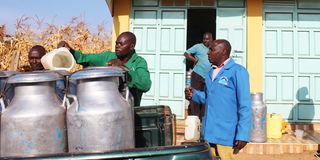
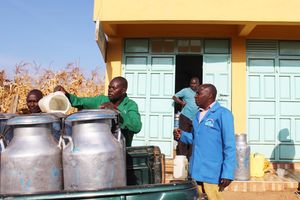
A worker at Mumberes Dairy Co-operative Society Limited in Baringo County receives milk from farmers.
Photo credit: File | Nation Media Group
Historically, Kenya’s dairy sector has exhibited strong seasonality, with milk production dipping sharply during dry spells before rebounding during rainy periods when pasture conditions improve.
The severity of recent weather patterns has, however, amplified these fluctuations, exposing vulnerabilities in a sector heavily reliant on rain-fed systems and smallholder farmers.
Kenya’s dairy industry is largely driven by small-scale producers who account for the bulk of milk supplied to formal processors, making the sector particularly sensitive to climatic shocks.
Reduced intake volumes translate to lower earnings for farmers, many of whom depend on daily milk sales as a primary source of income, deepening financial strain in rural households.
KDB estimates production – including formally and informally marketed milk – is about 5.2 billion litres annually.
With an estimated 1.8 million smallholder farmers who make up around 80 per cent of the producers, it is estimated that about same ratio of Kenya’s milk is marketed informally.
This has seen Kenya increasingly rely on imports, particularly from Uganda, to meet the demand for processed milk and related products such as ghee, cheese, butter, and yoghurt.
The government has in recent years sought to support the sector through policy interventions aimed at improving productivity, including subsidised inputs and investments in dairy cooperatives.
A milk quality testing, mobile tanker at Dundori in Mirangine, Nyandarua County. Brookside Dairy has been paid more than Sh142 million in cash bonuses.
Photo credit: Francis Mureithi | Nation Media Group
In its 2024-2027 strategic plan, KDB aims to grow Kenya’s annual milk production to 11 billion litres and boost exports to one billion litres.
“To double production, interventions to enhance feeding, breeding, disease control, and farmer extension services will be implemented to increase productivity per cow from five to 10 litres per day,” said the State agency.