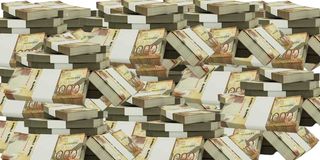
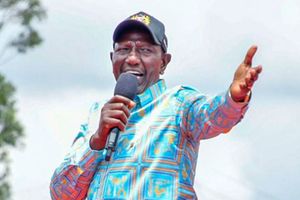
Ten agencies are overseeing nearly two-thirds of the public wealth, placing them at the core of President William Ruto’s re-election bid.
Data on government investments shows that by end of June 2026, the State had put in Sh9.7 trillion in agencies and companies across sectors, including assets held by roads, railway and power agencies, public schools, universities and hospitals, to stakes in companies and pension funds.
The 10 — led by Kenya Airports Authority (KAA), Kenya National Highways Authority (KeNHA), Kenya Railways Corporation (KRC) and the National Social Security Fund (NSSF) — hold Sh6 trillion of all the assets in agencies and State-linked companies.
How 10 agencies control Kenya’s Sh9.7 trillion cash.
Photo credit: Nation Media Group
This places them at the heart of the administration’s agenda, with President Ruto already positioning himself by launching projects in the crucial sectors, notably the Rironi-Mau Summit Road , Jomo Kenyatta International Airport (JKIA) upgrade and Standard Gauge Railway (SGR) extension to Malaba, all of which are ongoing.
The assets held by the 10 agencies constitute 61.9 per cent of the Sh9.7 trillion total government investments, according to Treasury’s 2025/26 national government investment report.
“The Consolidated National Government Investment Report summarizes the extent of National Government involvement or investment in, or funding of, all State Corporations, Government Owned Enterprises (GOEs) and Government-Linked Corporations,” Treasury said in the report.
With assets valued at Sh1.05 trillion, KAA holds the most of taxpayer wealth, mainly constituting airport infrastructure across the country.
A Kenya Airports Authority signage outside Nyaribo Airstrip in Nyeri County.
Photo credit: File | Nation Media Group
The President has sought to align his economic strategy around the crucial sectors, launching the Sh150 billion JKIA upgrade project in June, to address growing traffic at Kenya’s biggest airport.
KenHa held Sh935.5 billion assets by end of June, underlining the huge investment that has gone into national highways over the years. President Ruto has also launched several roads as he warms up to the 2027 campaigns, with the Rironi-Mau Summit project expected to be a crucial campaign tool as elections draw closer.
Ranking third is the KRC with Sh887 billion assets, mainly due to huge investments in the Nairobi-Naivasha SGR, a project that the government has taken a kin interest in, contracting Chinese firm China Road and Bridge Corporation (CRBC) to extend it to Malaba.
The data by Treasury shows that the top three agencies in public wealth under their care are all in the Transport sector, underlining its role.
“At the individual entity level, asset holdings are heavily concentrated among a select group of major infrastructure and fund management corporations. KAA held the highest total assets at Sh1.05 trillion, KeNHA followed closely with Sh935.49 billion and KRC ranked third with Sh886.79 billion in asset holdings,” the Treasury report stated.
At least four of the top 10 agencies and companies have had a change of their top leaderships this year, with only KRC having had the same CEO for more than five years.
The KAA board, for instance, appointed Moses Wekesa as Managing Director in April, following a near three-year period when the role was held by Mohamud Gedi in acting capacity.
KenHa’s Luka Kimeli was appointed to the position in February after his predecessor, Kung’u Ndung’u resigned in July last year, but Philip Mainga has served as Kenya Railways’ CEO since 2018.
Workers erecting a sign at NSSF's Social Security House offices in Nairobi.
Photo credit: File | Nation Media Group
The National Social Security Fund (NSSF) ranks fourth with Sh760.7 billion assets, highlighting its growing influence after the government in 2023 started implementing a new policy that raised pension deductions from workers from a flat rate of Sh200 monthly to 6 per cent of workers’ salaries.
Since his election in 2022, President Ruto has sought to overhaul Kenya’s savings industry which has seen NSSF and the wider pension industry grow funds under their care. He has sold the changes as a way to tackle old age poverty and help the government in infrastructure funding when entities such as the NSSF fund projects.
NSSF is followed by the Kenya Electricity Generating Company (KenGen) which holds Sh501 billion assets, according to the report.
KenGen is one of the only two listed companies among the 10 and is also due to have a change at the helm as Chief Executive Officer Peter Njenga exits.
The Kenya Electricity Generating Company head offices in Nairobi.
Photo credit: Photo | File
The government holds 69.9 per cent shares at the electricity generation company, making it the biggest owner.
The Kenya Rural Roads Authority (Kerra) ranks sixth with Sh438 billion assets. The agency in charge of national government roads in rural parts of the country also had a leadership change early this year, when Jackson Magondu was appointed its MD in February.
Behind Kerra follows Kenya Power with Sh420 billion assets, the only other company listed at the Nairobi Securities Exchange, among the top 10. The government holds 50.1 per cent stake at the utility firm.
Kenya Power is followed by the Kenya Ports Authority (KPA) with Sh389 billion assets, the Public Service Supperanuation Fund (PSSF) with Sh348 billion assets and the Kenya Deposit Insurance Corporation (KDIC) with Sh313 billion assets.
Kenya Power's offices on Aga Khan Walk, Nairobi.
Photo credit: File | Nation Media Group
“Total assets increased from Sh8.93 trillion as at 30th June 2025 to Sh9.76 trillion as at 30th June 2026. This growth was mainly driven by an expansion in capital work in progress for major infrastructural projects in the transport and energy sectors, as well as an increase in fixed-interest investments held by various funds,” Treasury said.
The report shows that the sectors holding most public assets are in the transport (where roads lead with over Sh3.7 trillion), pension, energy and financial services.
While some of the agencies holding the top layer of State assets are due to their crucial mandate, others such as in the pension industry are beneficiaries of a change in government policy in recent years.
The PSSF also ranks among the big players courtesy of a 2021 policy change that turned Kenya’s public service pension system from a defined benefit to a defined contribution framework.
This means that the system changed from one where public servants were never deducted pension from their salaries and instead their pensions were funded by the exchequer, to the current framework where they are deducted 7.5 per cent and their employers match the contributions, before they are deposited with PSSF for investment.
Other than the top 10 agencies and firms, the Treasury report also listed more than 100 agencies and institutions where the government has invested hundreds of billions, cutting across social services, business and regulatory sectors.
Other top ranking agencies, which hold more than Sh200 billion in State assets each, include the Higher Education Loans Board (Sh223 billion), the Kenya Urban Roads Authority (Sh222 billion), the University of Nairobi (Sh221 billion) and the Affordable Housing Board (Sh207 billion).
The Treasury report also observes a growing trend of debts by the institutions where the State holds trillions of taxpayer money, with total liabilities hitting Sh3 trillion as of June 2026.
“KRC recorded the single highest debt exposure, reporting total liabilities of 1,015,178 million (Sh1.015 trillion). This major debt obligation is largely attributable to outstanding on lent loans issued for the construction of the Standard Gauge Railway (SGR),” Treasury stated.
Other companies with high levels of debts include Kenya power at Sh288.38 billion, Kenya Electricity Transmission Company (Ketraco) at Sh245.89 billion and KenGen at Sh207.5 billion.