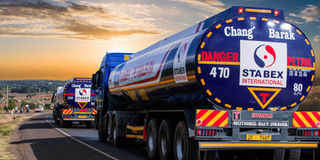
A few years back, whenever Duncan Murei attempted to manually reconcile pump activities against payments received at Stabex petrol stations, the station manager would notice stark inconsistencies.
During certain working days, the total payments received on record appeared to be much lower than the total amount of fuel sold, yet Duncan could not pinpoint the exact source of these inconsistencies.
This manual accounting made it difficult for Duncan and his team to know exactly how much fuel was sold at a particular shift, how much restocking needed to be done and how the different attendants at the station were performing.
“At the end of every shift, it could take us hours before we could manually reconcile the sales data submitted by every staff against the payments received,” said Murei.
By spending more time on assessing performance, the entrepreneurs would spend less time on their core business, and this affected their growth as well as their service delivery.
"Everyone was beginning to get frustrated, because our staff had to stay way past their shifts to help us reconcile the sales data, yet there were still inconsistencies," recounted Murei.
Centralized accounting system
Albeit at an added cost to them, the business opted to adopt a digital payments and accounting solution, that would make it easier for them to track sales, monitor stock and inventory, as well as issue invoices.
The Pesapal fuel forecourt management solution, would grant them visibility of all the elements at their petrol stations on a single dashboard, thus reducing cases of pilferage and losses due to errors of omission.
"Every attendant would be given a digital tag which enables us to track their sales. If one fuels 700 litres a day and another 100 litres, we'll know there's a problem, either we are over staffed or one has a customer service issue," posed Murei.
Like Murei, many entrepreneurs, particularly those managing multiple outlets, often struggle to track daily sales, monitor inventory and assess performance accurately, using manual accounting systems.
Without a centralized accounting system, these petrol station operators and oil marketing companies are often unable to make informed, data-driven decisions.
John Inyanga, Solution Manager at Pesapal, holds the view that in order to remain competitive in this fast-paced world, businesses must invest in centralized, digital accounting solutions.
These solutions, unlike manual accounting solutions, can help to eliminate discrepancies and enhance the accuracy of sales performance data —empowering businesses to focus on growth and strategy.
Digitally transform operations
“A typical station would take up to three hours to manually reconcile their pumping activities against the payments they receive, but using a digital system, they only need around 10 minutes,” stated Inyanga.
The shift to digital is particularly crucial now, with the Kenya Revenue Authority having directed that all petrol stations countrywide should link their operations with the electronic tax invoice management system (eTIMS).
Under the new requirement, all transaction data generated from fuel dispensers must be relayed to the eTIMS server in real time, ensuring that every sale is captured and taxed accurately.
Additionally, motorists—particularly those fueling fleet or commercial vehicles—will now be required to provide their KRA Personal Identification Number (PIN) at the point of fueling.
While the new directive introduces additional compliance obligations for fuel station operators, it is an opportunity to digitally transform operations and enhance long-term business competitiveness.
“Fuel stations that integrate technology will be better positioned to streamline operations, gain insights through real-time data analytics, plan well and improve customer service,” Inyanga said.