Kenya is stepping up efforts to expand exports of orthodox tea to Germany and Kazakhstan to replace the Iranian and Sudanese markets it lost last year.
Germany and Kazakhstan held a week-long familiarisation tour last week in Mombasa and held a consultative meeting with the Kenya National Chamber of Commerce and Industry (KNCCI) and East African Tea Trade Association (EATTA), which runs the weekly regional tea auction, signalling renewed momentum in bilateral trade ties.
In a meeting with KNCCI, Kazakhstan Ambassador Barlybay Sadykov, and the head of the Economic Affairs and Commercial Diplomacy Directorate, proposed the establishment of a Kenyan tea and coffee hub in Astana, outlining incentives designed to attract Kenyan exporters and traders into Central Asia.
Tea plucking machines at Browns East Africa Plantations PLC estate in Kericho.
Photo credit: Vitalis Kimutai | Nation Media Group
“By proposing a tea and coffee hub, Astana is effectively offering to become a conduit for Kenyan products into the region. This mirrors the role Kenya itself plays as a gateway into East Africa, Comesa and the continent for foreign partners,” said Ambassador Sadykov.
As Kazakhstan closes ties with Nairobi on the establishment of tea and coffee hubs, the German delegation, which has also been in Kenya for a week-long familiarization tour of the Orthodox tea industry, aims at deepening trade connections and boosting tea imports from Kenya.
The visit gave the delegation a firsthand look at Kenya’s tea production methods, strict quality standards, and innovative varieties such as purple tea, where they experienced the full tea value chain from cultivation on the farm to processing.
Kenya is using this visit to position itself as a dependable source of high-quality, sustainably produced tea, while building direct relationships with potential buyers from Germany.
The EATTA managing director, George Omuga said the tour is expected to create new opportunities for increased exports, greater value addition, and stronger long-term trade partnerships between Kenya and the European market.
The Kenyan delegation is led by Peter Chege, Head of the Tea Value Chain at the State Department for Trade, while the German delegation is headed by Maximilian Wittig, Secretary General of the German Tea and Herbal Infusion Association.
"The engagement focused on strengthening commercial linkages, aligning quality standards and positioning Kenyan orthodox tea more competitively in the European market,” said Mr Omuga.
Kenyan Assistant Director for Trade Peter Chege said the initiative was part of a broader government strategy to diversify export destinations and build resilient, long-term trade partnerships.
“This familiarisation tour is aimed at deepening market access for Kenyan tea in Germany and across Europe, and the State Department for Trade remains fully committed to supporting this process by working closely with the Kenya Embassy in Berlin, the German Tea and Herbal Infusion Association, and all industry stakeholders to ensure these engagements translate into tangible commercial outcomes,” said Mr Chege.
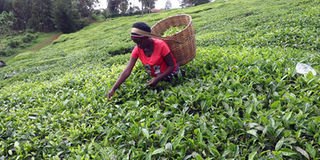
A farmer picking tea.
Photo credit: File | Nation Media Group
Frank Schübel, Chairman of the German Tea and Herbal Infusion Association, hailed Kenya’s passion for quality and the diversity of its tea offerings, noting that the tour will further deepen the Kenya–Germany tea industry partnership.
“The Kenya tea has exceeded our expectations, more so with no use of chemicals and pesticides. This engagement underscores Kenya’s growing reputation as a competitive supplier of premium Orthodox tea to international markets,” said Schübel.
In May last year, the government announced policy reforms that will allow 142 tea factories across the country to directly sell and export their tea to international markets, eliminating intermediaries and promising higher returns for farmers.