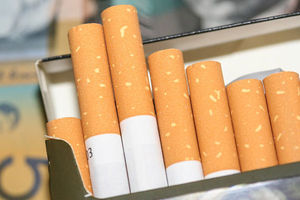
Alliance One Tobacco Kenya Limited (AOTKL), a local affiliate of a US-based tobacco company, will pay the Kenya Revenue Authority (KRA) Sh23.746 billion after the High Court dismissed its appeal and affirmed that the firm’s tobacco-leaf processing amounts to manufacturing and therefore attracts excise duty.
Justice Francis Rayola Olel upheld the Tax Appeals Tribunal’s (TAT) finding that AOTKL’s operations constitute intermediate manufacturing, making the company liable for excise on products it had treated as non-excisable.
The tax liability is nearly the same as total revenue earned by the Nairobi Securities Exchange-listed BAT Kenya, which made Sh25.716 billion, next to excise duty and the 16 percent value-added tax (VAT) for the year 2024.
At the heart of the dispute was the nature of AOTKL’s work. The company told the court it buys raw tobacco from farmers in Kenya and Uganda and undertakes limited steps—stemming, threshing, and re-drying—to deliver what it calls “pre-manufactured” tobacco to Alliance One International, a US parent and primary customer for AOTKL.
Alliance One then sells to licensed cigarette makers, including BAT, Mastermind Tobacco, and Estobac Kenya.
Because the output is not ready for consumption and is only an input for downstream factories that will eventually manufacture finished products such as cigarettes, AOTKL argued their products should be classified as unmanufactured tobacco for excise purposes.
On its part, the KRA argued that its investigations revealed that AOTKL processed tobacco through leased machinery at BAT.
The taxman added that the transformation from green leaf to a graded, blended, and packed input tailored to customer specifications is manufacturing in line with Section 2 of the Excise Duty Act, which covers both the production of excisable goods and “any intermediate or incomplete process” in their production.
KRA also cited variances between sales declared in the company’s CIT and VAT returns for January 2016 to December 2021, and said AOTKL had not provided evidence of exports, supporting the position that VAT was due on local sales in addition to excise.
In dismissing the appeal, Justice Olel adopted the Tribunal’s factual findings and set out the step-by-step processing undertaken by the company.
The Court noted that stemming to remove thick stalks, grading to eliminate undesirable leaf, “loose leaf butting” to trim ends, mechanical or manual stripping, re-drying to customer-specified moisture of about 13 percent, and final packaging, amounted to value-addition.
“Without doubt [this] comprises an intermediate (manufacturing) process,” the judge held.
"For the reasons I have set out above, I do find and hold that the tribunal did not err in finding and holding that the
Appellant was liable to pay Excise Duty on its products based on the definition of “manufacturing” as provided for under Section 2(b) of the Excise Duty Act, 2015," said Olel in a judgement given on September 10.
KRA had initially demanded Sh25.802 billion (excluding penalties and interest) across corporation income tax (CIT), value added tax (VAT), and withholding tax.
After AOTKL—through Ernst & Young—furnished additional material, the Commissioner issued a fresh assessment in September 2022 for Sh39.804 billion, including penalties and interest.
AOTKL objected on October 11, 2022. KRA then partially upheld the additional assessment for April 2016 to March 2021 and reduced the demand to Sh23,746,847,800, inclusive of penalties and interest.
As they awaited attending the High Court case, the two parties went through alternative dispute resolution (ADR) that saw VAT of Sh3.159 billion and excise duty assessments of Sh19.772 billion referred back to the High Court for hearing and determination. The High Court confirmed these tax liabilities.
The tobacco company decried what it described as excessive tax assessment, which it noted was contrary to fair administrative action.
To illustrate this tax burden, the company told the court it sold its most expensive stemmed or blended grades at about Sh600 per kilogram, yet the assessment sought to levy excise at Sh7,000 or Sh8,837 per kilogram—more than ten times the selling price.
Justice Olel noted that the Excise Duty Act expressly includes intermediate and incomplete processes within “manufacture”, and that AOTKL’s own description shows repeated physical and qualitative changes to the leaf to meet buyer specifications.
On excessive taxation, the court observed the complaint was not properly pleaded.
The Court also heard that in 2020, AOTKL sought a private ruling, and KRA, in a letter dated August 28, 2020, was categorical that the process involved manufacture and that tax was payable.
Alliance One Tobacco Kenya Limited, a local affiliate of a US-based tobacco company, will pay the Kenya Revenue Authority Sh23.746 billion.
Photo credit: Fie | Nation Media Group
In March 2020, the Tax Appeals Tribunal allowed KRA to demand Sh9.1 billion from Keroche Breweries after finding that compounding—diluting Crescent Vodka to produce the Vienna Ice ready-to-drink beverage—constituted manufacture of a new product, attracting duty on the full volume.