Miraa juice crackdown: Sh1m fine, jail for misuse of Kebs quality mark
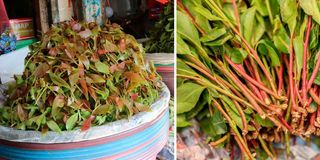
A basin of muguka and a bunch of miraa. For years, miraa and muguka traders in the county have operated under a standard Sh3,100 business licence.

Traders displaying the Kenya Bureau of Standards (Kebs) quality mark on miraa drinks face jail or fines of up to Sh1 million amid a crackdown on juice made from the stimulant.
In a public notice on Friday, Kebs said some manufacturers are using permits issued for fruit juices and drinks to market beverages containing khat, commonly known as miraa or jaba juice.
The standards regulatory bureau says it has not issued quality mark permits for any khat-based beverages because its certification scheme excludes khat and its derivatives, citing concerns about cathinone and cathine, the plant’s psychoactive compounds.


The Standards Act provides for a fine of up to Sh1 million, imprisonment for up to 12 months or both for first offenders, with repeat offenders facing up to three years in prison, a fine or both.
“Members of the public are advised that khat-infused beverages are not currently certified by Kebs, and any representation to the contrary is misleading,” Kebs said.
Under Kebs rules, the standardisation mark is a mandatory certification scheme for locally manufactured products, and a permit applies to the specific product covered by the approved standard or specification.
The crackdown comes as entrepreneurs move miraa consumption beyond the traditional practice of chewing fresh leaves, with bottled drinks offering consumers an alternative that avoids spending hours chewing the stimulant.
The shift is creating a new value-addition business around a crop whose market has traditionally depended on fresh leaves and chewing.
Brian Kiribwa, for instance, returned from the United States in 2020 to found Handas Juice, a bottled miraa business that processes between 200 and 250 kilogrammes of raw miraa daily and sells 500ml bottles for between Sh450 and Sh1,000.
Manufacturers are barred from transferring approval for one product category to another, with Kebs warning that permits issued for fruit juices and drinks do not cover beverages infused with miraa.
The crackdown highlights a longstanding challenge facing entrepreneurs seeking to turn Kenya’s miraa crop into processed products, including juices, teas, energy drinks and other consumer goods.
A Parliamentary sitting in May this year recorded discussions about legal hurdles to developing miraa juice, tea bags and other products because of the regulation of cathinone and cathine.
The compounds are central to the regulatory debate as they contribute to miraa’s stimulant effects, raising questions about how products containing them should be assessed and regulated before being sold as beverages.
Kenya has previously taken steps to improve hygiene in the miraa supply chain, with Kebs announcing a code of practice in 2021 covering sanitary production, handling and distribution of the crop.
The code covers handling across the supply chain, including growers, aggregators, transporters and shippers.
According to the Agriculture and Food Authority (AFA), the miraa sub-sector earns Kenya revenues of about Sh13 billion annually.
Kenya’s main export destinations are Somalia, Israel and the Democratic Republic of Congo (DRC).
AFA classifies miraa in different colours and levels of potency, with the category grown in the Meru region falling into five grades that include Kangeta, Kisa Grade 1, Kisa Grade 2 (Nyeusi), Kata, and Alele.
Meanwhile, in Embu, all four grades of miraa cultivated there are commonly known as muguka. The grades from Embu are mchele, medium, digital, and CR.
Miraa was declared a scheduled crop in 2016, allowing government intervention in the development, promotion and regulation of the crop — which has long drawn controversy over whether it is a drug or not.
Follow our WhatsApp channel for breaking news updates and more stories like this.