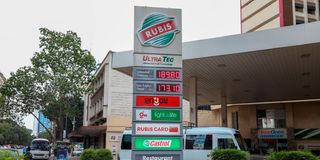
Kenya’s six biggest oil firms are charging petrol station operators unapproved fees and barring them from selling rival lubricants, exposing consumers to higher product prices.
The Energy and Petroleum Regulatory (Epra) revealed that the majors — Vivo Energy, Rubis Energy Kenya, TotalEnergies Marketing Kenya, Ola Energy Kenya, BE Energy and Trinity Energy — overcharge the dealers on rent, besides other undisclosed fees and do not compensate them for fuel lost while in transit from the depots to stations.
These (unapproved fees) have increased the operational costs of the dealers and exposed them to higher losses due to missing fuel, heightening the possibility of higher fuel prices as the dealers seek to plug the deficits and remain in operation.
Besides the possibility of higher fuel prices than those that have been approved by Epra, consumers have also been limited on the choice of lubricants and other petroleum products that they can buy at Company-Owned-Dealer-Operated (Codo) fuel stations, amid growing disquiet from the dealers.
The agreements that are skewed in favour of the oil majors prompted the Competition Authority of Kenya to direct Epra to investigate at least 40 Codo-operated fuel stations across 18 counties.
“The following practices were found to require enhanced enforcement and regulatory oversight; margin squeezing through imposition of additional unapproved charges, restrictive trading agreements limiting dealers’ rights to stock alternative lubricants and ancillary product brands,” Epra says in a letter to the oil majors.
Codo’s are deals where the oil firm owns the land, station and supplies fuel to an independent dealer, who is in-charge of operating the station. The two then share revenues in an agreed ratio.
Epra controls fuel prices but higher illegal charges on dealers could prompt them, especially those in far-flung areas to breach these price caps in order to recover additional charges.
The law has set a fine of Sh10 million for anyone found breaching the price caps, highlighting the challenge facing the dealers.
The regulator reckons that the restriction on lubricant brands has denied customers their preferred choices besides forcing them to buy ones whose prices may be higher.
Vivo Energy is the dominant oil firm with a share of 21.34 percent, followed by Rubis and Total at 15.96 percent and 14.53 percent respectively. Ola has a share of 4.42 percent while BE Energy, which is owned by the family of veteran politician Raila Odinga is fifth at 3.72 percent.
The dealers had escalated the flawed agreements to the which then directed Epra to probe the deals, where findings on 40 CODOs revealed the flawed deals that have left dealers and consumers at a loss.
Dealers have also accused the oil majors of dumping fuel at their stations, mostly ahead of the monthly pricing reviews, exposing them (dealers) to the possibility of losing out especially when prices go up or when the State increases the subsidy applied per litre of fuel.
Epra has since ordered oil majors to submit agreements with their dealers and small oil firms for approval in order to curb the imposition of the illegal charges.
“Similarly, you are hereby notified that dealership agreements /commercial agreements/franchise agreements shall first be submitted to the authority (Epra) together with application for license renewals for review before they become effective,” Epra adds in the letter dated April 17,2025.