The Kenyan Parliament has unanimously approved a motion urging the government and the United States of America (USA) to pursue an extension of the African Growth and Opportunity Act (Agoa) for an additional 16 years, until 2041. This is meant to safeguard the economic gains and protect livelihoods.
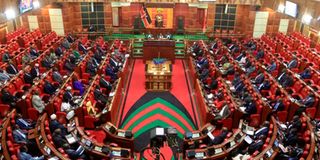
The National Assembly on Wednesday passed a motion seeking the fast-tracking of negotiations on the extension of Agoa, a landmark US trade programme that is set to expire at the end of September.
In the event that Agoa is not extended, the Kenyan Parliament wants the US to provide a transition window of two years for Kenya to develop a trade deal that will safeguard the businesses and job opportunities that Agoa currently offers.
The motion, sponsored by Laikipia Woman Representative Jane Kagiri, seeks to have the trade pact extended to boost exports, create employment, and attract investment into Kenya and across accredited Sub-Saharan African countries.
The Act was designed to enhance economic development and strengthen governance in eligible Sub-Saharan African countries by granting duty-free access to the US market, thereby increasing trade and investment.
“In the case of non-renewal, there should be a transition period of two years to allow us to develop a trade deal that shall safeguard the businesses and job opportunities,” Ms Kagiri said in the approved motion.
“Agoa has significantly boosted African exports to the United States of America, including agricultural products such as coffee, nuts, fruits, and vegetables, amounting to over $500 million in 2020, as well as enhancing local textile and cotton industries that have generated thousands of jobs.”
Data from the Kenya National Bureau of Statistics (KNBS) show that the volume of apparel exported to the US market under Agoa increased from 97.3 million pieces in 2023 to 116.0 million pieces in 2024.
The Economic Survey 2025 indicates that the value of apparel exports to the US rose by 19.2 percent to Sh60.6 billion in 2024.
The KNBS statistics show that the number of enterprises under Agoa rose from 39 in 2023 to 40 in 2024.
The statistics revealed that direct employment grew by 15.2 percent to 66,800 persons in 2024 while capital investment expanded by 21.1 percent to Sh38.3 billion in same period.
Kenyan apparels produced in Special Economic Zones in Athi River, Kitengela and the Coast region are destined for the US market.
While initiating debate on the motion, Ms Kagiri said Kenya risks losing more than 66,000 direct jobs, with many more indirect opportunities at stake, if Agoa is not renewed.
“Women comprise approximately 75 percent of the direct beneficiaries of Agoa, and their incomes directly support education, healthcare, and poverty alleviation,” Ms Kagiri said.
“Agoa has played a critical role in expanding trade, attracting investment, and creating employment, especially for low-income workers, thus fostering economic growth and social stability.”
Lawmakers who contributed to the debate on the Agoa extension said the decades-long pact had helped developing nations to fight poverty and strengthen bilateral trade with the US.
“The termination of Agoa will affect Kenya. We must have bilateral agreements to ensure continuity and to avoid a vacuum in trade and production,” said George Murugara, who chairs the Justice and Legal Affairs committee.
Deputy Majority Leader Owen Baya said the Agoa is a progressive framework that has allowed Africa to grow its manufacturing base.
“We would like an extension of Agoa and therefore plead with the US to continue being kind and consider an extension,” said Catherine Omanyo, the Busia Woman Representative.
Sirisia MP John Waluke appealed to US President Donald Trump to grant the extension “so that Kenya does not suffer”.
Ms Kagiri said the expiration of the Agoa deal would trigger market uncertainty, deter investment, disrupt supply chains, and adversely impact both African and American businesses that rely on Agoa-linked trade.
She said the duty-free trade pact has helped strengthen US supply chain diversification, boosted bilateral trade ties, and connected American businesses with opportunities under the Africa Continental Free Trade Area.
Last week, delegations from Kenya, Madagascar, Lesotho, Tanzania, and Mauritius joined forces in Washington DC to engage with more than 30 offices across the Congress, the Senate and the US Trade Representative.