Hello

Your subscription is almost coming to an end. Don’t miss out on the great content on Nation.Africa

Ready to continue your informative journey with us?

Hello

Your premium access has ended, but the best of Nation.Africa is still within reach. Renew now to unlock exclusive stories and in-depth features.

Reclaim your full access. Click below to renew.

Pastoralists fault low allocation to livestock sector

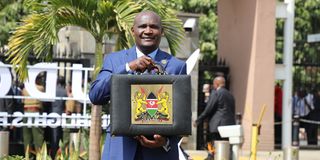
Treasury CS John Mbadi delivers the FY 2026/2027 Budget Highlights at Parliament Buildings, outlining the government's fiscal policy direction and priority spending areas for the coming financial year.

Photo credit: Dennis Onsongo | Nation Media Group

Kenya has proposed Sh5 billion allocation to the livestock sector in the 2026/27 financial year to strengthen the pastoral economy that sustains millions of livelihoods across arid and semi-arid regions.

National Treasury Cabinet Secretary John Mbadi, presenting a Sh4.8 trillion budget in Parliament, proposed Sh3.3 billion for de-risking, inclusion and enhancement of the pastoral economy, Sh1.3 billion for the Kenya Livestock Commercialisation Programme, and Sh400 million for livestock value chain support.
CS Mbadi said the investments will improve market access, animal health services and resilience among pastoral communities dependent on livestock production. The allocation, however, remains far below agriculture sector funding of Sh64 billion, raising concern among pastoral stakeholders. Data from the Department of Livestock shows Kenya has about 8.8 million pastoralists contributing 10 per cent of total GDP, and 50 per cent of agricultural GDP, across 21 arid and semi-arid (Asal) counties.

In Kajiado County, where livestock turnover exceeds Sh3.2 billion annually, herders said the proposed allocation is insufficient amid recurring droughts.

They called for increased funding for value addition, drought mitigation and offtake programmes such as the Kenya Meat Commission initiative saying the sector faces mounting climate shocks.

Mr John Kismil, a herder from Kajiado Central, said pastoral communities, which remain a key pillar of Kenya's meat export market in the Middle East and Europe, deserve greater support, especially in value addition and drought mitigation programmes.

"The proposed Sh5 billion is too little considering it is meant for the entire country. The government ought to have tripled the allocation. Pastoralism is no longer as sustainable as it once was because of the consistent drought periods," said Kismil.

Mr James Satia from Kajiado West Sub-County said the government should increase funding for programmes such as the Kenya Meat Commission (KMC) livestock offtake initiative to ensure livestock keeping remains profitable while boosting the country's food security.

"We hope the government has developed policies to ensure the inclusion of all pastoralists across the country in the proposed programmes. It is a good gesture and recognition by the government that the pastoral community is a major artery of the economy," said Satia.

During the 2020–2022 drought, about one million livestock died and 400,000 households required relief food, according to the National Drought Management Authority underscoring vulnerability in Asal economies.

Follow our WhatsApp channel for breaking news updates and more stories like this.


