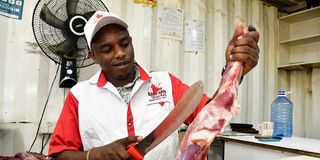
When the Covid-19 pandemic hit the world in 2020, businesses across the globe were disrupted, and Martin King’ori, who operates in the meat industry, was not spared.
Entrepreneurs, especially in Nairobi and its neighbouring counties, were affected by the cessation of movement and lockdowns put in place to curb the spread of the coronavirus. Many were forced to temporarily close operations.
Although the food value chain remained essential during the global pandemic, King’ori had to find innovative ways to continue supplying meat and meat products to his customers.
With a background in Information and Communication Technology (ICT), he used his digital skills to bridge the gap, ensuring that his clients never lacked their favourite meat products.
“Covid struck just when my business had begun gaining momentum. In entrepreneurship, you have to work smart to stay afloat. Technological innovation is key to growth,” says the IT expert-turned meat entrepreneur.
staff
Photo credit: Francis Nderitu | Nation
Mr King’ori, who holds a Diploma in Information Technology, leveraged his knowledge to develop a digital platform to serve customers more efficiently, especially during a time when they needed him the most.
However, travel restrictions hindered his ability to make timely deliveries.
“I decided to develop a digital app, which ultimately came as a huge relief to meat lovers,” he says.
It was officially launched on the Google Play Store in 2022 and is accessible to anyone with an Android phone.
Beginning with one butchery, digitising his services has enabled King’ori to expand to four outlets.
He now operates two facilities in Kasarani, another in Mirema–Zimmerman, and one in Githiga, Githunguri, Kiambu County, where he also runs a feedlot for fattening animals.
The Githunguri feedlot has a capacity of 30 animals, which he sources from more than 1,000 pastoralist farmers in Kajiado, Narok, and Laikipia counties.
“To meet high meat quality standards, I decided to invest in a feedlot where animals are fattened for two to three months. They are fed well and given the proper nutrients, diet, and minerals,” he explained in an exclusive interview.
“I am keen on traceability so that my customers get quality meat — tender and delicious,” he told Seeds of Gold.
With five pens in Githunguri, King’ori also runs a ranch in Suswa, Narok, where he keeps over 40 head of cattle.
He says his decision to digitise aligns with the Food and Feed Safety Control Coordination Bill, 2023, which is in the final stages of approval.
His product range includes various premium meat cuts such as T-bone, ribeye, barbecue ribs, sirloin steak, topside, brisket, beef shank, flank steak, short ribs, silverside steak, chuck, and osso buco.
Value-added products include dry-aged beef, beef sausages, boerewors, Mexican sausages, burgers, African sausage (mutura), and samosas. He is not limited to beef alone — he also sells goat meat and chicken.
All his butchery outlets are equipped with cold chain systems operating under controlled temperatures.
Over 40 per cent of his customers place orders online, with prices per kilo depending on the cut ranging from Sh700 to Sh1,800.
“We have embraced social media platforms such as TikTok, Instagram, X (formerly Twitter), Facebook, our online app, website, and even referrals,” explains the Camp David Butchery founder.
“Customers receive a notification for each delivery, and no product is handed over without a unique code for verification, which ensures accountability.”
The riders, who also access the app, undergo a thorough vetting process. They must submit a valid driver’s license, motorbike registration documents, a national ID copy, and their photograph.
To ensure meat safety, hygiene, and avoid food contamination, King’ori has adopted vacuum packaging and sealing methods.
From employing only two workers at the start, his venture has now directly employed 15 people and supports another 25 indirectly.
Despite his growth, the journey has had its share of hurdles.
“Due to the skyrocketing cost of living, purchasing power has declined. Accessing credit to expand the business has also been a major challenge,” he says.
King’ori regularly attends the Kenya Meat Expo and Conference, organised by Nation Media Group (NMG) PLC, crediting it with helping him tap into a vibrant market for his dry-aged beef, a value-added product that cooks quickly.
This year marks the fourth edition of the Expo, themed “Driving Sustainable Growth Across the Meat Value Chain.”
It will be held at the Kenyatta International Convention Centre (KICC) in Nairobi from August 6–8.
Farmers also get an opportunity to network, explore new markets, and engage with industry experts.