From a distance, the expansive 10-acre farm at Moi Girls Isinya Senior School resembles a privately owned commercial enterprise, earning millions from dairy farming and growing fruit and vegetables under drip irrigation in the semi-arid landscape of Kajiado County.
However, beyond the flourishing greenery lies an ambitious school project that is improving student nutrition and saving the institution millions in food costs.
The populous public school, which topped Kajiado County in the 2025 Kenya Certificate of Secondary Education (KCSE) examinations with a mean score of 8.35, has successfully transformed part of its previously overgrown and arid land into a flourishing food and dairy hub, providing over 1,800 pupils with nutritious meals.
In late 2019, the school management took a leap of faith and ventured into the labour- and resource-intensive farming project, transforming part of its arable land into a modern farm. The school sits on a 53-acre plot of land near Isinya town.
However, just a few months later, the pandemic struck, forcing schools to close for at least a year. What initially appeared to be a setback later turned into a blessing in disguise, as the project became a source of raw milk and vegetables for Isinya town and the surrounding area.
Isinya Girls Senior School Principal, Ms Alice Sayo, told Seeds of Gold that the drip irrigation and dairy farming project has grown significantly, providing food for the 1,800 students.
Isinya Girls Senior School
Photo credit: Stanley Ngotho | Nation Media
During the Seeds of Gold visit on the afternoon of May 11, 2026, the farm was buzzing with activity. Following the ongoing rains, the horizon had transformed into a breathtaking stretch of flourishing greenery. Healthy crops swayed gently in the breeze, creating an image of abundance. Herds of cattle grazed peacefully across the vast fields, feeding on the lush pasture that the steady rains had brought forth.
“After investing heavily in 2019, our hearts sank when the outbreak of Covid-19 caused the schools to close. However, during the lockdown, an opportunity arose for the school to sell vegetables and milk, which boosted the farming venture,” said Ms Sayo. “The programme has stabilised the students' food supply. We feed them fresh, organic produce from our farm. We have also cut food expenditure by 50 per cent, saving money for other development projects, including building accommodation for our teachers,” she said.
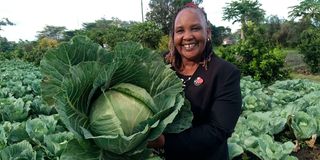
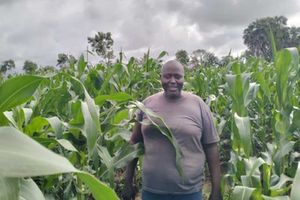
The farm currently boasts 600 different species of fruit trees, including mango, papaya, avocado, orange and lemon trees. A variety of vegetables, including cabbage, spinach, kale, maize, onions and beans, are grown on a large scale throughout the year to ensure a consistent supply during the three school terms.
Isinya Girls Senior School Farm Manager Alfred Sikuku displays fresh lemon fruits at the institution's farm on May 11 2026.
Photo credit: Stanley Ngotho | Nation Media Group
Mr Alfred Sikuku, the 50-year-old farm manager and agronomist, said the school harvests between seven and nine tonnes of cabbage every month, equating to at least 21 tonnes per term. For accountability and transparency, he said, the farm department is treated as a private supplier, selling produce to the school at half the market price.
Currently, a cabbage retails at Sh80 in the local market, but the school supplies it internally at half the price, just like all other produce from the farm.
“Our policy is to provide high-quality, chemical-free farm produce to our students and the local community. We use manure produced by our animals to fertilise the soil for growing crops. Drip irrigation is useful considering the region is semi-arid,” said Mr Sikuku. “Farming is resource- and labour-intensive, but despite having six members of staff working in the farm and dairy section, as well as casual labourers as and when needed, we usually make tidy profit margins.”
The school farm has also become an important demonstration centre for locals and neighbouring private and public schools, particularly as local herders diversify into crop farming and away from pastoralism.
The Ministry of Education has been promoting school farming through the Homegrown School Meals Programme (HGSMP) and the Education for Sustainable Development (ESD) policy. This policy integrates agricultural production into the education system to improve student nutrition, combat short-term hunger, and provide learners with practical agricultural skills.
Apart from crop farming, the school has diversified into dairy and pig farming, which has become a key source of supplementary income.
The dairy section boasts ten Friesian breed cows, including two bulls, one in-calf heifer and five dairy cows that produce at least seventy litres of milk daily. The animals graze in open fields, and the school stores dozens of bales of hay produced on the farm for use during the dry season. The animals are also occasionally fed supplements to boost milk production.
Isinya Girls Senior School Principal Ms Alice Sayo displays a paw paw at the institution’s farm on May 11 2026.
Due to climate change, Kajiado County has experienced prolonged droughts over the last decade, resulting in the deaths of large numbers of livestock and leaving hundreds of families vulnerable to hunger.
Locally, the price of raw milk varies from Sh50 to Sh60 per litre, depending on the distance from the collection centre.
This is down from the price of Sh80 per litre recorded two months ago, due to a milk surplus caused by heavy rainfall and improved pasture.
Ms Sayo said that the school only outsources 30–40 litres of milk per day to meet the needs of students and staff, saving the institution a significant amount of money each month.
'During term time, depending on our animals' lactation schedule, we source raw milk to supplement our own production. During the school holidays, we sell milk and farm produce to locals at market rates. It’s a lucrative enterprise that every school with idle land should invest in,” she added.
To minimise food waste, the school has also invested in pig farming to generate additional annual income. The school currently keeps 46 pigs of the Large White breed of different ages.
“We have an elaborate plan to ensure a consistent supply of pigs and pork throughout the year. This is an untapped opportunity in this region, which has several rapidly growing satellite towns, including Kitengela,” added Mr Sikuku.
A mature sow or boar retails at between 25,000 and 40,000 Kenyan shillings, while a pregnant sow fetches between 40,000 and 50,000 Kenyan shillings. The school avoids selling piglets in order to grow the herd.
However, the school is grappling with several challenges, including water shortages, the high cost of farming supplies, and animal diseases.
For the last five years, the institution has relied on a single borehole with a dilapidated water line, which has led to significant water losses through leakage.
“Water shortages and wastage have taken a toll on crop farming for years, almost making it untenable. At least now we have a 20-litre water reservoir with a modern reticulation system, installed recently by the Rotary Club of Nairobi Thika Road,” said Ms Sayo.
According to the school management, the institution has been battling soil pathogens that have made tomato farming difficult, as well as common animal diseases that are manageable though costly to treat. Soil samples have since been sent to the Kenya Agricultural and Livestock Research Organisation (KALRO) for testing and expert consultation.
The school plans to expand its crop and livestock farming operations to 20 acres. The aim is to not only feed students fresh farm produce, but also to increase supplies to the local market and contribute to the country’s food security.