What began as ornamental birds later became a normal business that any farmer could start. After many unsuccessful days of searching, Benjamin Muturi finally found a farmer rearing turkeys on his farm in Gilgil, Nakuru County, in 2020.
“It was my dream to keep turkeys as ornamental birds at my residence, but I had no idea where to get them. On this day, I approached this farmer, who agreed to sell me a pair of white turkeys, male and female, for just Sh1,500,” recalls Mr Muturi, adding that the price was much lower than the Sh3,000 he had heard other farmers quoting.
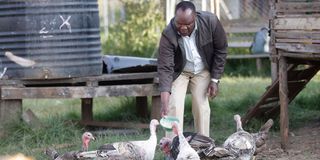
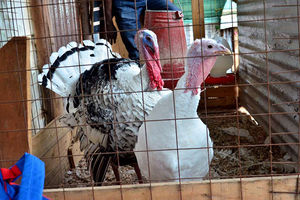
During a recent visit to his home in Elburgon, Nakuru County, Muturi, a small-scale farmer, was feeding his white and black turkeys, which he no longer keeps as ornaments, but for sale. He noted that he had partitioned his chicken coop to house the turkeys, as this reduced the cost of building another structure for his fowls.
A few days later, his turkeys began laying eggs that were much bigger than those of his chicken project. “After a few days, there were enough eggs for hatching. Seven chicks hatched successfully after 28 days, though others hatched after 30 days, depending on temperature stability and the breed.
“We consumed the first batch of eggs as a family since there was no one to buy them because they were new to the market," said Mr Muturi, adding that managing turkey chicks was more challenging than managing chicken. He prefers to rear and sell mature turkeys rather than chicks.
He said that turkey chicks are delicate and can easily die from infection if they are not managed properly. After seven to eight months, the chicks began to lay eggs, which resulted in a continuous breeding process that increased his flock rapidly, with a minimum of seven chicks hatching each time.
He says his first buyer had agreed to purchase a pair of mature turkeys for Sh6,000, which had motivated him to seek out other breeds. He was then able to cater for his domestic needs and purchase additional feed to complement their vegetarian diet.
Benjamin Muturi, holds one of the turkey breeds he rears in Elburgon, Nakuru County on August 21, 2026.
Photo credit: John Njoroge | Nation Media Group
In 2021, Mr Muturi opened a bar and restaurant in Molo Town, transferring some of his turkeys there to feed on food waste and allowing them to roam freely and feed on grass in the spacious compound.
"One of my customers was attracted to the flock and asked if I would slaughter and prepare a meal for him. He agreed to buy a mature fowl for Sh4,500, which prompted Muturi to work to fulfil his request. He added that the business thrived and the numbers increased following motivation from some of his customers. The area became known for turkey meat as customers visited his restaurant to enjoy the delicious meals on offer. The business was successful for the next four consecutive years until he shut it down in 2025.
He feeds his turkeys green vegetables, grass, and food residue, and also buys additional feed from livestock shops despite the higher cost. During the dry season, it is difficult to find enough feed for his flock, especially from farms, since they consume a lot of feed, unlike in the rainy season when there are sufficient vegetables and pastures, making it easier and more affordable to feed them.
His plan is to increase the number of birds and rear them in large quantities to satisfy customers in case demand rises in the future.
“I call on other farmers who are unaware of the value of these turkey breeds to embrace them and keep them widely on their farms in order to create a common market. Buyers may be interested in rearing them, but they may not have access to them or know where to source them due to scarcity or unavailability in a certain area,” said Muturi, adding that the market could be good for export if many farmers practised it on a large scale. He currently has 100 turkeys, but his goal is to reach 200 by the end of next year.
Mr Muturi said that the market is slow and cited this as the biggest challenge compared to the market for chicken. He added that, currently, a pair of turkeys — a tom and a hen — retails at Sh8,000, while Sh100 is charged for each egg sold to a willing buyer at the local market. He said the turkey business has no specific market seasons, just like chickens, and customers buy them depending on demand.
He says that chicks and mature turkeys are susceptible to health conditions, most notably blackhead disease, a deadly protozoan parasite infection. To control these infections, Mr Muturi buys medicine from agrovet shops or uses traditional methods, as poultry or extension officers rarely visit farms to educate and advise farmers on diseases affecting their poultry and the appropriate treatments to use in case of an outbreak. Other infectious diseases affecting turkey farmers include fowl cholera, bluecomb, and mycoplasmosis, among others.
On his 100m by 100m plot of land, the farmer also rears geese and guinea fowl, the latter of which are some of his ornamental birds. He added that keeping domestic fowl is labour-intensive, even in a small area, so long as there is enough food and water.
To have a thriving farm, livestock officers urge farmers to ensure that housing is well constructed and raised to prevent predators from accessing it, and that it is cleaned regularly to prevent diseases affecting domestic fowl.