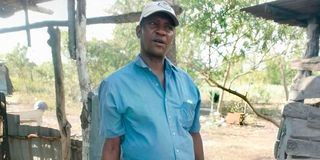
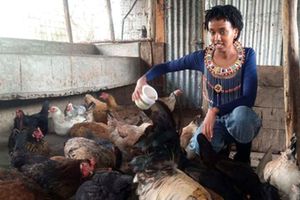
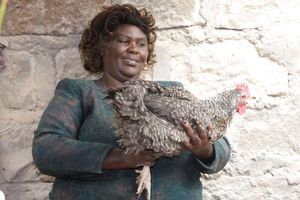
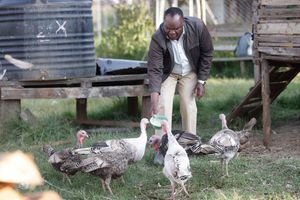
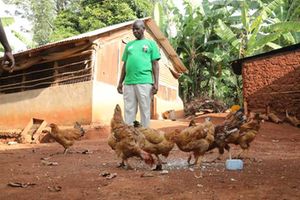
When Anthony Kyalo sold a goat to buy his first six chickens nearly a decade ago, he was looking for a more reliable source of income than goat farming.
Today, the 52-year-old poultry farmer from Kwale County says that his business has so far enabled him to acquire parcels of land within the county, educate his children, and support his family, turning this small venture into a foundation for his wider agricultural investments.
His journey began with six indigenous chickens, each costing between Sh350 and Sh400. At the time, Kyalo was already keeping goats, but the returns were too slow. Sometimes he had to wait nearly a year to sell an animal and receive money.
“I realised that relying on goats alone was not working, so I decided to keep chickens because I could sell the eggs regularly,” he says.
Within a year, some of the hens had hatched chicks that grew up and eventually started laying eggs, providing him with two sources of income.
“I started seeing the benefits because I could sell the eggs and also sell the chicks once they had grown a little. That encouraged me to continue,” he says.
For the first few years, he focused on growing his brood, using the money he made from selling eggs and chicks to buy feed and keep some of the young hens for breeding. By the fourth year, his brood had grown to more than 100 birds, and the number of mature chickens eventually reached 180. Instead of withdrawing profits for personal use, he reinvested much of the money back into the business. However, the transition from a small indigenous chicken venture to a larger commercial operation was not without its challenges.
Around 2020, he sold around 50 birds, raising Sh42,000. He used this money to buy hundreds of chicks, including improved breeds.
He had also started to acquire poultry management skills by taking part in online training sessions organised by a various farmers' WhatsApp group, where he learnt about feeding, vaccination and disease prevention. However, the improved breeds did not perform as well as expected in his market.
“Some customers preferred traditional indigenous chicken, so they were reluctant to buy the improved birds. This forced me to sell some at very low prices,” says Kyalo.
This poor market performance impacted his ability to finance subsequent production cycles. In December 2021, he bought around 300 chicks instead of the larger numbers he had initially planned for. He also changed his feeding practices, incorporating crops such as millet and sunflower seeds to reduce his dependence on commercially manufactured feed. This helped him to manage production costs and improve the appearance of the birds, particularly their legs. He said that some buyers associated these with good-quality indigenous chicken.
Some of the chickens Anthony Kyalo rears at his poultry farm in Kwale.
Photo credit: Pool
By 2023, he had become more confident in managing larger batches. In one production cycle, he sold around 210 chickens for Sh780 each before reinvesting in another batch. At one point he kept around 700 birds, and added more chicks in subsequent cycles. Today, he keeps around 1,000 chickens at any given time, primarily pure and improved indigenous breeds.
As his experience grew, Kyalo began sharing his knowledge with those interested in poultry farming. In 2024, he attended a gathering where financial institutions, including KCB, presented opportunities available to small businesses and farmers. He became involved in a poultry support initiative run by the KCB Foundation, which eventually led to him being able to train other farmers.
In 2025, he organised a group of young people and began teaching them practical poultry management skills, such as building poultry houses, feeding the birds, administering vaccinations, and controlling diseases.
The initiative attracted around 60 young people. Following an assessment of their readiness and ability to manage poultry enterprises, 34 participants were selected for support, including Kyalo.
“In April 2026, I received a call informing me that the successful participants would each receive 300 chicks,” he says.
Despite expanding his brood, finding reliable buyers remains one of Anthony’s biggest challenges. His customers include hotels, bulk buyers, and households buying a few chickens for consumption.
“I sell one bird to hotels and other bulk buyers for between Sh750 and Sh800, while individual customers buying one or two pay between Sh1,200 and Sh1,500, depending on the size of the chicken,” he says.
“When local demand is low, I usually travel to Mombasa to look for customers. Sometimes I sell at lower prices to avoid the additional expense of keeping mature chickens,” he says, and adds,
“The biggest challenge in this business is the market. If I had a reliable market, I would not hesitate to increase my flock, but you can raise many chickens and then fail to find people to buy them,” he says.
He is also careful not to keep birds beyond their intended selling period while waiting for better prices. Although demand may rise during festive seasons such as Christmas, he says that farmers cannot always afford to wait, as the cost of feeding the birds continues to accumulate.
“I learnt that when a chicken is ready to be sold, it should be sold. If you keep feeding it in the hope of getting a better price, you might end up spending all the profit you made from selling the other chickens,” he says.
Managing production costs
Feed is a major consideration when running this business, with his flock consuming around 70 kilograms of feed per day. To reduce this expense, he grows some of the crops used to feed the chickens, including millet and sunflowers. He also grows pumpkins, spinach, amaranth and managu, some of which he sells, while he uses part of the green produce to supplement the birds' diet.
Disease has caused some losses, but predators have also posed a significant threat. In 2023, he lost over 70 chickens to predators such as snakes.
Looking to the future, Kyalo is still looking to expand his enterprise. He plans to acquire a feed-milling machine to produce some of the chicken feed himself, as well as a vehicle to transport feed and birds to market.
His advice to anyone considering poultry farming is to start with a manageable number of birds and to understand the cost of raising them before making a large investment.
“Don't rush to the top. Start small and grow gradually. Before buying 200 chickens just because you've seen someone with 500, make sure you know how much it will cost to feed them and how you'll sell them once they're ready,” he says.