When most people think of agriculture, they imagine soil, seed, and sustenance. But in Consortium of International Agricultural Research Centres (CGIAR)’s newly launched 2025 Flagship Report, titled 'Insight to Impact,' agriculture is recast as something far more powerful, a driver of livelihoods, resilience, and rural transformation.
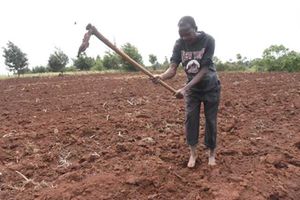
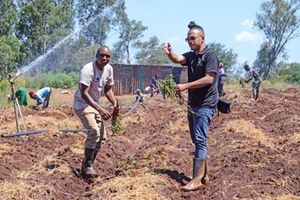
Across fields once marked by erratic rainfall and dwindling yields, farmers are now applying science-backed techniques, growing climate-resilient crops, and accessing markets once beyond their reach.
It is evident that Africa, and particularly East Africa, has taken a center stage in an ambitious global agenda which is to transform agriculture into a force for employment, equity, and economic empowerment.
Kenya, long a hub pioneer of agricultural research in Africa, is recognised not just for its challenges, but for its innovations.
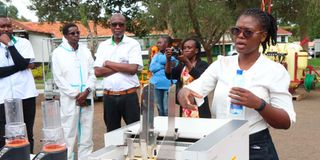
In semi-arid counties like Kitui, CGIAR’s supported programs are helping farmers transition to drought-tolerant crops and adopt soil-specific fertilizer recommendations, leading to increased yields, reduced input costs, and more stable incomes.
In Turkana, where pastoral livelihoods are under threat from climate change, initiatives combining agro-pastoralist education, market linkages, and water access are enabling communities to diversify and adapt.
Kenyan youth are also stepping into leadership roles within food systems. CGIAR-linked initiatives and technological advancements such as agribusiness incubators, young entrepreneurs in Nairobi, Eldoret, and Kisumu have created agri-tech platforms that connect rural farmers with everything from market prices to crop disease alerts via smartphone.
Across Africa, over 60 per cent of the workforce is engaged in agriculture, yet rural poverty remains entrenched. According to the report, food systems represent the largest potential employer in Africa, especially for the region’s booming youth population.
However, some the commonly noted barriers include Low productivity due to soil degradation and climate stress, limited access to credit, inputs, and infrastructure, gender inequities in land and labour rights, and weak rural-urban market connections
The Livelihoods and Jobs chapter of the report goes beyond traditional research providing a clear and compelling narrative that ‘science can and must translate into better lives.’
It focuses not just on innovation, but on implementation helping farmers grow more, earn more, and adapt to a future increasingly shaped by climate change, market shifts, and political instability.
“Food systems are more than what we eat,” the report said. “They are the lifeblood of rural economies,” the report added.
It highlights how productivity alone isn’t enough; what matters is connecting farmers to markets, training them in climate-smart techniques, and embedding research findings into national strategies.
More than 3 billion people rely on food systems for their livelihoods, yet most face precarious and informal employment, poor access to credit, and low returns.
CGIAR emphasizes a “whole-system” approach to livelihoods, analyzing what smallholder farmers actually need, what policymakers can support, and how private markets and innovation ecosystems can play a role.
According to an OECD report, in sub‑Saharan Africa alone, approximately 375 million youth are expected to join the labour force by 2030.
Food systems, if properly transformed, can absorb a significant share of this population not just on farms, but across logistics, manufacturing, marketing, finance, and agri-tech.
In Nairobi, a CGIAR-linked accelerator has helped launch startups that use AI to predict rainfall, blockchain to trace produce, and drone mapping for yield forecasting. These businesses are not only solving real agricultural problems they’re creating quality jobs in a sector often dismissed as backward.
African governments are asked to embed agriculture into their national youth strategies, and it calls on donors to fund innovation ecosystems, not just inputs.
Earlier this year, during the CGIAR’s summit in Nairobi, Kenya, its agenda reflected the growing recognition that agriculture stands at a critical crossroads, responsible for approximately 23 per cent of greenhouse gas emissions, according to the Intergovernmental Panel on Climate Change, while also being among the sectors most vulnerable to climate impacts.
With extreme weather events increasingly disrupting food production, experts from various fields debated whether conventional agricultural models can be reformed or must be fundamentally reimagined.
Zainab Hawa, director general of the UN in Nairobi, emphasised the city's positioning as a hub for international cooperation, though critics note that previous similar gatherings have produced more statements than implementable solutions.