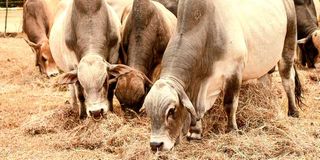
Reducing the cost of livestock feed, increasing the local production of feed ingredients, and embracing new technologies are among the key strategies that industry players and the government believe could increase livestock productivity and make meat, milk, and eggs more affordable for consumers.
Speaking at the 2026 Africa Feed and Feed Ingredients Conference (AFEC), stakeholders said that Kenya's livestock sector continues to struggle with the high cost of feed, which has increased production costs for farmers and reduced the country's competitiveness in regional markets.
Newton Nyaga, Head of Animal Feeds and Nutrition at the State Department for Livestock, said that the government is collaborating closely with the Association of Kenya Feed Manufacturers (AKEFEMA) to address this issue through policy reforms and by increasing the local production of feed raw materials.
He added that bringing manufacturers together in one association has made it easier for the industry to engage with the government on shared concerns, while also encouraging self-regulation.
According to Mr Nyaga, the country faces a 60 per cent deficit in animal feed, forcing manufacturers to import a significant proportion of raw materials. This exposes the industry to customs duties, supply chain disruptions, and global price fluctuations, which ultimately result in expensive feed for livestock farmers.
"When feed prices rise, the cost of producing milk, beef and eggs also increases, making these products less affordable for consumers and reducing Kenya's competitiveness in export markets," he said.
In order to address this challenge, the government has introduced a five-year National Feed Strategy which aims to promote the local production of feed ingredients and support manufacturers in accessing cheaper imported raw materials via the East African Community duty remission programme.
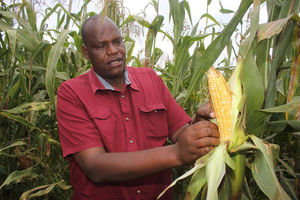
The government is promoting yellow maize specifically for livestock feed, in order to reduce competition with white maize intended for human consumption.
He added that contract farming will play a critical role in guaranteeing farmers a ready market and ensuring manufacturers have a reliable supply of raw materials. Other potential interventions include establishing strategic feed reserves to support pastoralists and feedlot operators during periods of drought, when livestock losses are usually high.
Nyaga noted that the dairy industry continues to benefit from years of policy support, subsidised fertiliser programmes, improved breeding through artificial insemination, and rising consumer demand driven by population growth and an expanding middle class.
Photo credit: File | Nation Media Group
However, Joseph Karuri, chairman of AKEFEMA, said that nutrition remains the biggest missing link in Africa's livestock production, despite the continent having high-quality animal breeds.
He noted that dairy cows in Kenya produce around 1,000 litres of milk per year, whereas similar breeds in the Netherlands produce almost 10,000 litres, largely due to differences in feeding practices.
“Good genetics alone are not enough. Proper nutrition through quality feeds and forages is what unlocks the productive potential of livestock,' he said.
Mr Karuri explained that commercial feeds should complement quality roughage and forage, forming the foundation of livestock nutrition.
He observed that, although feed manufacturers have significantly improved the safety of compounded feeds, challenges persist at farm level, where poorly prepared hay and silage often contain high levels of aflatoxins.
He said that the industry is working closely with farmers to improve their handling and storage of feed, as contaminated feed reduces animal performance and poses food safety risks.
Kenya currently imports around 80 per cent of the raw materials used in feed manufacturing due to insufficient local production. As raw materials account for 70–80 per cent of production costs, increasing the local production of yellow maize, soybeans, sunflowers and rapeseed would substantially lower feed prices.
Karuri added that wider adoption of the government's duty remission programme would also help manufacturers to reduce their production costs.
He encouraged farmers to use quality feed, invest in improved forage production and modern livestock technologies, and expand their enterprises to benefit from economies of scale. The industry is also promoting the consumption of more animal-source foods, such as eggs, pork and cheese, in order to expand the domestic market.
John Muia, founder and chief executive of House Farm, said that technology is becoming increasingly important in improving feed quality and food safety. He explained that innovations introduced by the company enable manufacturers to analyse raw materials before feed formulation and test finished products before they reach the market.
"Modern mycotoxin binders, for instance, have significantly reduced the threat posed by aflatoxins and other toxins in commercial feeds," he noted. He urged feed manufacturers to routinely test both raw materials and finished products to safeguard animal health and consumer confidence.
Continued investment in innovation, quality assurance and laboratory testing will strengthen Kenya's feed industry and support higher livestock productivity across the country, he said.