South Korea and the United Kingdom are now the main growth markets for Kenya’s pyrethrum extracts, marking a shift in demand from Asia and emerging outlets in Europe.
Official data shows that in 2024, Kenya exported a total of 30,584 kilogrammes(kg) of pyrethrum refined extract to various international markets, with Belgium remaining the leading export destination, accounting for 46.7 percent of total exports with 14,277 Kg.
Kenya’s pyrethrum extract exports to South Korea posted a substantial increase, amounting to 8,550 Kg or 27.9 percent. The United Kingdom also emerged as a key market, importing 3,136 Kg (10.2 percent).
“This shift in trade dynamics highlights the growing demand for Kenya’s pyrethrum in Asia and emerging European markets, while some traditional buyers, such as Spain, reduced their purchase volumes,” the Agriculture and Food Authority(AFA) said.
“The evolving market trends emphasise the need for continued diversification and strategic engagement to sustain and expand Kenya’s presence in the global pyrethrum market,” it added.
Other significant export destinations for Kenya’s pyrethrum extracts included Italy (2,200 Kg, 7.1 percent), Brazil (1,350 Kg, 4.4 percent), the United States (536 Kg, 1.7 percent), and Mexico and South Africa (each at 0.8 percent) in 2024.
Pyrethrum extract is mainly used in the manufacture of insecticides for use in and around homes to control cockroaches, mosquitoes, houseflies, and other insects. Pyrethrum products are also used against insects and arthropod pests in food handling and storage facilities because of their low mammalian toxicity, animal pens, and head lice control.
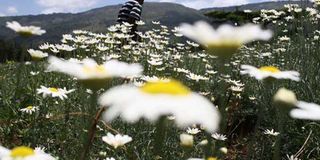
A pyrethrum farmer harvests her crop in Eburu area, Gilgil sub-County, Nakuru County.
Photo credit: Francis Mureithi | Nation Media Group
AFA said that in 2024, there was an increase in production and value of pyrethrum extract.
“The volume of production increased by 5.3 percent from 30 tonnes in 2023 to 31.59 tonnes in 2024. The year 2024 reported a significant drop in prices to Sh26,645 per Kg compared to Sh37,500 in the year 2023, attributed to the weakening of the Kenyan shilling against the US dollar,” the regulator said.
In the year under review, the area under pyrethrum cultivation stood at 9,549 acres, reflecting a 2 percent increase from 9,362 acres recorded in 2023.
A farmer inspecting his pyrethrum crop. More farmers in the Rift Valley have gone back to pyrethrum farming following efforts by the government to revive the once lucrative sub-sector. PHOTO/SULEIMAN MBATIAH
“While Government and private sector interventions together with increased farmer engagement in pyrethrum production were aimed to increase area under production, challenges such as erratic weather patterns and market price fluctuations may have impacted the expected increase in production,” AFA said.
Nakuru, West Pokot, Bomet, Nyandarua, Kericho, and Elgeyo Marakwet counties remained dominant in pyrethrum farming.
“Expansion efforts were observed due to increased adoption of pyrethrum as a viable cash crop. Support from county governments and processors through seedling distribution and extension services continued to influence acreage trends,” AFA said.
“Additionally, market demand and contract farming arrangements played a role in onboarding more farmers. The Directorate’s initiatives in training extension officers and distribution of pyrethrum solar dryers further enhanced technical support for growers,” it added.