Kenyan exporters of vegetables turned to India as one of the alternative markets for their produce after the European Union tightened checks on chemical residues, locking out non-compliant supplies.
Earnings from sales of fresh vegetables surged more than five times last year despite the value of total exports more than halving because of stricter checks by the 27-nation EU trading bloc.
Vegetable producers generated nearly Sh7.88 billion from exports of “dried leguminous vegetables, shelled, whether or not skinned or split [beans and pigeon peas] to India last year, a 501.08 percent jump over Sh1.31 billion in 2023.
There were no recorded earnings from vegetables sold to India in 2022, according to the data collated by the Kenya National Bureau of Statistics and sourced from the Kenya Revenue Authority.
This came in a year exporters of fresh vegetables suffered a 54.03 per cent contraction in earnings to Sh23.4 billion compared with Sh50.9 billion the year before, attributed to shrinking market in the EU bloc as a result of interceptions over Maximum Residue Levels (MRLs).
“EU notifications regarding Kenyan beans and peas in pods due to concerns about pesticide residue levels exceeding MRLs resulted in lower export volumes,” KNBS analysts wrote in the 2025 Economic Survey.
The EU lowered the requirements on pesticide residues to a bare minimum, indicating that any level found on the consignment, whether high or low, is treated the same way.
An increase in the number of exports intercepted not only subjects exporters to losses but also places the country at risk of being banned from exporting produce to the EU until a corrective measure is taken.
The increased sales of orders of vegetables helped lift the total value of Kenya’s exports to India to a new record of Sh19.05 billion in 2024, a jump of more than three-quarters (80.85 percent) over Sh10.06 billion in the prior year.
Indian market is one of the markets which has in the past been listed by the Kenya Export Promotion and Branding Agency (Keproba) as difficult to penetrate.
“We realise the Indian market has risen in terms of sophistication and even the demand must correspond to needs of the niches in the market. We are marketing key products into the market by developing a targeted IMC (Integrated marketing communications) plan,” Keproba said in a past emailed response.
Besides vegetables, Kenya also exports tea, legumes, tubers, coffee as well as raw hides and skin to India.
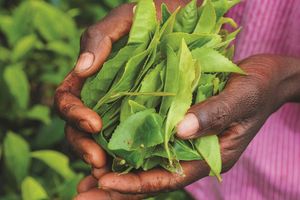
Earnings from exports of tea to India more than doubled last year, according to KNBS data, jumping 167.08 per cent to Sh3.58 billion from Sh1.34 billion in 2023.
Besides strict phytosanitary and chemical level checks, exporters of horticultural produce, including vegetables, to Europe are also increasingly being forced to shift to sea transport from air to align with growing preference for products with lower carbon emissions by consumers and retailers.
"Retailers in Europe, because of the demands of their consumers, are increasingly demanding low climate impact produce in their market. There is a huge difference in the carbon emissions of air freight compared to sea freight,” Erik Van De Kamp, senior project manager of Flying Swans, a Dutch firm that operates cold chain infrastructure in Naivasha, said last September.
“So, some retailers are already demanding that all of the fruits and vegetables they buy be transported through sea freight."
Findings of a study by European Food Safety Union (EFSA) found the risk of pesticide residues to human health remains low, the report released on May 14 suggested, keeping in line with trends in recent years.
The EFSA survey, conducted every three years, analysed results of 13,246 random samples taken by EU Member States, Norway and Iceland from 12 of the most consumed food products in the EU as part of the EU-coordinated control programme (EU MACP).
“From this subset of samples analysed under the EU MACP, 99 per cent were found to be compliant with EU legislation. This finding is consistent with the results obtained in 2020 (99.1 percent), when the same selection of products was sampled,” EFSA wrote in the report.