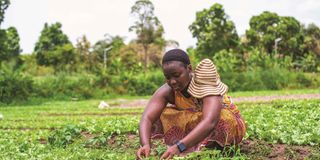
In a significant shift for global environmental policy, the three Rio Conventions have jointly recognised that securing women’s land and property rights is essential to achieving their goals.
This new consensus was the driving force behind the Women's Land Rights Initiative, a high-level dialogue in Nairobi co-hosted by TMG Think Tank for Sustainability, the Robert Bosch Stiftung, the Huairou Commission, and other partners. The event brought together UN agencies, government officials, and grassroots advocates to forge a joint approach to climate and environmental action.
The UN Convention to Combat Desertification (UNCCD), the Convention on Biological Diversity (CBD), and the UN Framework Convention on Climate Change (UNFCCC) all agreed that addressing the gender gap in land ownership is critical to their missions. This convergence is being operationalised through a dedicated push for gender-responsive land governance, bridging policy and practice for the women who feed nations but often cannot claim the land they till.
Translating this unified front into national action is the next challenge, according to Gabriel Mara, G77 & China coordinator for National Adaptation Plans under the UNFCCC. His group is actively integrating gender equality into national climate mechanisms.
Translating this unified front into national action is the next challenge, underscored by Gabriel S.J. Mara, G77 & China Coordinator for National Adaptation Plans under the UNFCCC. His group is actively building gender equality into national climate mechanisms. "There is a growing appetite for this integration," Mara stated, noting women's dual role as pillars of society and those most vulnerable to climate impacts.
He highlighted the persistent silos between the conventions. "The negotiations operate separately," he said, but new tools like the newly launched UNFCCC synergies website will help them find common ground. Gabriel also advocated for the Loss and Damage Fund to support communities facing cultural losses such as ancestral graveyards lost to sea-level rise. His call to action was clear: "Women need to be brought to the table more... If you don't count this one voice, you're counting out half of the world."
Olivier Rukundo from the Secretariat of the Convention on Biological Diversity (CBD) detailed concrete steps beyond general language. The CBD’s Global Biodiversity Framework and its Gender Plan of Action provide specific mandates to advance women’s land rights in conservation. This is the convention’s roadmap, which aims to mainstream gender equality into biodiversity conservation efforts by recognising the critical role women play and ensuring their full, equal, and meaningful participation in decision-making, policy, and action.
Olivier pointed out that women own just 15 per cent of land worldwide, emphasising the scale of the gap. He argued that the environmental crises provide a powerful new argument for gender equality. "The combination of this advocacy, more economic advocacy, and environment-related advocacy will actually move the needle a little bit," he stated. He highlighted collaboration between the convention secretariats, with the initiative serving as a key platform for alignment, advocating for a "two-way learning" process where grassroots realities inform international policy.
Audrey N’Goan, a youth negotiator for the UNCCD, addressed the challenge of shifting cultural norms. "Our mothers have been through that our great-grandmothers have been through that... but we don’t want the case that our children will be fighting that," she said. Despite progressive laws in many African nations, she noted the "difficult part is still within the mindset of our customs, which sidelines women from land decisions and weakens climate response”.
She said that sustainable agriculture is a practical way for the three conventions to work together since it connects land health, climate action, and biodiversity. She called on governments to support civil society organizations and provide the funding needed to make progress.
From the grassroots, Esther Mwaura-Muiru, global advocacy director for the Stand for Her Land campaign, urged for action after planning. She said her campaign focuses on closing the chasm between "extremely beautiful" legal frameworks and women's reality by centering grassroots voices, implementing existing laws, and confronting patriarchal norms.
She lauded the recent creation of the Kenya Women Parliamentary Caucus on Land Rights as a major step forward. Formed in August, this Kenya Women Parliamentary Association sub-group focuses on advancing land justice and empowering women through legislative and grassroots initiatives. Still, Esther warned that without enough funding, even the best policies may not work.
Violet Shivutse, founder of Shibuye Community Health Workers, shared a real example from Kakamega County. Her group began by working on HIV/Aids related nutritional challenges, but soon realised that land insecurity was a main cause of malnutrition, so they started advocating for clearer ownership and leasing frameworks, especially for women.
The community created Land Lease Guidelines, which the Kakamega County government has now adopted. These guidelines allow women to lease land securely, enabling them to invest in soil restoration, conservation, and other sustainable practices. So far, she said more than 1,000 women are working on soil management, and almost 600 are using leased land for activities like composting, terracing, and group farming. "More women are now involved in activities they couldn’t be previously when unsure of the duration they'd lease a piece of land for," Shivutse said.
Today, the guidelines have empowered her community to be at the frontline of addressing climate change. For her, the Conventions’ dialogue created a vital bridge. "Being here has really helped me to relate the work that we do as grassroots women to these three Conventions," she said, pointing to new collaborative pathways to scale local successes into national policy.
The Nairobi meeting ended with a clear call to include women's land rights in global plans for climate, biodiversity, and fighting desertification. The next step, attendees agreed, is to turn this agreement into action by ensuring these rights are included in national plans, climate projects, and biodiversity goals.