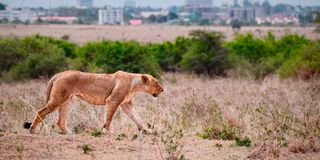
A new international poll warning that 70 per cent of global tourists could shun South Africa if it reverses its planned phase-out of the captive lion industry is sending ripples far beyond its borders, raising fresh questions about the future of wildlife tourism across Africa, including Kenya.
The captive lion industry, primarily located in South Africa, involves the intensive breeding, keeping, and commercial exploitation of lions in captivity.
Commissioned by World Animal Protection in collaboration with Blood Lions, the survey paints a stark picture: modern tourists are increasingly unwilling to support destinations associated with exploitative wildlife practices. Instead, they are gravitating toward ethical, conservation-driven experiences, an evolving trend that Kenya’s tourism sector has been steadily trying to align with.
Conducted by Savanta across South Africa, the UK, the US, the Netherlands, and Germany, the poll of 2,528 respondents found that 77 per cent support South Africa’s 2021 decision to phase out commercial captive lion breeding. But more striking is the potential economic fallout if that decision is reversed.
Seven in 10 respondents said they would be deterred from visiting a country that allows lions to be bred and kept in captivity for profit. Nearly as many as 69 per cent warned that such a move would damage South Africa’s reputation as a responsible tourism destination, while 65 per cent indicated they would choose alternative destinations altogether.
For a country where tourism contributes nearly nine per cent of GDP and supports about 1.8 million jobs, the implications are profound.
Estimates suggest that South Africa could lose up to 860,000 international visitors if sentiment translates into action, putting as many as 66,000 tourism jobs at risk.
“Captive lion breeding is cruel, has no conservation value, and risks undermining South Africa’s standing as a leader in wildlife protection,” said Edith Kabesiime, wildlife campaign manager at World Animal Protection Africa.
“Tourists increasingly want authentic, responsible experiences, and these findings show that protecting lions in their natural habitats aligns with both public sentiment and economic resilience,” she added.
Her remarks echo a broader shift in global tourism, one being felt keenly in Kenya, where wildlife remains the backbone of the industry. From the Maasai Mara to Amboseli,
As climate change intensifies droughts and shrinks habitats, human-wildlife conflict is rising, and conservation funding gaps are widening. In response, some African countries have explored alternative revenue streams, including controversial models that blur the line between conservation and exploitation.
Climate change is emerging as a powerful force shaping tourism decisions. Prolonged droughts in East Africa have led to declining wildlife populations in some areas, altered migration patterns, and increased competition for water between communities and animals. These changes are not only ecological; they are economic.
Tourists today are more informed and values-driven than ever before. Many are asking not just what they will see, but how their visit impacts wildlife and local communities.
In this context, practices like captive lion breeding, often linked to cub petting, canned hunting, and the bone trade, appear increasingly out of step with global expectations.
Dr Louise de Waal, director of Blood Lions, warned that the risks extend beyond reputation. “South Africa’s commercial captive lion industry has been proven to be deeply problematic, creating issues around reputational damage, ethical and animal welfare concerns, and zoonotic diseases,” she said.
She observed that the new polling data shows failing to end this industry also risks serious harm to the continent’s vital tourism sector.
The poll found that 72 per cent of citizens reject promoting exploitative wildlife industries over ethical alternatives, while 66 per cent consider captive lion breeding unethical. A similar proportion warned against risking tourism demand, and 63 per cent said reversing the phase-out would undermine trust in evidence-based governance.
For Kenya, these findings offer both a cautionary tale and a strategic opportunity. On one hand, they reinforce the importance of maintaining high ethical standards in wildlife management, particularly as climate change places increasing strain on natural systems. On the other, they present an opportunity to capitalise on the growing market for sustainable tourism — if Kenya can effectively protect its ecosystems and wildlife populations.