Climate change has been cited as the leading threat to the livability and sustainability of World Heritage properties and cities in Africa.
The outcome follows a two-day meeting organised in Lamu UNESCO World Heritage site by the Organisation of World Heritage Cities (OWHC).
Various speakers highlighted how climate change has continued to negatively impact world heritage properties, with most of them left vulnerable to the climate-related extreme events and disasters.
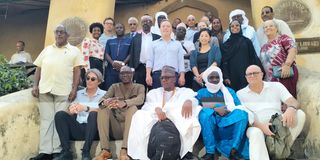
Delegates from 15 African World Heritage Cities at the conclusion of a two-day meeting at Lamu Fort on December 6, 2025.
Photo credit: Kalume Kazungu | Nation Media Group
During the meeting, Lamu Old Town was highlighted among UNESCO World Heritage site cities that have in recent times been on the receiving end owing to diverse effects of climate change.
In March and April this year, Lamu Old Town hit the headlines when shops, houses and streets were submerged after the Indian Ocean experienced unprecedented high tides, leading to backflow.
The Secretary General of the Organisation of World Heritage Cities (OWHC), Mikhael De Thyse, acknowledged that climate change has heavily impacted not only Lamu and the other African World Heritage Cities but also globally.
Mr Thyse noted that climate change is the main trigger that has been multiplying the effects of different crises witnessed today in many of the concerned cities of the world.
“Climate change is indeed the accelerator of crises, and such issues need to be addressed forthwith. Climate change is a common concern in all cities. Even if each city faces its own specific challenges, it’s high time we come together and find solutions,” said Mr Thyse.
Secretary General of the Organization of World Heritage Site Cities Mikhael De Thyse during an interview with the Daily Nation at the Lamu Fort on December 6, 2025.
Photo credit: Kalume Kazungu | Nation Media Group
He lauded the mayors and governors of the African World Heritage cities for convening the Lamu forum, noting that their unity will help them to effectively face the existing problems like climate change head-on and resolve them.
“Through collaborative efforts like this, the leaderships of African cities can exchange ideas and adopt best practices that will see to it common challenges fully redressed,” said Mr Thyse.
Governor Issa Timamy of Lamu expressed concern that climate change has continued to significantly add to the cost and expenses of maintaining world heritage cities.
He cited increased frequency and intensity of climate-related hazards such as the extreme weather events, sea-level rise, and subsequent flooding, which necessitate costly adaptation measures, extensive repairs and proactive preservation strategies.
Due to climate change effects, the devolved government, for instance, has been forced to spend dearly on undertaking frequent repairs of seawalls within the Lamu UNESCO World Heritage site.
Mr Timamy said maintaining seawalls is an expensive affair as they have to keep on reconstructing the walls whenever they get eroded and collapse as a result of wave action.
“Lamu gets very little annual allocation from the national treasury. It’s challenging to cope with the cost implications involved in rehabilitating destroyed seawalls. Climate change is real. It’s leading to sea level rise. This forces us to increase the height of our seawalls from time to time, and it’s way too expensive,” he said.
The forum also highlighted ongoing efforts by the county government to safeguard the island’s architectural heritage while supporting local development and tourism, a move that underscores the devolved unit’s commitment to strengthening partnerships with regional and global heritage institutions.
Participants also examined current pressures facing heritage cities in Africa, including rapid urban growth, infrastructure demands, and the need to balance development with cultural preservation.
Amady Diallo, the Municipal Councillor of the city of Saint-Louis in Senegal, also highlighted the negative implications brought about by climate change to the historical city.
The Island of Saint-Louis in Senegal is a UNESCO World Heritage Site, inscribed in 2000 in recognition of its outstanding French colonial architecture, regular town planning and historical significance as the former capital of French West Africa, showcasing significant cultural exchange in West Africa.
In his presentation at the Lamu Fort hall, Mr Diallo vividly showed how the Unesco World Heritage City of Saint-Louis is heavily threatened by frequent storms, extreme ocean erosion, rising sea levels and increased flooding due to climate change.
Representatives of the African World Heritage Cities follow proceedings of a meeting Lamu Old Town on December 5, 2025.
Photo credit: Kalume Kazungu | Nation Media Group
This has, on many occasions, left thousands of people displaced from their usual places of residence, hence disrupting the local economy and the general social fabric.
According to Mr Diallo, the population in Saint-Louis has for decades depended on fishing, tourism and market gardening.
However, such traditional pillars, which have long been sources of prosperity, are now being undermined by the effects of climate change.
“I can attest here today that Saint-Louis is acting as a poignant symbol of the world’s vulnerability to climate change. We’ve witnessed coastal erosion and sea-level rise that have ended up displacing and pushing people to the mainland areas, including areas previously earmarked for conservation. But we’re trying our best to ensure the heritage site is fully protected,” said Mr Diallo.
The UN-Habitat designated Saint-Louis as the most threatened city in Africa for coastal flooding in 2008.
Apart from Senegal, other attendees of the Lamu forum were representatives from Cidade Velha (Cape Verde), Harar (Ethiopia), Timbuktu (Mali), Agadez (Niger), Chinguetti (Mauritania), among others.
The Lamu meeting also provided a platform for exchange and dialogue with participants exploring how heritage-led urban management can enhance the habitability of historic centres.
The just concluded Lamu meeting is in preparation for the coming 18th World Congress of the Organisation of World Heritage Cities (OWHC), which is scheduled to take place in Marrakech, Morocco, from October 26 to 29, 2026.