Kenyan scientists are increasingly turning to genome editing as a possible alternative to genetically modified crops amid continued public resistance to genetically modified organisms (GMOs).
The shift comes as Kenya, one of the countries in the Horn of Africa hardest hit by climate change, seeks new ways to strengthen food production against drought, pests and declining yields.
For years, debate over GMO crops has remained sharply divided, with critics raising concerns about possible long-term health effects and environmental risks. Although Kenya approved the cultivation and commercialisation of Bt cotton in 2019, wider adoption of genetically modified crops has faced legal and political obstacles.
Bt cotton, a pest-resistant variety, was introduced to protect farmers from destructive bollworms that have long reduced yields in cotton-growing regions.
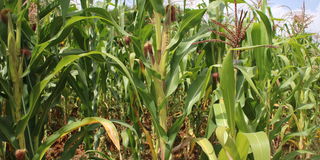
Genetically modified maize has also completed National Performance Trials and is awaiting regulatory approval, but its cultivation and importation remain suspended following court petitions filed by anti-GMO activists.
Scientists now say genome editing could provide a less controversial solution because, unlike traditional genetic engineering, it does not involve introducing genes from unrelated organisms.
Instead, the technology makes precise changes to a plant’s existing DNA to improve traits such as drought tolerance, pest resistance and shelf life.
“Naturally, organisms undergo mutations in their DNA, some of which can be beneficial,” said Anne Muia, a scientist at the National Biosafety Authority.
“Rather than waiting for those changes to occur over hundreds of years, scientists can now reproduce them in a targeted way using tools such as CRISPR-Cas9,” she said.
Genome editing has been under research in Kenya for about five years, with institutions including Kenyatta University exploring its use in crop improvement and biofertiliser development.
Researchers are currently working on cassava varieties that resist post-harvest discoloration, sorghum that can withstand the parasitic striga weed, rice resistant to fungal infections and maize resistant to lethal necrosis disease.
Prof Richard Oduor, a molecular biologist at Kenyatta University, said genome editing may be easier for the public to accept because no foreign DNA remains in the final crop.
“With genome editing, maize remains maize. We are only improving the plant’s own genetic material to make it perform better,” he said.
He said this distinction addresses one of the biggest concerns that has surrounded GMO crops in Kenya for years.
Regulatory hurdle remains
Although no genome-edited crops are yet available commercially in Kenya, scientists say the ongoing research is helping build local expertise and could eventually support national food security.
Globally, countries including the United States and China have already commercialised genome-edited crops, while several African countries that have adopted GMOs are also beginning to explore the technology.
Researchers say Kenya now faces a choice between continued delays and embracing a technology they believe could help farmers cope with a changing climate.