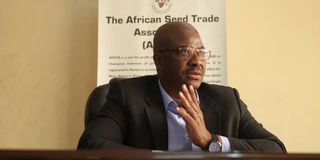
Dr Yacouba Diallo is Secretary- General of the African Seed Trade Association founded in 2000 to advance Africa's private seed industry. The body harmonises seed regulations, promotes access to quality seed and biotechnology, and supports national associations. It will host its annual Seed Congress in South Africa in March. He speaks to Seeds of Gold's Sammy Waweru.
How is the seed sector contributing to climate change adaptation and resilience for African farmers?
Climate change is no longer distant. African farmers face prolonged droughts, erratic rainfall, floods and new pests and diseases. The seed sector is central to adaptation because seed is the most critical agricultural input. Research shows that improved seed varieties account for 40–50 per cent of yield gains.
African breeders, both public and private, are developing drought-tolerant, heat-resistant, and early-maturing varieties across cereals, legumes, and vegetables. These enable farmers to harvest even under moisture stress or shortened seasons. Advances in biotechnology and gene editing allow scientists to tailor varieties to specific climate pressures.
As AFSTA, we promote these innovations through technical working groups focused on plant breeding, ensuring climate-resilient seeds move efficiently from research institutions to farmers’ fields. Without access to quality seed, adaptation efforts are incomplete.
Seed systems underpin food security. Quality seed yields more produce, making food more available and affordable. aImproved varieties also enhance nutrition; biofortified crops with higher micronutrients are increasingly incorporated into breeding programmes.
Africa still lags in average yields. While research stations may record 7–10 tonnes per hectare, many farmers harvest less than half. Bridging this gap starts with seed. Strengthening seed systems through better variety release, quality assurance, distribution networks, and farmer education boosts productivity and incomes.
Vegetable seeds illustrate this trend. Smallholders increasingly buy hybrid seeds for higher yields, better-quality produce, and stronger market demand.
Functioning seed systems allow farmers to select varieties suited to agro-ecological conditions and markets, improving both food security and nutrition.
Africa has made progress in harmonising seed regulations, but implementation remains slow. Harmonised rules on variety release, certification, quality assurance, and cross-border trade are essential for seed movement from Cape Town to Cairo or Freetown to Mogadishu. Trade barriers drive counterfeit and illegal seed, leading to poor yields and economic loss. Full implementation of harmonised regulations aligned with the African Union and AfCFTA is crucial.
Nations must treat seed as they do food—traded efficiently, with regulatory approvals fast-tracked, duplication reduced, and certification mutually recognised.
New breeding techniques, including hybridisation, biotechnology, and gene editing, improve yield potential, pest resistance, and climate resilience.
Evidence shows no conclusive harm from approved genetically modified crops. Africa has validated a continental gene-editing policy framework, now needing national regulations that balance innovation and safety.
Private companies dominate seed production, processing, and distribution in many African countries. Agro-dealers provide last-mile delivery and advisory services. Private entities increasingly handle certification, supplementing overstretched public systems.
Strategic outsourcing, with government oversight, improves efficiency. Private investment drives breeding and technology transfer, crucial for competitiveness while supporting smallholders.
Reducing cross-border barriers expands markets, encouraging investment in breeding, processing, and infrastructure.
Trade creates jobs, strengthens value chains, and attracts international partnerships, accelerating technology transfer and industry development.
The annual AFSTA Congress, Africa’s largest seed industry gathering, brings regulators, researchers, private companies, farmers, and journalists together.
The 2026 Congress in South Africa is expected to attract record participation. It provides a platform for policy dialogue, innovation showcase, and business networking, covering breeding, biotechnology, variety protection, market constraints, and regulatory harmonisation.
Expected outcomes from plenaries, exhibitions, and networking?
Plenaries are expected to yield clear policy recommendations, especially on regulation and innovation. Exhibitions will highlight new varieties and technologies, while business engagements may result in contracts, partnerships, and investments.
The Congress aims to deliver a roadmap strengthening Africa’s seed systems, ensuring quality seed underpins agricultural transformation, food security, and economic growth.