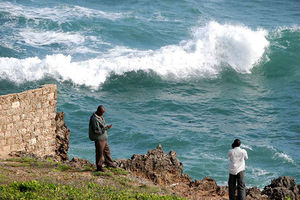
As the sun begins to dip, it casts long shadows and a golden-orange glow across the Indian Ocean off Lamu Island.
A short distance from the shoreline, Omar Yusuf scoops water from the lowest part of his boat’s cockpit and tosses it over the side. The vessel slams against the waves, making it difficult for Yusuf to maintain his balance. The constant roar of the wind and waves creates a high-pressure and exhausting environment.
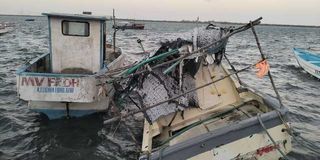
Discarded vessels at Wiyoni area in Lamu Island on January 20,2026.
Photo credit: Kalume Kazungu | Nation Media Group
“You see, my boat has a low freeboard height, making it more vulnerable to water ingress. All this is because of the rough seas contributed majorly by climate change,” says Mr Yusuf.
His predicament is one of many challenges boat owners and shippers with low-height vessels are increasingly facing. Due to climate change, such vessels are not effectively shielded from wave crests and sea spray, allowing water to easily reach the deck. The situation has forced boat manufacturers, owners and shippers to incur extra costs in redesigning their vessels.
These design changes include extending the normal boat freeboard, the vertical distance from the waterline to the main deck or gunwale. This adjustment is meant to enhance safety by preventing waves from washing onto the deck.
Lamu boat maker Abdallah Munawar during an interview with Nation on January 20, 2026. He says extreme weather linked to climate change has driven up the cost of building, repairing, and maintaining sea vessels.
Photo credit: Kalume Kazungu | Nation Media Group
Abdallah Munawar, a renowned boat builder in Lamu Island, explains that a higher freeboard improves stability and safety during rough and extreme sea conditions. To avert tragedies, Mr Munawar says builders are also considering widening vessel bottoms to enhance seaworthiness, safety in rough seas and reserve buoyancy.
Initially, a standard sea vessel would cost about Sh2 million to manufacture from start to completion. Today, Mr Munawar says, boat owners incur additional costs ranging between Sh200,000 and Sh300,000 to increase freeboard heights and widen vessel bottoms.
“The extreme weather is directly affecting boat production. As boat makers, we normally advise clients to opt for climate-resilient vessel designs, which are costlier,” said Mr Munawar. Ahmed Hassan, a boat owner, decried the rising costs of repair and maintenance at sea in recent years, noting that wear and tear has been accelerated by severe weather conditions marked by rough seas and strong tides.
“For instance, in past years, you would purchase a boat and use it for a whole year without servicing it. That isn’t the case today. The number of times needed for vessel servicing, repair and maintenance is now three or four times more. We’re burdened,” said Mr Hassan.
Boat repair and general maintenance now cost not less than Sh50,000, depending on the size of the vessel and the extent of damage. As a result, many newly purchased boats have been left rotting in yards along Lamu Island’s Indian Ocean shoreline, turning them into costly liabilities.
Ali Lali, a boat builder, observed that material and labour shortages in disaster-struck areas significantly inflate rebuilding costs.
An abandoned vessel in Lamu town.
Photo credit: Kalume Kazungu | Nation Media Group
Environmental expert Mohamed Athman, who works with the Lamu Marine Forum, argues that warmer water temperatures, rising sea levels and more intense storms have made the maritime environment more hazardous and corrosive for vessels. He notes that severe storms at sea are characterised by strong winds and turbulent waters.
“The storms can cause significant damage to ships, infrastructure, and coastal areas, posing risks to maritime safety and navigation. To overcome this, the maritime industry is required to build resilience and be prepared to mitigate the increased risks and the associated costs,” said Mr Athman.
Lamu County Environment and Climate Change Chief Officer Mohamed Dirie acknowledged that climate change has continued to affect marine infrastructure and operations.
Mr Dirie observed that rising sea temperatures, increased storm intensity and changing weather patterns have accelerated wear and tear of vessels. For boat manufacturers and owners in Lamu and the Coast region, he said this has resulted in more frequent repairs due to recurrent damage from extreme weather.
He also noted the likelihood of increased maintenance costs due to corrosion from saltwater and changing ocean conditions, noting that design and material adjustments are crucial for vessels to withstand emerging climate stresses.
“As boat manufacturers and owners minding safety at sea, you’ve no option except building vessels with climate-resilient materials and designs suited for the changing conditions no matter how expensive it costs,” said Mr Dirie, adding that proactive vessel checks are necessary to reduce damage from extreme weather.