How TVs, laptops and radios are fueling Kenya’s e-waste crisis
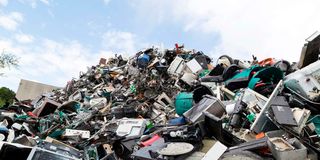
The surge in electronic device consumption such as mobile phones, refrigerators and televisions has resulted in a mounting e-waste problem.

As televisions, laptops and radios continue to power daily life, their afterlife is becoming harder to ignore. From the leafy suburbs of Nairobi to the narrow alleys of Korogocho, and from international shipping routes to local dumpsites, the journey of discarded electronics is leaving behind a toxic footprint that the country can no longer afford to overlook.
While these electronic gadgets disappear from homes, they do not vanish. Instead, they are feeding a growing stream of electronic waste that is increasingly shaping Kenya’s environmental crisis.
A new policy brief dubbed “Plugged In, Piling up: The E-waste Reality in Kenya”, prepared by Greenspace Initiative, highlights the scale of the problem, noting that “Kenya generates about 51,000 metric tonnes annually, only 1 percent of this is formally recycled”.


Much of this waste comes from everyday household electronics, with televisions, laptops and radios forming a significant share as consumers upgrade to newer models.
Data cited in the report shows that televisions, laptops and tablets alone contributed more than 5,700 tonnes of e-waste in 2024. These once-essential devices are now among the fastest-growing contributors to the country’s waste burden, driven by rapid technological change and a growing culture of replacement over repair.
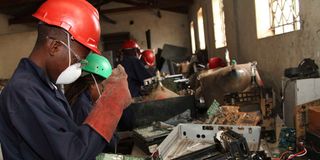
Staff at the Waste Electrical and Electronics Equipment Centre dismember a computer.
In most cases, discarded electronics do not enter formal recycling systems. Instead, they are absorbed into an informal network of collectors, traders and waste pickers who dismantle them for parts. The report warns that unsafe practices such as open burning and crude dismantling release dangerous substances into the environment.
“Dismantling devices and open burning cables… spew heavy metals and persistent organics into the air and soil,” the report states.
The movement of this waste across the city highlights deep inequalities. Electronics discarded in affluent neighbourhoods such as Karen and Lang’ata often end up in informal settlements like Korogocho, where they are stripped, resold or burned to extract valuable materials.
According to the policy brief, e-waste collected in Korogocho is sourced not only from local repair shops but also transported from wealthier parts of Nairobi. This creates a direct link between consumption in high-income areas and environmental degradation in low-income communities.
For residents of Korogocho, e-waste provides a source of income but comes at a heavy cost. The report notes that around 61 per cent of the respondents reported having experienced health issues from handling e-waste.
“At least 47.2 per cent reported having respiratory issues (such as breathing complications and chest pains), and 35.3 per cent reported having skin damage or infections. The rest is physical harm, such as muscle sores or muscle strains from handling heavy weights of e-waste and tetanus from metal cuts,” the study showed.
The report further reveals that Kenya’s e-waste problem is not only locally generated but also imported. Large volumes of used and near-end-of-life electronics are shipped into the country, often disguised as donations or second-hand goods.
“Much of the remaining e-waste is then shipped abroad… under the guise of ‘used electronics’…Kenya imports approximately 70% of its electronic equipment, much of which is near the end of its life and eventually becomes e-waste,” the report states, noting that Kenya has become a major destination for such imports.
These imports typically enter the country through key points such as the Port of Mombasa, Jomo Kenyatta International Airport, and border crossings, including Busia and Malaba. Once in the country, they are distributed through markets in Nairobi and other urban centres as affordable alternatives for low-income consumers. However, many of these devices are already obsolete or non-functional, meaning they quickly transition into waste.
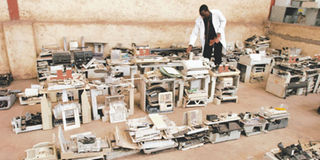
An e-waste recycling centre.
Nairobi serves as the main hub for this flow of electronics and e-waste, hosting both formal and informal recycling operations. From here, unusable electronics are channelled into informal settlements such as Korogocho and dumpsites like Dandora, where they are dismantled. Components that cannot be processed locally, such as lithium batteries and capacitors, are often stockpiled and later exported to countries with more advanced recycling capacity, including facilities in the United Arab Emirates.
The report attributes these imports to both global and local factors. Globally, high consumption of electronics in developed countries generates large volumes of waste, some of which is exported to Africa. Locally, demand for affordable electronics drives the importation of second-hand devices, even as weak enforcement allows non-functional equipment to slip through as “refurbished” goods.
To address the crisis, the report calls for full enforcement of Extended Producer Responsibility regulations, requiring manufacturers and importers to take responsibility for the lifecycle of their products. It also urges stricter monitoring of imports to ensure that only functional electronics enter the country, alongside stronger enforcement of international agreements governing hazardous waste.
Other recommendations include expanding e-waste collection infrastructure, integrating informal waste pickers into formal systems through training and protection, and promoting repair and reuse to extend the lifespan of electronic devices. Public awareness campaigns on safe disposal are also identified as critical in reducing the flow of waste into informal settlements.
“The e-waste crisis must be addressed with a new development model that centres on equity, justice and African leadership,” the report concludes, warning that failure to act will deepen environmental and health risks.
Follow our WhatsApp channel for breaking news updates and more stories like this.