Karura controversy: What the 15-billion-tree goal gets wrong
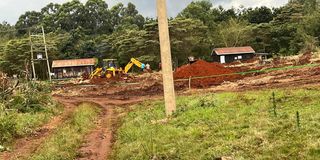
An excavator inside Karura Forest.

What you need to know:
- The Karura standoff illustrates the trade-off. Removing mature indigenous trees forfeits decades of ecosystem complexity and instant carbon storage that thousands of saplings cannot quickly repay.
- Their survival is uncertain, making such destruction a risky, potentially irreversible choice.
Kenya’s 15-billion-tree goal has sparked a debate about what truly constitutes a climate win. The recent outcry over the clearing of three acres in Karura Forest revealed a truth scientists have long warned about. While the government defended the move as necessary to support the national target of a 10-million-tree nursery, the incident served as a reminder that not all trees are equal.
Chasing planting targets can create a green illusion, suggesting each sapling offsets the destruction of a mature ecosystem. But simply putting any tree anywhere may cause harm. The right tree, in the right place, is essential.


The Karura standoff illustrates the trade-off. Removing mature indigenous trees forfeits decades of ecosystem complexity and instant carbon storage that thousands of saplings cannot quickly repay. Their survival is uncertain, making such destruction a risky, potentially irreversible choice.
For years, the shift from thirsty exotic monocultures like eucalyptus towards diverse indigenous species has restored forest resilience. Exotic plantations grow fast but often act as green deserts; sucking up groundwater and offering little support for native birds and pollinators. True climate action requires prioritising protection of old forests over mass planting. A forest’s value lies not in density, but in diversity and permanence.
Cutting trees to plant others is one problem. Planting the wrong type where none existed is another. When non-native species enter sensitive ecosystems like grasslands or peatlands, they can become invasive, choking out local flora.
Maggie Wangui, aspiring MP for Gilgil Constituency, points to a historical warning. In the 1970s, the shrub Prosopis juliflora, locally known as Mathenge, was introduced from Brazil to curb desertification. Today, it is an ecological catastrophe.
“That plant has become one of the greatest nightmares in northern Kenya,” Wangui says. “It has colonised the areas almost entirely, affecting pasture for livestock.”
Beyond destroying livelihoods, Mathenge exacerbates flooding by stifling native undergrowth that controls stormwater. Uprooting it has proven difficult, a reminder that well-intentioned planting can backfire.
In Kenya’s water-stressed landscapes, fast-growing exotic species are known as “thirsty trees.” Their roots transpire more water than native species. Planted near water towers, they mine groundwater, drying springs and lowering the water table. Their leaf litter can also be acidic, preventing undergrowth and leaving soil bare.
Adam Israel, national coordinator of the Green Army Presidential Flagship Programme, warns that introducing trees into the wrong ecosystems such as grasslands or wetlands leads to biodiversity loss and increased water stress. Good intentions, he notes, can undermine climate resilience.
As Kenya pursues its tree goal, Israel emphasises that protecting existing forests is more urgent than planting new ones. Mature forests store vast carbon and support complex ecosystems that saplings will take decades to replicate. A science-based approach must prioritise conservation above all.
Beyond biology, planting the right trees has a socio-economic dimension. When corporations or governments rely on tree planting as a primary climate solution, it often amounts to greenwashing: allowing high emitters to claim carbon neutrality without reducing emissions.
Wangui argues Kenyans must reclaim the narrative and move beyond donor-funded planting. “Tree planting should be a civic duty for all citizens,” she asserts. “Kenyans should start propagating seedlings of trees that naturally occur in the area where they live so that they restore biodiversity.”
Wangui is putting this into practice in Gilgil, incorporating climate clinics into colleges and public institutions. By planting indigenous species in schools and churches, she aims to shift from simple planting to informed restoration.
Israel advocates for this long-term thinking, insisting that a tree must match the local ecology and that “survival, not planting numbers, is what ultimately determines climate impact.”
Climate success depends not on how many trees we plant, but on how effectively we restore and protect ecosystems. Effective climate action demands proforestation—protecting existing forests—and deliberate planting of indigenous species. We must maximise carbon storage, biodiversity, and resilience by allowing trees to mature rather than prioritising new plantings. Selecting the right tree for each ecosystem is critical.