Fading jewel: The environmental crisis threatening Mfangano Island
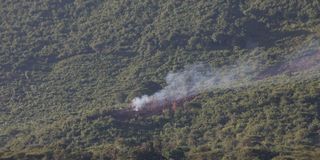
Charcoal burning on a hillside in Mfangano Island, Homa Bay County, on March 9, 2026. The practice, driven by a lack of access to clean cooking alternatives, is accelerating deforestation on the island and threatening its once-lush biodiversity.

What you need to know:
- The 2019 census recorded 24,123 people in 6,085 households on Mfangano. Today, the number is higher.
- In October 2022, the government made the island an administrative unit —Suba West Sub-county —covering Mfangano, Ringiti, Remba, and Takawiri islands.
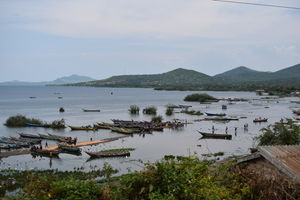
Mfangano Island in Lake Victoria is among Nyanza's finest tourism destinations: beautiful, serene, and culturally rich, with dramatic scenery of steep, forested hills rising over 300 metres, contrasted against sandy beaches, hidden coves, and crystal-clear waters.
But beneath the beauty lies an environmental threat that could rob the island of its allure.
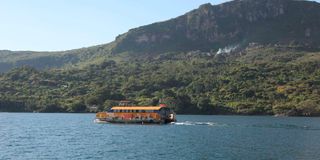
Mfangano Island in Homa Bay County on March 9, 2026. Authorities warn that the island is experiencing accelerated deforestation, driven by reliance on charcoal and firewood for cooking.
The island's remote location makes access to liquefied petroleum gas a major challenge. Electricity is unreliable: Kenya Power runs diesel generators that supply unstable power, often failing during bad weather. Most people use electricity in business areas, then switch to traditional fuels at home.
The most common sources, firewood and charcoal, are now threatening the island's biodiversity.
Across the 66-square-kilometre island, the main hill is covered with shrubs interspersed with patches of cleared ground where charcoal burning occurs daily. According to residents, this is not how the island looked three decades ago.
Also read: Lake Victoria islands gets a new sub-county
"There were only trails that people used to walk. Sometimes we would bend to avoid hitting low tree branches," recalls 63-year-old Jane Atieno. Night movement was unheard of. "When darkness fell, everyone rushed indoors. Those who hadn't reached home sought shelter at the nearest house."
Historians trace the Abasuba community's occupation of Mfangano to the mid-18th century, when they migrated from Uganda. For generations, the population remained sparse: transport challenges and lack of roads kept the island isolated.
That changed in 2012, when ferries were introduced, revolutionising transport between Mfangano and Mbita town. Vehicles and motorcycles followed. Suddenly, the island became accessible for leisure, for fishing, and for those seeking a permanent home.
The 2019 census recorded 24,123 people in 6,085 households on Mfangano. Today, the number is higher. In October 2022, the government made the island an administrative unit —Suba West Sub-county —covering Mfangano, Ringiti, Remba, and Takawiri islands.
Increased population has created pressure on resources. Trees are chopped down for charcoal, the primary fuel. Jane Atieno notes that trees on communal land are all gone, cleared for settlement and farming.
"It is now easy to travel to the island unlike before when people depended on canoes. But increased population makes the island suffer from environmental degradation as more fuel is used to prepare meals," she says.
Dr Mark Matunga, an IT expert and resident, says lack of investment in clean cooking threatens the island's trees as most families depend on charcoal and firewood. Some have even turned charcoal burning into a business, ferrying sacks to the mainland for sale. Areas once covered with natural forest have become barren land where smoke rises daily from makeshift kilns.
Dr Matunga believes families must embrace green, modern cooking methods that do not pollute. On March 7, he organised the second edition of the Victoria Run, a marathon around the island to raise funds for vulnerable children's education and awareness on environmental protection.
"Tourists in the island help create awareness on conservation and the need to protect the fragile lake ecosystem. The marathon encourages environmental protection. It also creates alternative employment for residents who solely rely on charcoal for income," he says.
Beyond logging, Mfangano faces other threats. In 2021, the island was hit by backflow from Lake Victoria, causing significant flooding of shorelines, submerging homes, and displacing communities. Intense rainfall and storms have disrupted agriculture. Environmental groups say the lake's ecosystem is under pressure from climate change, leading to loss of indigenous fish species and habitat disruption.
Also read: The forgotten island of Remba
Willis Omullo, an environmental activist, warns that unregulated sand harvesting and poorly managed dredging also threaten the islands. In February 2021, fishermen on Takawiri island protested when a dredger moved next to the beach and started scooping sand from the lake bottom without residents' approval. The exercise, they said, disrupted fish breeding grounds and decreased water quality by increasing suspended solids.
Omullo says fishermen must practice sustainability by using legal gears. "Some rogue individuals still use nets that contribute to the degradation of fishing grounds," he warns.
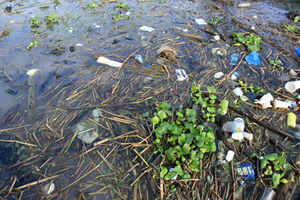
The lake also faces rising plastic pollution and untreated waste, which leads to eutrophication and harms aquatic life.
The government has taken note. Suba West Deputy County Commissioner Samson Akatch says his office holds a monthly tree-planting exercise to encourage environmental protection.
"We give out tree seedlings during public barazas every last Friday of the month. The islands face major deforestation as some people depend entirely on charcoal burning for their livelihood," the administrator says.
The problem is compounded by the islands' remote location. From Mbita Town, the journey to Mfangano takes at least an hour by boat, ferry, or water bus, a trip that is both expensive and risky when strong waves hit.
"Some families in the islands are not exposed to alternatives that could make life simpler," Akatch explains. "But things are changing. The government is in the process of building a ring road around the island to ease movement."
Despite these efforts, rogue loggers persist, chopping down trees under cover of darkness and turning them into charcoal.
Participants at the marathon called for more urgency in restoring the degraded environment. Susan Kobitu, a tourist, said she loved the island's greenery but was concerned that most areas are now covered only with shrubs.
"If the island is not well taken care of, it will turn into a green desert; shrubs growing without order. We need more trees here," she said.