Kenya mapping its soils to strengthen agri- food systems
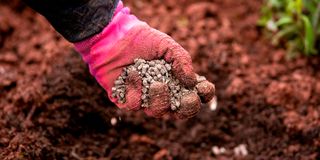
More than 40 per cent of soils across East Africa are degraded, and in Kenya the picture is worse.

What you need to know:
- In some of the country’s high-rainfall areas, soils have become so acidic that crops struggle to absorb nutrients even when farmers apply fertilisers.
Every harvest is taking something out of Kenya’s soils, and much of it is never returned.
Crop residues are removed to feed livestock, nutrients are depleted season after season and farmers apply fertilisers without knowing whether their soils can absorb them.
The result, soil doctors say, is declining soil fertility, lower crop yields and rising production costs.

In some of the country’s high-rainfall areas, soils have become so acidic that crops struggle to absorb nutrients even when farmers apply fertilisers.
In the drylands, water loss and salt accumulation are making the soil increasingly hostile to crop production, while low organic carbon is weakening soils across much of the country.
In an interview with Climate Action, Dr Caroline Kundu, soil scientist and the Centre Director at KALRO’s (KALRO) Kabete Centre noted that 63 per cent of soils in Kenya’s agricultural areas are acidic, while about 70 per cent of soils nationally have low organic carbon.
“These conditions affect the ability of crops to absorb nutrients,” Dr Kundu said, “ultimately reducing productivity and yields.”
The decline in soil fertility is affecting crop productivity and raising concerns about Kenya’s ability to sustain agricultural production, food supplies and farmers’ livelihoods.
“It undermines the productivity of agricultural land,” she explained, “at a time when farmers are already contending with unpredictable rainfall, prolonged droughts and other effects of climate change.”
Soil degradation is being driven by a combination of farming practices, the natural characteristics of Kenya’s soils and changing climatic conditions.
One of the main problems is nutrient mining, a process in which crops take up nutrients from the soil but the nutrients removed during harvesting are not adequately replenished.
Farmers are said to often remove nearly everything from their farms after harvesting, including the plant residues that could otherwise help restore soil organic matter.
“In maize farming, for instance, farmers harvest the cobs and remove the remaining stalks and leaves,” Dr Kundu explained, “leaving little crop residue on the field to decompose and replenish soil nutrients.”
The practice may provide livestock feed in the short term, but repeated removal of crop residues without replacing the lost organic matter gradually weakens the soil.
“That is an aspect of nutrient mining,” she noted.
Also read: http://nation.africa/kenya/health/biochar-a-game-changer-in-tackling-soil-acidity-4422540
The problem is compounded when farmers fail to return livestock manure to their fields or use other sources of organic matter to replenish the soil.
Organic carbon is particularly important because it helps sustain soil fertility and supports the processes through which crops absorb and use nutrients.
Without sufficient organic matter, applying mineral fertilisers alone may not deliver the expected improvement in crop growth.
“Farmers should retain some crop residues after harvesting or return manure to their fields to help maintain organic carbon levels,” Dr Kundu said.
In smallholder farming systems, however, crop residues often have competing uses, particularly as animal feed.
The removal of crop residues for livestock feed leaves farmers with less organic matter to replenish the soil, contributing to declining fertility over time.
According to Dr Kundu, Kenya’s soils also face different challenges depending on where they are found, making a uniform approach to fertiliser use and soil management inadequate.
The country has about seven agroecological zones, each with different soil conditions, rainfall patterns and agricultural needs.
In high-rainfall areas, including parts of western Kenya, Kakamega and Kericho, soil acidity is a major concern. Kundu says that some pockets of central parts of Kenya are also affected.
According to soil doctors, heavy rainfall washes basic cations, which are positively charged nutrients such as calcium, magnesium and potassium, out of the soil.
As these nutrients are lost, the soil becomes more acidic, affecting the availability of nutrients required for crop growth.
“Soils in these areas can have a pH below five,” Dr Kundu explained, “a level at which many crops struggle to take up essential nutrients.”
The consequence is that farmers may spend money on fertilisers without obtaining the expected yields because the soil conditions limit how effectively plants can use the nutrients supplied.
“When we grow crops, then the crops are stunted.” She said. “They don’t grow much because they are not able to absorb whatever nutrients that the farmers are applying in terms of fertilisers,”
The arid and semi-arid lands receive relatively little rainfall, while high evaporation rates remove moisture from the soil.
As the soil dries, salts can accumulate near the surface, sometimes forming crusts that further interfere with crop growth.
“The pH in these areas can rise above seven,” Dr Kundu said, “increasing the concentration or reducing the availability of certain elements needed by crops.”
Most crops are noted to perform best within a relatively narrow soil pH range, although the precise requirement varies by crop and soil conditions.
“When the soil becomes too acidic or too alkaline, nutrient uptake can be restricted even where nutrients are present,” she noted.
Climate change is intensifying these pressures through drought, excessive rainfall and erosion, further complicating efforts to maintain productive farmland.
Dr Kundu explains that the damage is already being felt through declining agricultural productivity and the rising cost of producing food.
Farmers may have to spend more on inputs while harvesting less, while pastoral and livestock-dependent communities face shortages of animal feed when degraded land can no longer sustain sufficient vegetation.
“The decline in crop productivity is among the clearest indicators that soils are deteriorating,” she said.
Dr Kundu points to maize production in parts of Kenya’s traditional food-producing areas, where poor performance reflects a combination of climatic conditions, nutrient depletion and farming practices.
She further adds that agricultural production around Lake Victoria, where cotton was once grown more widely and in rice-growing areas such as Ahero and West Kano.
“Changes in the crops farmers grow cannot be attributed to soil degradation alone.” She explained. “There are also economic factors and other opportunities that influence their decisions to shift to different value chains.”
Still, the deterioration of soil fertility raises questions about whether farmers have sufficient information to determine which crops their land can support and which interventions would improve productivity.
For years, fertiliser subsidies and other agricultural support measures have sought to improve production by making farm inputs more accessible.
However, Dr Kundu says that farmers who apply fertilisers without understanding their soil conditions risk using the wrong products or aggravating existing problems.
“If the farmers don’t have the information or the know-how that they need to have their soils tested so that they know which type of inputs to use,” she emphasized, “it’s still making the soils to be a bit problematic.”
Some inorganic fertilisers can contribute to soil acidification, depending on their composition, application rates and how they are used.
“Without soil testing and appropriate nutrient management,” Dr Kundu urged, “repeated application can therefore fail to address the underlying problem.”
Kenya, however, is said to have made progress in mapping its soils.
Dr Kundu says that 45 of the country’s 47 counties have undergone soil mapping through initiatives supported by different partners, including the World Bank and the Food and Agriculture Organization (FAO).
“Nairobi and Mombasa were left out of the mapping exercise,” she explained, “because they are major urban centres where extensive development has altered much of the land.”
The mapping provides information about soil characteristics, helping identify areas where particular crops are likely to perform well and where specific soil management interventions may be required.
“Such information helps the governments make more informed decisions,” she said, “about fertiliser subsidies, agricultural investment and the crops promoted in different regions.”
She further added that the information also supports county governments in advising farmers at ward level, where decisions about planting, fertiliser application and land management are ultimately made.
However, mapping the soil is not the same as ensuring that farmers can use the information.
“Soil mapping is a continuing exercise because it is difficult to sample every farm,” she said, “given the resources required to collect samples, analyse them and update the resulting information.”
Kenya is among seven countries where soil mapping exercises are being carried out to support the development of more resilient agri-food systems.
The initiative also covers Ghana, Tunisia, Mozambique and Zambia in Africa, as well as Guatemala and Honduras in Central America.
Out of the targeted 40,000 soil samples across the seven countries, Kenya has collected more than 3,600, with trained technicians and field teams carrying out the exercise across the study area.
Nora Berrahmouni, the Deputy Director of the Land and Water Division at the Food and Agriculture Organization of the United Nations (FAO) told Climate Action that the analysis will determine which crops are best suited to different soils, identify nutrient deficiencies, and guide farmers on the type, quantity and timing of fertiliser application.
“In order to manage your farm, your field, your soils, your land, you need data.” Ms Berrahmouni emphasized. “You need to understand what your soil actually needs like its condition, health and the nutrients it contains.”
Mutahi Kagwe, Cabinet Secretary for Agriculture and Livestock Development, said soil mapping would help farmers make informed decisions about the inputs their land needs.
“For a hundred years we have asked our soils what they can give us,” he said.
He believes that fertiliser subsidies should be guided by soil testing to ensure farmers receive inputs suited to their land.
“Subsidy without a soil test is sympathy. It is not strategy,” he said.