Alarm as circumcision seclusion forces hundreds of Tiaty boys out of school
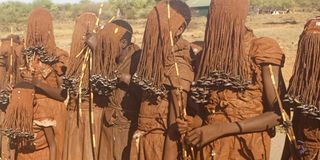
Initiates take a walk at Chesirimion, Tiaty East on January 20, 2026. Hundreds of boys in Tiaty who underwent circumcision during the festivities are still secluded, including schoolchildren who have not yet returned to school this term.

Hundreds of schoolboys in Tiaty, Baringo County, remain out of school for more than two weeks after the first term reopened, as they continue seclusion following circumcision rites conducted during the festive season.
Head teachers have warned that prolonged absence is paralysing learning, amid fears that some pupils may not return and concerns over a looming drop in enrolment, especially for boys in higher grades who may struggle to catch up.
Among the affected schools are Kreze, Sukut, Katagh, Ptikii, Ng’oron, Korelach, Nalekat, Donyasas, Nakoko, Lorwatum, Cheseret, Domo, Chesirimion, Riong’o, Naudo, Akwichatis, and Nasorot. The gap in school attendance has disrupted teaching, particularly in classes with higher numbers of boys.


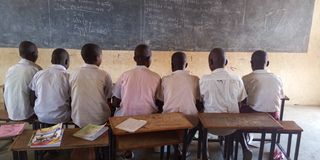
Grade seven girls in class at Korelach Comprehensive School in Kolowa Sub-County in Tiaty on January 20, 2026. Four boys in the junior school class have not yet reported this term. Hundreds of boys in Tiaty are still out of school thanks to the practice of circumcision, which keeps them in seclusion.
At Domo Primary School in the newly created Kolowa Sub-County, 15 boys from grades four to nine have not reported to school.
“We are informed that boys from the community, including those enrolled in school, underwent circumcision during the festive season and are still in seclusion. More than 15 boys have not returned, and we do not know when they will,” head teacher Charles Chesire said.
He said that according to Pokot tradition, initiates are expected to remain in seclusion for more than three months following circumcision.
He urged local authorities to make follow-ups because learning has already resumed.
“We appeal to parents to ensure that if the cultural ceremony is mandatory, it should be conducted during school holidays so that children can return when schools reopen. It is very disappointing for children to miss school because of cultural practices,” he said.
At Donyasas Primary School in Tiaty Central, nine boys have yet to report to class. Head teacher Mathew Chesire said the boys, mainly in grades four to ten, are still undergoing the initiation process.
“We hope the chiefs will follow up on the matter and ensure that the learners are accounted for because some have been in seclusion since undergoing the rite of passage two months ago,” he said.
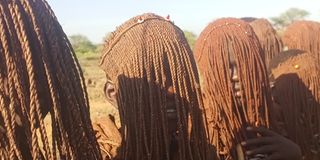
Initiates take a walk at Chesirimion, Tiaty East on January 20, 2026. Hundreds of boys in Tiaty who underwent circumcision during the festivities are still secluded, including schoolchildren who have not yet returned to school this term.
Korelach Primary School is also grappling with low attendance. Out of more than 120 learners, only 88 have reported, with 18 boys still absent due to the ceremony.
Head teacher Cliophas Lotuliangiro said he plans to convene a meeting with chiefs, parents, and the school committee to address the situation and sensitise the community on the importance of education.
“In remote areas, traditional cultural practices are still widely observed, and due to high illiteracy levels, there is a need to educate the community on why children must attend school. If the rite of passage is mandatory, it should not take place when schools are open, because it disrupts learning,” he said.
Mr Lotuliangiro said while the cultural practice is important to the community, it must be balanced with education.
“If the initiation ceremony is mandatory, it should not coincide with the school term, otherwise we risk losing learners permanently,” he said.
Elder Yuda Losutan explained the historical context of the rite of passage. He said that in the past, initiation ceremonies lasted three to four months and were only conducted for boys aged 16 and above.
“Things have changed over the years. Nowadays, even boys below ten years are initiated, which affects their schooling because they can spend more than three months in seclusion,” Mr Losutan said.
He added, “If possible, locals should take their boys for such ceremonies only during school holidays so that they do not interfere with learning. Culture and education do not go hand in hand. The administration should sensitise the community because school dropouts often lead to problems such as cattle rustling and banditry, which are common in pastoralist communities,” he stated.
Authorities are, however, taking steps to ensure children return to school. Tiaty Central Deputy County Commissioner Aaron Omaset said he is conducting spot checks in schools to track learners who have not reported.
“I don’t have the exact number of boys still out of school, but I am doing a mop-up in the villages to ensure that all children, including those who underwent the rite of passage, are in school,” he said.
Kolowa Sub-County Deputy County Commissioner, Mr Edward Karanja, confirmed that all 21 seclusion centres had been closed after the festive season. He said he would gather detailed enrolment data during an education stakeholders’ meeting in Kolowa, involving head teachers and curriculum support officers.
“No learner should remain out of school now that the seclusion centres have closed,” he said.
Elder Losutan said modernity has changed the timing and age of initiation, and communities must find a way to uphold cultural rites without interfering with the education of children.
“Otherwise, the social cost will be high,” he warned.
Follow our WhatsApp channel for breaking news updates and more stories like this.