Tom Kebia was last week invited to entertain guests at an event in Magunga Township, Suba South Sub-County.
He is a singer and the leader of a dance group that uses traditional folk songs to entertain people.
Normally, the group is called to meetings, mostly within the Suba region, where they showcase their artistic and musical skills.
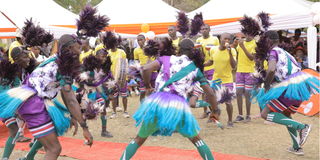
Suba Young Cultural Dancers during an event at Suba South sub-county headquarters in Magunga, Homa Bay County on September 13, 2025. The group uses dance and music to promote Abasuba culture.
Photo credit: George Odiwuor | Nation
Based on the nature of each gathering, the team composes songs that suit the occasion.
This is exactly what Kebia did before travelling to Magunga with his team, hopeful of delivering an excellent performance.
But when their turn on stage came, the entire meeting burst into laughter during the group’s introduction:
"Omukanagthi omukoro Avakangathi ve World Vision Abatho voona varia vecheri ano kumaa Amayo aga Avasuba Nuvio vuno rero Vono henga," they said.
It turned out that only a few people understood what the 16-member Suba Young Cultural Dancers were saying: They were simply introducing themselves.
What they said translates to: “Guest of honour and distinguished guests from World Vision, these are the Suba dancers. We welcome all participants in this meeting and residents who have come to witness the dance of the Suba.”
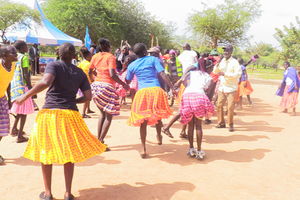
Suba Young Cultural Dancers during an event at Suba South sub-county headquarters in Magunga, Homa Bay County on September 13, 2025. The group uses dance and music to promote Abasuba culture.
Photo credit: George Odiwuor | Nation
Unlike other traditional dance groups that switch between English, Swahili, and their native languages, Kebia’s troupe insists on performing entirely in Olusuba—the endangered language of the Abasuba community.
Olusuba, also known as Ekisuba, is spoken by very few people today, mostly elders. Younger generations struggle with it, often left puzzled when it is used in public performances.
The language is considered endangered, with elders fearing that it could disappear within a few generations if no action is taken.
The Suba are Bantu speakers who migrated to islands of Lake Victoria such as Mfangano, Rusinga and Takawiri, as well as parts of Gembe, Gwassi, and Kasgunga. Over time, surrounded by the Nilotic Luo community, they were assimilated, leading to the decline of their language.
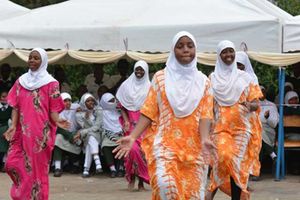
Suba Young Cultural Dancers during an event at Suba South sub-county headquarters in Magunga, Homa Bay County on September 13, 2025. The group uses dance and music to promote Abasuba culture.
Photo credit: George Odiwuor | Nation
Abednego Odiembo, the Suba Council of Elders spiritual leader, explains that intermarriage accelerated the shift. “They are our neighbours and we mingled. That led to marriage and later influenced the language,” he says.
Odiembo said that Luo women who married into the Suba community often taught their children Dholuo first as mothers spent more time with the children than fathers did.
Assimilation was further reinforced through formal education. In the 1980s and 1990s, many teachers posted to Suba schools were Luo, which exposed children to Dholuo at school.
“There was a time when whoever spoke Olusuba was considered primitive. Parents encouraged their children to speak Dholuo to avoid stigma. Dholuo was seen as modern,” Mr Odiembo recalls.
Religion also contributed. Missionaries from the Catholic Church and Seventh Day Adventist Church used Luo Christians to spread the gospel, teaching and preaching in Dholuo.
To counter this decline, Kebia founded the Suba Young Cultural Dancers in 2023, using music and dance to revive interest in Olusuba.
Every weekend, the group gathers at Kisaku trading centre in Gwassi to practice dances and songs once sung by their forefathers. Elders join these sessions, guiding the group in composing songs and teaching oral literature, including poems, riddles, and narratives.
“Younger generations learn faster through song and dance than by reading books. We chose this method because it’s easier to master and pass on themes,” Kebia explains.
Suba Young Cultural Dancers during an event at Suba South sub-county headquarters in Magunga, Homa Bay County on September 13, 2025. The group uses dance and music to promote Abasuba culture.
Photo credit: George Odiwuor | Nation
During performances, the group wears owalo (sisal skirts), plays tung (horns), drums, and is working to revive the use of animal skins as traditional clothing.
Group member George Amolo says he focuses on pronunciation and tone to ensure the songs remain true to Olusuba. “During performances, we want to instil the language in the younger generation,” he says.
The group’s efforts complement other community initiatives to save Olusuba. These include annual cultural events, the establishment of Ekialo Kiona (EK FM)—a community radio station in Mfangano broadcasting in Olusuba—and the translation of the New Testament into Olusuba, with work ongoing on the Old Testament.
Prominent Suba figures such as businessman Sammy Wakiaga, Treasury Cabinet Secretary John Mbadi, Minority Leader Millie Odhiambo and lawyer Silas Jakakimba have also backed preservation efforts.
Suba Elders coordinator Joab Ikawa says that some members are engaging Unesco to support the revival of the language, while others are using social media to teach it.
Suba Young Cultural Dancers during an event at Suba South sub-county headquarters in Magunga, Homa Bay County on September 13, 2025. The group uses dance and music to promote Abasuba culture.
Photo credit: George Odiwuor | Nation
Mr Odiembo adds that government recognition has also boosted their identity: “We now have administrative units named after us—Suba West, Suba Central, and Suba South sub-counties.”
For Kebia, the song and dance is more than entertainment; it is a form of cultural preservation. “Most of our people have adopted Luo customs. We lacked a way of displaying our own culture, and that is where our dance group comes in,” he says.
Though the impact may not be immediate, he believes the seeds being planted today will keep Olusuba alive for generations to come.