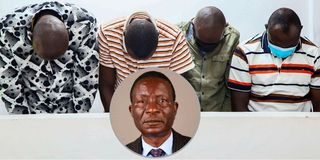
Three suspects charged with the fatal shooting of former Kasipul MP Charles Ong’ondo Were have been linked to an organised criminal gang in Homabay known as “Kabreeze", though they denied and said it was a registered social welfare group.
According to the prosecution, the group is known for violence and intimidation and that Were's brother, Mr Paul Were, had reported receiving threats from a sibling of one of the suspects.
At the same time, it has emerged that certain key prosecution witnesses, including friends and relatives of the accused persons, have been placed under the State's Witness Protection Agency after expressing fear for their safety.
These are some of the factors that have moved the trial court in Kibera Nairobi, to deny the suspects bail, stating that the nature of the allegations and the vulnerability of the protected witnesses could not be taken lightly.
The suspects, William Imoli Shighali alias Imo, Edwin Oduor Odhiambo alias Machuani and Ebel Ochieng alias Dave Calo wanted to be released on bond terms pending the determination of the case.
Suspects (handcuffed) linked to the murder of Kasipul MP Ong'ondo Were's at JKIA Law Court on May 9, 2025.
Photo credit: Wilfred Nyangaresi | Nation Media Group
The defence lawyers argued that the issue of bail besides being a Constitutional right, they were not flight risks and had cooperated with police during arrest.
They stated that the pre-bail reports relied upon information supplied by a police officer who was related to the late MP, thereby giving rise to a conflict of interest.
They disputed claims that they were unfamiliar with their rural homes, which the Prosecution alleged to be indicative of a likelihood to abscond bail.
Welfare group or criminal gang?
The suspects further denied membership in the alleged "Kabreeze" gang and informed the court that it was a registered welfare group.
While the prosecution alleges the group is a criminal gang and the suspects claim it is a registered welfare organization, the court could not immediately verify the counterclaims.
However, Justice Diana Kavedza said the Prosecution's allegations coupled with a verbal threat made by one of the suspects to a State prosecutor inside the courtroom, constituted compelling reasons to deny the accused bail pending trial.
"The combination of alleged gang affiliation, the political sensitivities surrounding the killing, and the prevailing risk to public safety constitutes compelling reasons for denial of bail.
"Less restrictive measures, such as stringent bond terms, would not adequately address the risk of witness intimidation, community unrest, and erosion of public trust," said Justice Kavedza.
The judge added that the fear the alleged criminal gang generated in the community was material to the court’s assessment.
According to the court, granting bail to individuals perceived to be part of an organised criminal network could aggravate community tensions, expose potential witnesses to retaliation, and undermine the public’s sense of safety.
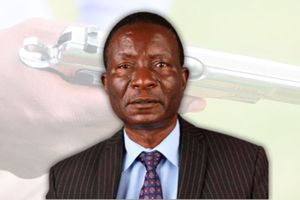
Kasipul MP Charles Ong’ondo Were was gunned down by a motorcycle assassin near Nairobi Funeral Home, minutes after leaving Parliament.
Photo credit: Pool
The information provided to the court alleges that they committed the offence jointly with others not before the court.
The prosecution said the murder weapon was recovered from the residence of Mr Odhiambo and that mobile phones allegedly used in the coordination of the offence had also been seized. The court heard that the former MP's murder was coordinated.
'Threats and intimidation'
In regard to threats to a prosecution counsel inside the courtroom, the judge said such conduct was a brazen affront to the authority of the court and the sanctity of judicial proceedings.
"The open issuance of death threats in a courtroom, a forum that ought to epitomise the rule of law and the protection of rights, is a most egregious manifestation of contempt for the judicial process.
"It reveals a calculated and malicious intent to instil fear and to potentially cause physical harm to any person perceived as standing in the way of the accused’s release or eventual acquittal," said Justice Kavedza.
"This is not mere posturing; it is an overt threat, made in a setting where its chilling effect could not be lost on witnesses, court officers, or the public".
The court also noted the prosecution's contention that some witnesses were relatives and close acquaintances of the accused persons.
According to the court, placement of key witnesses under the Witness Protection Agency was itself indicative of the seriousness of the threat perceived.
"It is not in dispute that some of the accused persons and the witnesses share social ties, hence creating both opportunity and means of interference," the court said.
"Moreover, the gravity of the charge, coupled with the relationship between the parties, increases the likelihood of such interference, particularly where it has been deponed on oath that the offence was committed through an organised and coordinated manner," it added.
Additionally, the court referred to the behaviour of the accused persons from when they were arraigned. The court said it had noted their impatience, audible sighs, and gasps whenever a decision was made to remand them.
"It also demonstrates a lack of composure expected of persons facing such grave charges, where the administration of justice demands patience, respect, and restraint.
"The wheels of justice inevitably take time to turn, and an accused person’s demeanour is a relevant consideration when assessing whether they are likely to comply with court orders and respect the process if released," said Justice Kavedza.
5 suspects linked to the murder of Kasipul MP Charles Were appear in court
Another reason for denying them bail was that the grief, anger, and shock was still palpable in Kasipul.
"Were was not only a sitting Member of Parliament but a prominent public figure, and his killing on a public road is an extraordinary and troubling occurrence in our democratic society. Such an incident, committed in a vicious manner, has drawn intense national attention and scrutiny," said the judge.
"Courts are not isolated entities; they are influenced by societal values, norms and changes, and in turn, their decisions and interpretation of the law impacts the society".
It was the court's finding that releasing the suspects may not only risk provoking significant public outrage, but, may also undermine confidence in the criminal justice system, hence creating a perception of judicial detachment and indifference to the gravity of the offence.
Defence lawyers maintained that the prosecution had not shown any specific acts indicating intent of the accused persons to abscond.
The defence submitted that the purpose of bail is to secure attendance at trial, not to punish or undermine the presumption of innocence.
They challenged the investigating officer’s affidavit for lacking evidential and legal basis and maintained that no witness had sworn an affidavit alleging intimidation.