In North Rift Kenya, fortunes built over lifetimes are now tearing families apart, as bitter inheritance battles erupt over disputed Wills and fractured loyalties.
Behind the gates of grand estates in the region, family ties are unravelling fast, triggered by handwritten Wills, contested inheritances, and the promise of untold wealth.
As the founding generation fades away, what often begins with a funeral can end in protracted legal battles in court. Children and, more often than not, wives of wealthy and prominent families battle for legacies worth billions, deepening family rifts in the process.
This week, the High Court in Eldoret declared null and void a contested Will allegedly authored by the colonial-era paramount Chief Kibor Arap Talai, whose estate, valued at over Sh3 billion, has been the subject of a legal dispute for more than 20 years.
The court’s ruling has thrown the late chief’s family into disarray, especially among members who had hoped the Will would resolve long-standing questions over the estate’s distribution.
With the Will now invalidated, the division of assets will require a fresh agreement among all beneficiaries.
This is not an isolated case. The bitter feud engulfing the Chief Talai family mirrors a growing trend in the North Rift region, where multimillion- and billion-shilling estates are increasingly becoming battlegrounds, and a common source of anguish among wealthy families left behind.
At the heart of many of these conflicts are Wills that are contested, allegedly forged, or unevenly favour certain heirs.
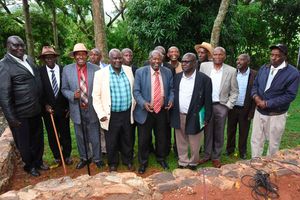
Fortunes built over lifetimes are now tearing families apart, as bitter inheritance battles erupt over disputed Wills and fractured loyalties.
Photo credit: Pool
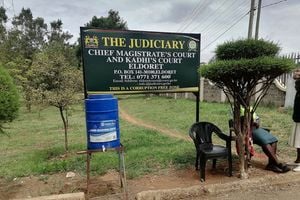
Courts in the region are now tasked not only with verifying documents but also with navigating family emotions, mistrust, and claims of betrayal, and ensuring that legacies are honoured fairly even when families fall apart.
Behind the courtroom doors and the family home, the fight for legacy and justice tears at bonds once thought unbreakable.
Chief Talai died on August 2, 2012. He had two wives: his first, Tapyotin Kibor, whom he married in 1947 and had five children with, and his second wife, Irene, who is at the centre of the contested Will and has three children.
His vast estate, spread across Uasin Gishu and Elgeyo Marakwet counties, includes large tracts of agricultural land, commercial properties, vehicles, farm equipment, and significant financial assets.
While delivering his judgment, Justice Reuben Nyakundi declared the Will, dated February 13, 2006, null and void after a forensic analysis. The decision was based on a forensic document examiner’s report submitted on November 24, 2025, which concluded that the signatures on the Will did not match verified samples of the deceased’s handwriting.
The case was originally filed by Talai’s first wife, who passed away six years ago. She had challenged the authenticity of the Will, claiming it was used by her co-wife Irene to unfairly claim a larger share of the estate. She requested the court to subject the document to forensic analysis at the DCI headquarters in Nairobi, alleging it was a forgery.
Following her death, her daughter Nancy Talai took over the case. During proceedings, Nancy told the court that her father had been a teacher before becoming a paramount chief, and that her mother worked as a cook at the same college in Elgeyo Marakwet where her father taught.
Ms Irene Talai, however, maintained that the Will was valid and opposed the forensic examination, claiming it was an attempt to rob her of her rightful inheritance.
According to Ms Irene, her husband was of sound mind when he instructed how his estate should be distributed.
“The deceased gifted me the prime land near Moi University, on which stand several commercial business premises, before he died. There is no way I will share it with he first wife,” she said during court proceedings.
With the Will now invalidated, Justice Nyakundi directed all parties involved to file comprehensive proposals for how the estate should be distributed among the beneficiaries. The matter was mentioned on October 2, 2025, to confirm compliance and issue further directions.
Pattern of wealth, wills, and wars
Not far away, the family of the late Uasin Gishu tycoon Francis Kipkoech Cheptoo Kimoso remains embroiled in a bitter inheritance battle that has stalled the burial of his son, Luka Kimoso, for nine months.
Luka's body has remained at Iten Hospital Mortuary since January 2025, with the burial halted due to a dispute over the family's contested Sh1.5 billion estates. His brother, Mr Morris Kimoso, moved to court in January, objecting to his burial on a land in Karuna Meibek, where Luka had lived for 13 years, claiming it was not allocated to him under their father’s Will.
The Will, reportedly drafted while their father was unwell and bedridden, is being challenged in court by some family members, led by eldest daughter Margaret Kimoso, who allege that it excludes eight rightful beneficiaries.
The dispute has deepened divisions within the family, with allegations of disinheritance, involvement of armed police during the Will’s reading, with the family insisting that Luka’s burial would not proceed until the court determines the authenticity of the contested Will.
With no agreement in sight and emotions running high, the dispute has not only delayed the burial of the Kimoso sibling but also exposed the deep fractures within one of the region’s most prominent families.
The Murgor family dispute
In yet another bitter inheritance feud, the family of former Kerio Central MP William Murgor has faced a similar legal storm.
His son, Dr James Murgor, the former MP for Keiyo North, was accused of forging a Will and a power of attorney to take control of a Sh2 billion estate.
Other family members, led by Ms Enid Murgor, the late MP’s daughter, filed a petition in the High Court claiming they had been excluded from the inheritance through fraudulent documents.
A forensic expert testified that some of the documents used in the estate’s division, including the Will, were indeed forged.
Lawyer Philip Murgor, a cousin of James, represented a section of the family and directly questioned the validity of the disputed documents.
In January 2025, the court ruled that the Will was invalid and ordered James Murgor to share the estate equally with all 35 beneficiaries.
The late William Murgor, who died on September 28, 2006, was survived by five widows – Ms Soti Murgor, Ms Rosa Kimoi Murgor, Ms Rosaline Murgor, Ms Anne Murgor and Ms Philemona Murgor – and their children.
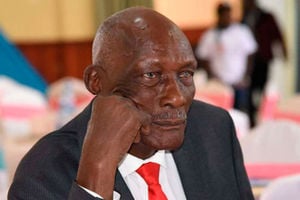
The late Jackson Kibor.
Photo credit: File | Nation Media Group
The Jackson Kibor contested legacy
In yet another ongoing case, the family of the late Jackson Kibor, a well-known Eldoret farmer and politician, is locked in a fierce legal battle over a Will that outlines how his Sh16 billion estate should be distributed.
Mr Kibor’s Will, released to the family in 2023, named his fourth wife, Ms Eunita Kibor, and lawyer Mr Jonah Korir as executors. Ms Eunita moved to the High Court to have the Will officially adopted.
However, other widows, sons, and daughters objected, questioning its legality and fairness.
Court records show that 27 family members filed objections. The hearing is scheduled to continue on November 17, 2025. Mr Kibor died on March 16, 2022 , at the age of 88.
These cases reveal a deepening crisis in succession and estate management among wealthy families in the North Rift, where old money, family secrets, and disputed Wills are fuelling court battles years after the tycoons have died.
As the first generation of post-colonial tycoons passes on, disputes over land, power, and money have replaced family unity with legal warfare.