On Tuesday, the Cabinet ratified the handover of Amboseli National Park to the County Government of Kajiado, marking a step closer to enabling communities living within the Amboseli circuit to reap more benefits, with the county eyeing millions in revenue.
In August 2023, while touring the Maasai Mara, President William Ruto backed the handover of the park on a 50:50 revenue-sharing basis between the county and the Kenya Wildlife Service (KWS), following a petition by the Maasai community.
On Tuesday, the Cabinet also approved the National Treasury's compensation of the Kenya Wildlife Service for any revenue losses, while ensuring that a portion of the park's income continues to be allocated to national conservation efforts. This is intended to empower local communities, promote sustainable stewardship and ensure the equitable sharing of ecological and economic benefits.
Once finalised, a phased co-management model will be introduced, under which Kajiado County will assume operational control, while KWS retains national conservation responsibilities. Revenue will be shared between the county and KWS on a 50:50 basis. The devolved unit is expecting to generate at least Sh700 million in revenue annually, providing a much-needed boost for development projects. KWS currently generates at least Sh1.5 billion annually from park fees and related tourism activities.
Kajiado Governor Joseph Ole Lenku, the public face of the Amboseli takeover, is optimistic that the final handover will have a significant economic impact on his administration and the local population.
“The Maa people have co-existed with wildlife for years. With management of the park bestowed on the county government, they are assured of more economic benefits and more job opportunities for our youths. We expect more revenues to fast-track our development agenda,” said Governor Lenku.
He says that his administration plans to increase park revenues from Sh1.5 billion to Sh3 billion during his remaining time in office. He is currently serving his final term.
John Teum, a 52-year-old resident of Kimana, which lies within the Amboseli ecosystem's wildlife migratory route, said that residents are hopeful that the county will triple the bursary allocation for needy learners.
According to Mr Teum, the seven group ranches have been receiving Sh21 million annually from KWS for the learners' bursary fund.
"Despite the high collections by KWS, we only receive Sh21 million annually. Some ranches, including Olgulului-Olalashi, get the lion’s share of the money. Needy learners end up getting as little as Sh3,000 annually. That’s peanuts. We expect the bursary kitty to grow significantly under county management,” said Mr Teum.
He also mentioned that the community expects more job opportunities, particularly as rangers in the park, as currently only a small proportion of the local population is employed. Now that the park is under local management, the community will be rooting for one of their own to take charge.
"Our people have vast experience co-existing with animals, but few are employed by KWS. We expect the county to manage the park professionally and create more jobs for our people,” he added.
Some locals want the county government to hold public forums to educate the community about the importance of wildlife conservation, and to implement measures to reduce the expectation that they will be permitted to graze their animals in the park.
"After the President gave the directive in 2023, we saw herders sneak into the park in droves to graze their animals. Under KWS watch, this was not possible. It might be a tall order for the county to convince herders to keep their animals away from the park. No tourist will visit any park to see livestock,” said a local resident, who requested anonymity due to the sensitivity of the matter.
Over the years, the local community had lost its sense of ownership of the park, prompting retaliatory attacks on animals. Amboseli depends on community land for 90 percent of its area and is surrounded by more than 15 private wildlife sanctuaries.
"The move to hand over the park to the county government will restore a sense of ownership to the local community. They will feel they own and benefit from the wildlife, hence protecting it instead of killing it,” said George Kimiti, a Loitoktok resident.
“Amboseli is the heartbeat of conservation within the Amboseli wildlife circuit. We hope the county government will establish new, humane mechanisms to resolve human-wildlife conflicts and set aside some funds to compensate locals for migration corridors on their private land.”
Others poised to benefit include traders of Kajiado beadwork and artefacts, who hope that the county government will set up cultural centres in strategic locations within and outside the park.
"We expect the county government to promote Maa artefacts and beadwork by setting up modern ushanga curio malls in strategic points within the Amboseli wildlife circuit," said Ms Mary Sonko from Loitoktok.
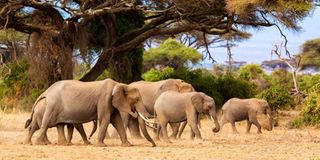
Amboseli National Park is located in Kajiado South Sub-county. It is known for its large elephant herds and panoramic views of Mount Kilimanjaro. It pays homage to the Big Four and boasts the largest herd of elephants in the country. It is the second most popular park in Kenya after the Maasai Mara, occupying 392 square kilometres. Amboseli comes from a Maasai word, empusel , meaning a ‘salty, dusty place’.