Why impact investing should be thriving: A case of Amboseli National Park
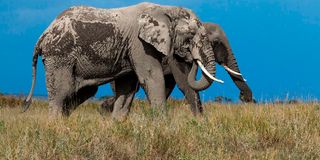
Elephants graze at the Amboseli National Park in Kajiado County, Kenya, April 4, 2024.
What you need to know:
- Amboseli National Park spans over 390 square kilometers and is one of the most biodiverse areas in East Africa.
- Known for its free-ranging elephants, breathtaking landscapes, and the backdrop of Mount Kilimanjaro, Amboseli is a Unesco biosphere reserve and a cornerstone of Kenya's tourism economy.
In the 21st century, the purpose of investing is being redefined. Investors are no longer simply chasing profits; they’re increasingly seeking to create meaningful change while earning returns.
This growing movement, known as impact investing, is taking root in areas where social needs, environmental conservation, and economic development intersect. One of the most compelling cases for impact investment in Africa lies at the foot of Mount Kilimanjaro, in Amboseli National Park, Kenya.
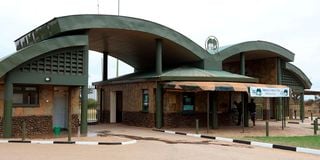
The entrance to Amboseli National Park.
This ecologically rich but vulnerable region offers a living laboratory for testing how private capital, public interest, and environmental sustainability can merge to create shared value. As the world faces the triple crises of climate change, biodiversity loss, and social inequality, Amboseli calls on impact investors to act boldly, urgently and collectively.
What is impact investing?
Impact investing is defined by the Global Impact Investing Network (GIIN) as “investments made with the intention to generate positive, measurable social and environmental impact alongside a financial return.” It is a proactive strategy that channels capital into businesses, projects, and funds that directly address issues such as:
•Climate change mitigation
•Access to healthcare or education
•Sustainable agriculture
•Biodiversity protection
•Gender equity and community development
The key features of impact investing include:
•Intentionality – The investor aims to create social/environmental impact.
•Return expectation – Financial return is pursued, ranging from below-market to market-rate.
•Measurability – The impact created is tracked, evaluated and reported.
Unlike traditional investing, which often treats social and environmental issues as externalities, impact investing integrates these concerns into the core investment thesis.
Amboseli National Park: Why it matters
Amboseli National Park spans over 390 square kilometers and is one of the most biodiverse areas in East Africa. Known for its free-ranging elephants, breathtaking landscapes, and the backdrop of Mount Kilimanjaro, Amboseli is a Unesco biosphere reserve and a cornerstone of Kenya's tourism economy.
However, this natural jewel is under threat. The region faces:
•Climate volatility and erratic rainfall patterns
•Increasing human-wildlife conflict
•Overgrazing and habitat degradation
•Unemployment and rural poverty
•Youth disenfranchisement
Traditional donor funding and conservation models are struggling to keep pace with these evolving threats. What Amboseli needs now is a model that goes beyond charity, a sustainable capital injection that empowers communities, protects the ecosystem, and supports resilient livelihoods. This is precisely where impact investing comes in.
How impact investing can transform Amboseli
1. Eco-tourism and sustainable enterprises
Tourism remains a major economic driver, but community participation is often minimal. Impact investors can support the development of community-owned lodges, safari operations, and cultural heritage experiences. These initiatives generate income, promote environmental stewardship, and create employment opportunities, especially for youth and women.
2. Nature-based solutions and biodiversity protection
Investors can fund the restoration of degraded lands, wildlife corridors, and sustainable grazing zones. Technologies like drone surveillance, GPS tracking, and AI-powered anti-poaching tools also offer high-impact opportunities.
3. Human-wildlife coexistence infrastructure
Impact capital can support innovations such as:
•Solar-powered electric fences
•Livestock compensation schemes
•Mobile conflict response units
•Community scouts and rangers
These solutions reduce friction between communities and wildlife, protecting both lives and livelihoods.
4. Regenerative agriculture and climate resilience
Amboseli communities depend on agriculture and pastoralism, yet climate extremes are undermining productivity. Investments in drought-tolerant crops, soil regeneration, water harvesting, and market access platforms can increase resilience while restoring the ecosystem.
Case Reference: The Rhino Bond in South Africa
A compelling example of nature-based impact finance is the Wildlife Conservation Bond, popularly known as the “Rhino Bond”, launched in 2022 by the World Bank in partnership with the Global Environment Facility.
The $150 million five-year bond channels capital to two South African game reserves - Addo Elephant and Great Fish River Nature Reserves - to protect and grow their black rhino populations. Investors receive financial returns only if rhino numbers increase, tying financial incentives directly to conservation outcomes.
This innovative model demonstrates the potential of outcome-based investing. Similar instruments could be designed for Amboseli such as an “Elephant Coexistence Bond” or a “Community-Led Conservation Bond”, where returns are linked to metrics like reduced poaching, improved livelihoods, or increased vegetation cover.
Enabling Structures: Blended finance and partnerships
For impact investing to thrive in Amboseli, it must be supported by enabling structures:
•Blended Finance: Development institutions, NGOs, and donors can offer first-loss guarantees, technical assistance, or subsidised interest rates to attract private capital and reduce risk.
•Public-Private Partnerships (PPPs): Government agencies and private actors can co-create and co-finance infrastructure projects such as renewable energy mini-grids, road access to eco-sites, or ICT networks.
•Local fund structures: Establishing a dedicated Amboseli Conservation Investment Fund can pool impact capital and deploy it strategically across enterprises, cooperatives, and innovations.
Measuring impact: From vision to results
Impact investing must go beyond good intentions - it must be measurable. For Amboseli, key performance indicators could include:
•Increase in household incomes
•Growth in community-based tourism revenue
•Reduction in elephant or livestock deaths due to conflict
•Hectares of land reforested or restored
•Job creation and youth engagement levels
•Increased female participation in conservation enterprises
Tools such as the IRIS+ framework, GIIRS ratings, or custom scorecards can be adapted for the local context to track progress and ensure transparency.
Conclusion: Time for capital to do more
Amboseli is not just a park, it is a living economy, a cultural heritage site, and a global biodiversity hotspot. Its preservation is not the sole responsibility of governments or NGOs. Private capital has a vital role to play in ensuring that both nature and people flourish together.
Impact investing provides the model to achieve this. By aligning financial return with conservation outcomes and community development, investors can help Amboseli become a global example of how sustainable finance can transform ecosystems and empower lives.
The question is no longer why impact investing should thrive in Amboseli, it is how soon we can make it happen.
Mr Osoro, CPA, is the Lead, Finance at the Centre for Wildlife Management Studies