Rice farmers in Mwea have rejected the government's plan to allow the import of 500,000 tonnes of the commodity.
In a gazette notice, the Cabinet Secretary for National Treasury and Economic Planning, John Mbadi, permitted the duty-free importation of rice into the country before December.
Farmers complained that this would hurt them because they currently have no market for their local produce.
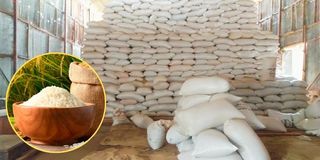
"We have more than 50,000 bags of rice lying idle in Mwea Rice Growers Multi-purpose Cooperative Society's stores in Ngurubani town due to lack of market," said farmer Pius Njogu.
Farmers said that they would suffer if importers bring in cheap rice. "Why import rice when the locally produced one is not sold?" asked Mr Njogu.
Farmers accused the government of failing to consider their interests, vowing to resist any attempts to flood the local market with rice imports.
Kirinyaga Senator Kamau Murango criticised the government, saying that the directive was misguided.
"Farmers are still struggling to find market for their produce but the government does not care. We are against cheap rice imports," said Mr Murango.
The Senator said it was sad that the government had not fulfilled its promise to buy rice from local farmers.
"The government promised to buy all the 50,000 bags of rice from the local farmers, which is now going to waste. This is unacceptable," said Mr Murango.
He added that farmers play a vital role in nation building and that the government should help them to find markets for their produce.
"Instead of helping them, President William Ruto’s administration is busy issuing oppressive directives. This should stop," added Mr Murango.
Farmers who grow rice in the giant Mwea Irrigation Scheme produce 80 percent of rice consumed nationally.
However, Director-General of Agriculture and Food Authority (AFA), Dr Bruno Linyiru, justified plans to import rice.
He explained that Kenya consumes 1.3 million metric tonnes of rice annually yet local production is only 264,000 tonnes, barely 20 percent of national demand with the balance traditionally being bridged through imports.
“Importation will not disrupt the local market or disadvantage Kenyan farmers. Before this decision was reached, the government, through the Kenya National Trading Corporation (KNTC), actively procured and continues to secure rice directly from paddy as it is milled. KNTC remains committed to supporting local rice farmers by providing a guaranteed market throughout the milling process,” said Dr Bruno in a statement.
The AFA agency boss said they had put in place further measures to protect quality and ensure consumer safety, including decreeing that only Grade 1 milled white rice that meets strict Kenyan and international standards will be permitted; and that all imports must be approved by the Kenya Bureau of Standards (Kebs).
“The duty-free window is strictly time-bound, requiring all consignments to arrive on or before December 31, 2025 under close regulatory oversight. It is important to note that this is not the first time Kenya has resorted to rice importation to supplement local production. This will continue into the foreseeable future only until we attain self-sufficiency,” said Dr Bruno.