More than two decades ago, the completion of the Kisumu–Kakamega Road by a construction firm that had set up camp in Kisumu transformed connectivity, opening up easier access between Kisumu and the larger Western Kenya region.
Before departing, however, the construction firms fenced off a quarry in Kanyakwar, Kisumu Central sub-County, where murram had been extracted for the road works.
According to the Kisumu County Director of the National Environment Management Authority (Nema) Leonard Ofula, efforts to rehabilitate the quarry have repeatedly stalled due to the inability to identify the rightful owner of the land.
“Identifying the legitimate landowner would have gone a long way towards making the rehabilitation process successful, but that was not possible,” Mr Ofula said.
He added that the absence of land ownership documents remains one of the biggest obstacles to land rehabilitation in the area.
Residents then took advantage of the abandoned quarry, secretly engaging in illegal mining activities.
According to Mr Ofula, miners would enter the site at night, digging deeper into the earth. During the rainy season, the pits would be filled with water, turning them into deadly traps.
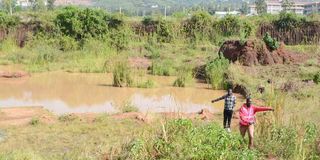
The Kanyakwar quarry in Kudho, Kisumu, where foour boys drowned on February 9, 2026.
Photo credit: Alex Odhiambo
“Our efforts to stop the miners did not bear fruit. Over the years, we issued notices to residents and even involved the police, but the illegal activity continued,” he said.
Instead of being restored, more quarries were dug and left exposed, posing grave danger to the community.
In 2023, tragedy struck when a 12-year-old boy drowned in one of the open pits.
Lilian Anyango says she had just left for work as a house help on the day her son died when she received an urgent call directing her to return home immediately, without being told why.
When she arrived, she was met with the lifeless body of her child.
“Not much was done, and I saw no need to report the incident to the area chief because I am a squatter,” Ms Anyango told Daily Nation.
A year later, she lost another son to the same quarry. The boy had also gone to fetch water when tragedy struck. His body was retrieved later that evening and taken to a mortuary within Kisumu County.
Beyond the deaths, Ms Anyango says the quarry has become a hiding place for criminals. The stagnant water, she adds, has turned into a breeding ground for mosquitoes, exposing residents to malaria.
“We have lost three children to malaria because of the quarry. Each time we rushed them to hospital, we were told they had contracted the disease, but none survived,” she said.
Siblings Hillary Ochieng (left), Kelly Otieno, Chris Brown Otieno and Wayne Otieno who drowned at Kanyakwar quarry.
According to witnesses, Wayne Otieno, 15, Kelly Otieno, 12, Chris Brown Otieno, 10, and Hillary Otieno, 8, had left home in the evening to fetch water from the quarry.
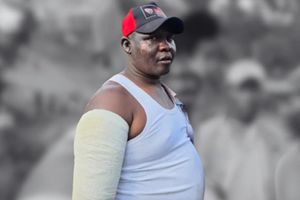
Their father, Felix Otieno, said he received a call at around 6pm informing him that an incident had occurred at the quarry. Moments later, his worst fears were confirmed.
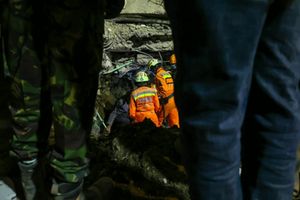
“I was told my four sons had drowned,” he said. With the help of relatives and friends, he retrieved the bodies from the water.
Residents say several other deaths and injuries linked to the quarries have gone undocumented over the years.
Environmental activist Sheila Odhiambo said those responsible for the quarry must be held accountable and urged authorities to begin environmental restoration to prevent further loss of life.
She noted that although the government has clear guidelines governing mining and post-extraction safety measures, these regulations remain poorly enforced in many parts of the country.
“Before any mining begins, those responsible must conduct a thorough Environmental Impact Assessment (EIA), involving local communities through public participation, and provide a clear rehabilitation plan. Sadly, very few comply, exposing residents to harm,” she said.
Mr Ofula acknowledged that the lack of title deeds has denied many locals the opportunity to conduct EIAs legally. Faced with poverty, some residents resort to mining in secrecy, while no rehabilitation follows, leaving dangerous open pits within villages.
“We have taken the matter to court and issued warnings that no one should engage in illegal mining activities,” he said.
In response to the deaths of the four siblings, the Kisumu County Government has suspended all sand mining activities in the region.
Governor Peter Anyang’ Nyong’o said no quarrying or mining would be permitted without a clearly approved, time-bound land rehabilitation and restoration plan to ensure excavation sites do not remain hazardous to the public.
“Only quarry and mining operations with valid legal approvals and enforceable safety standards will be considered for resumption,” the governor said.