Senators raise concern over Sh351m Kwale healthcare pending bills
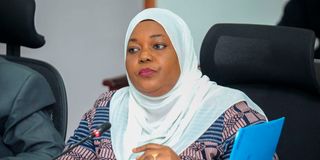
Kwale Governor Fatuma Mohamed Achani.

Senators have criticised Kwale County over Sh351 million in pending bills owed to medical suppliers, warning that the debt and a reduction in the health budget could undermine the supply of essential medicines in public health facilities.
Of the outstanding amount, Sh122 million is owed to the Kenya Medical Supplies Authority (KEMSA), with county officials saying they have already requested the Controller of Budget to facilitate payment of the bill.
The issue came under scrutiny during the Senate’s Mashinani engagement in Kilifi, where the Senate Health Committee, chaired by Mandera nominated senator Mariam Sheikh, examined challenges facing devolved healthcare and the implementation of its oversight recommendations.

The county also reported receiving only 52 per cent of the medicines it requests from KEMSA, leaving a 48 per cent supply gap that officials attributed partly to challenges in stocking the medicines required by health facilities.
Senators questioned how the county could guarantee reliable access to medicines while carrying a substantial debt to its main medical supplies provider and reducing funding to the health sector.
Nominated senator Tabitha Mutinda said the funding decisions were likely to have a direct impact on residents who depend on public hospitals and health centres.
“It is sad that you have reduced the budget for the sector, yet we are talking about the delivery of quality healthcare to the people. These services affect the people and they touch the people directly. So they ought to be financed,” Ms Mutinda said.
She also questioned the impact of the KEMSA debt on the availability of medicines, saying the Senate had received similar complaints from residents in other parts of the country over the availability of drugs despite the rollout of the Social Health Authority.
“It is clear that you are benefiting the pharmaceutical companies instead of helping the citizens of Kwale. If we do not discuss this issue of health, then how are we going to tell the Kenyans that SHA is working?” she said.
She said patients should not be left without medicines at public facilities, forcing them to purchase the same drugs from private pharmacies.
Kwale governor Fatuma Achani, however, rejected concerns that Kwale was facing a shortage of resources to purchase medicines, saying the county had already set aside Sh100 million and was seeking an additional Sh100 million through a supplementary budget.
“We have enough resources for drugs. We currently have Sh100 million, but we have already put in place a supplementary budget for an additional Sh100 million,” Ms Achani said.
She said the county had sufficient resources to ensure residents continued to access medicines in public health facilities.
On the outstanding KEMSA bill, Achani said the county had initiated the process of settling the debt.
“We have already made a requisition to the Controller of Budget to clear the amount,” she said.
The county’s position comes against the backdrop of a reported 48 per cent gap between the medicines requested from KEMSA and those actually supplied. The county government has also indicated that reimbursements received through SHA are treated as additional funding that can support other expenses at health facilities.
The Sh122 million owed by Kwale comes against a wider cash-flow crisis at KEMSA, with county governments collectively owing the medical supplies agency Sh3.66 billion. KEMSA operates a demand-driven model under which county health facilities order and pay for medical commodities, with the payments helping the authority replenish its stocks. The authority has previously called on counties to clear outstanding debts to improve cash flow and ensure continuous resupply.
The county debt forms the largest share of the Sh7.6 billion owed to KEMSA by counties, the Ministry of Health, national referral hospitals and other entities.
The unpaid bills have put pressure on KEMSA’s ability to pay suppliers and replenish stocks, with reports showing that some public hospitals are receiving less than half of the medical commodities they order.
Kwale is among 11 counties with KEMSA debts exceeding Sh100 million, placing it among the agency’s largest county debtors. Nairobi leads the list with Sh254 million, followed by Kilifi at Sh234 million, Turkana at Sh229 million, Tharaka Nithi at Sh186 million, Marsabit at Sh138 million, Wajir at Sh131 million, Kakamega at Sh124 million, Kwale and Homa Bay at Sh122 million each, Meru at Sh108 million, Bomet at Sh103 million and Samburu at Sh101 million.
The debt situation has also raised concerns over the wider implementation of universal healthcare, with shortages at public facilities potentially leaving patients to purchase medicines out of pocket when prescribed drugs are unavailable.
“We are not going to allow a situation where patients come to the county facilities and they are told to go out and buy the medicine,” Ms Mutinda said.
Follow our WhatsApp channel for breaking news updates and more stories like this.