Kenya’s arid and semi-arid lands (Asals) could face a food security crisis as the anticipated below-average October-December 2025 rains threaten to erode livelihoods and deepen hunger across the country’s dryland counties.
According to the Integrated Food Security Phase Classification (IPC) analysis, an estimated 2.1 million people across the Asal region are projected to face crisis levels of food insecurity (IPC Phase 3 or above), between October 2025 and January 2026—which is 2 percent increase compared to the previous year’s long-rains season.
According to the projection, the deterioration is largely attributed to below-average rainfall and higher-than-normal temperatures, which are expected to suppress crop yields, deplete pasture and dry up water sources, eventually leading to lower food production and weakened household purchasing power.
Out of the 23 Asal counties, 11 are expected to record an increase in populations classified in crisis or worse, the projection shows.
The analysis warns that poor rains during the period will limit the availability of water and pasture, a situation that will intensify competition for scarce natural resources and increase the likelihood of resource-based conflicts among pastoral communities.
“Consequently, competition over scarce natural resources is expected to intensify, fuelling resource-based conflicts,” the report reads in part.
“In addition, the prevalence of livestock diseases will further undermine pastoral livelihoods, reducing both livestock productivity and household purchasing power. The combined effect of these drivers is projected to erode household food security, deepen livelihood vulnerabilities, and increase humanitarian needs in the affected counties.”
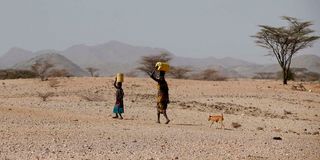
Residents take a nap on a dry river bed.
Photo credit: File | Nation
The Kenya Meteorological Department (KMD) recently projected below-average short rains across most Asal areas, with temperatures expected to remain above normal, a situation that will constrain crop production in mixed farming, marginal farming, and agropastoral zones.
As a result, the report indicates that household food stocks are likely to deplete earlier than usual and will now heighten dependence on markets at a time when staple food prices are rising.
At the same time, pasture and browse are expected to deteriorate steadily through January 2026 due to high surface temperatures that will accelerate depletion.
Consequently, livestock body conditions are expected to weaken, leading to lower milk production and reduced household access to livestock products.
“Although livestock birth rates are expected to remain at typical levels during this period, pasture and browse conditions are projected to deteriorate steadily, reducing livestock body condition, milk production, and household food derived from livestock products,” read the report.
“Intra- and inter-county livestock migrations are likely to intensify, increasing the risk of resource-based conflict, which could marginally increase mortality rates and further constrain herd productivity.”
Below-average rains and high evaporation rates will accelerate the drying up of open water sources, forcing households to travel longer distances or rely on unsafe water.
The report further indicates that reduced access to clean water will hinder hygiene and sanitation practices, increase the spread of waterborne diseases, and weaken food utilisation—all of which contribute to higher rates of acute malnutrition.
Kenya’s Asal region covers the largest percent of the country’s landmass and is home to more than 15 million people, most of whom depend on pastoralism and small-scale agriculture. But, the region remains highly vulnerable to climate shocks, including droughts, erratic rainfall, and resource-based conflicts—all of which continue to threaten food and livelihood security.