KWS races against time to shield wildlife from looming drought

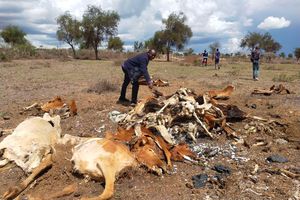
A dead wild animal in Amboseli National Park on November 5, 2022. PHOTO | NMG

What you need to know:
- Data from KWS and the International Fund for Animals Welfare showed the Amboseli ecosystem lost 6,093 animals between June and November 2022.
- This total included 127 elephants, 93 Masai giraffes, 3,872 wildebeests, and 1,395 common zebras, among other species.
The Kenya Wildlife Service (KWS) has initiated a raft of measures to safeguard hundreds of wild animals within the Amboseli Ecosystem in southern Kajiado.
This follows predictions by the Kenya Meteorological Department (KMD) and corroborated by Maa elders, indicating that most parts of the vast county will receive below-average rainfall between September and December, with dry conditions likely extending into early 2026.
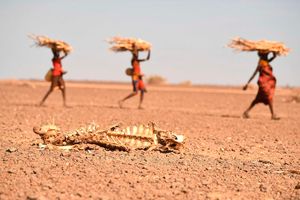
While short rains are falling elsewhere in Kenya, most of Kajiado remains parched. The land is cracked under intense heat, shrubs have withered, and rangelands are barren.
This slow-onset disaster threatens the livelihoods of people and the survival of both wild and domestic animals, with most seasonal rivers already dry. The environment is becoming increasingly starved of new vegetation, which is vital for wildlife.
The looming crisis has jolted the KWS into action to avert a repeat of the 2020-2022 drought—Kenya’s worst in 40 years; which killed more wildlife in Amboseli than any other recorded event.
Paul Wambia, KWS assistant director for the Amboseli Ecosystem, told Climate Action that the agency, in collaboration with stakeholders, is desilting water pans and solarising boreholes to maximise water harvesting from the limited expected rains.
He added that plans are in place to supplement animal feeds should the dry conditions intensify. "We will introduce pellets to animals if necessary. No animal has died so far," he stated.
"Apart from Amboseli National Park, the ecosystem pays homage to dozens of private wildlife sanctuaries and wildlife migratory corridors. We have ensured all the water pans are desilted and boreholes solarised to ensure we tap the little drops of rain in preparation for long dry periods," Wambia said.
Previous crisis
The scale of the previous crisis underscores this urgency. Data from KWS and the International Fund for Animals Welfare showed the Amboseli ecosystem lost 6,093 animals between June and November 2022. This total included 127 elephants, 93 Masai giraffes, 3,872 wildebeests, and 1,395 common zebras, among other species. During that time, KWS resorted to using helicopters to drop hay to emaciated animals.
The human and livestock toll was also devastating, with the National Drought Management Authority reporting over one million livestock deaths (400,000 cattle and 700,000 goats and sheep), and 400,000 households facing starvation.
Non-state actors are also mobilising. Big Life Foundation is developing wildlife water points away from community areas to reduce human-wildlife conflict over scarce water.
They are also expanding protective fencing around settlements and farms to keep wildlife at bay, especially when drought drives them closer to humans.
"Droughts are becoming a near-constant reality in Amboseli, and we don’t wait for a drought warning to start preparing. Our focus is on long-term resilience: restoring rangelands, supporting community livelihoods, improving water access, and protecting people and farms from the pressures that come when the rains fail,” said Ernest Lenkoina,
Big Life Rangeland Restoration manager.
Amboseli Land Owners Conservancy Association Chairperson Samuel Kaanki expressed concern that a recurring drought barely three years after the last disaster is a major setback to recovery.
"The recurring drought is detrimental not only to humans but animals’ survival. The climate change mitigation measures ought to take a holistic approach involving all stakeholders.”
Complicating the ecosystem's survival is the ongoing process of land subdivision in Kajiado South. Former communally-owned group ranches are being broken up into tens of thousands of individual plots. This trend poses a threat to the fragile environmen, as the plains risk becoming a patchwork of smallholdings that struggle to thrive in an already water-stressed environment.
Amboseli National Park, renowned as the home of the African elephant and a centre for research, relies on this vast ecosystem, as its large elephant population migrates through the surrounding areas into Tsavo National Park and across to Tanzania.