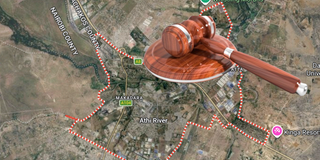
A family’s attempt to reclaim a 2-hectare parcel of land in Athi River has been dealt a major blow after a Machakos court ruled that its claim over alleged fraudulent registration was filed too late.
The dispute centred on land parcel Athi-River/Athi-River Block 5/112, which Kalondu Kyambo, representing the estate of her late relative Kyambo Ngata, said had been allocated to him through his membership of Drumville Farmers Co-operative Society Ltd.
But the land was registered in the name of another member, Timothy Matheka Kivula, in March 2000. The family alleged that the transfer was fraudulent and sought to have the title cancelled and the land registered in the deceased’s name.
In a judgment delivered on October 13, 2026, Environment and Land Court Judge AY Koross struck out the suit because it was filed outside the applicable time limit.
The case, filed on April 12, 2018, came about 18 years after the disputed registration. The family said it discovered the alleged fraud in August 2014, but the court found that it had until August 31, 2017, to file the claim.
The judge concluded that the suit was time-barred and ordered the plaintiff to pay the defendants’ costs.
“The plaintiff’s suit is incompetent and time-barred,” the court ruled.
The decision illustrates how the time taken to discover and challenge a disputed land transaction can determine whether a family gets a chance to have its ownership claim heard.
According to the judgment, Ngata was a member of Drumville Farmers Co-operative Society under membership number 702. Through the society, he claimed to have been allocated two parcels: Athi-River/Athi-River Block 5/112 and Mavoko Town Block 12/849.
The family alleged that around 2000, the defendants caused the property to be registered in the name of Kivula, who was also a Drumville member. The title deed was issued on March 28, 2000, after registration on March 22 that year.
Kalondu told the court that the family discovered the disputed registration in August 2014. She later sought a declaration that the property belonged to Ngata’s estate, cancellation of Kivula’s title and an order restraining the defendants from selling, transferring, charging or developing the land.
Peter Wanjohi Kamau, sued as the liquidator of Drumville Farmers Co-operative Society, argued that each member was entitled to one acre of residential land and five acres of agricultural land.
His defence was that Ngata had been allocated other parcels and that the disputed Athi River land had been mistakenly allocated to him before the error was corrected.
Kivula, represented in the case by Janet Nzilani Mutinda as administrator of his estate, also denied that Ngata was the lawful owner. He maintained that the disputed land had been reallocated to him.
However, Kamau did not testify at the hearing. The judge noted that the claims contained in his defence therefore remained unsubstantiated allegations.
During the hearing on December 16, 2025, Kalondu and Martin Mwanzia Kyambo testified for the plaintiff, while Mutinda testified for the second defendant.
Kalondu produced documents that included a letter dated February 10, 2018, from Drumville’s dispute resolution committee to the liquidator. The letter confirmed Ngata’s ownership of the disputed property, according to the judgment.
She also presented a society membership list that appeared to show both Ngata and Kivula allocated plot number 112, although the judge noted that the list was incomplete.
Mutinda, on her part, produced Kivula’s share certificate, a copy of the title deed and a June 14, 2000, notice from Drumville concerning his five-acre plot. She also presented a February 25, 2021, letter from the State Department for Co-operatives explaining that the land had initially been allocated to Ngata in error and was subsequently reallocated.
Under cross-examination, Mutinda said she did not know how the alleged allocation errors had been corrected. She told the court that Drumville sometimes corrected errors by cancelling entries with a pen, but she was not personally involved in any such cancellations.
Despite the competing documents and accounts, the court did not proceed to decide which party was the rightful owner. It first had to determine whether the case had been filed within the legally allowed period.
The court considered two provisions of the Limitation of Actions Act. One generally allows 12 years to bring a claim to recover land. Another provides an exception where fraud or a mistake has concealed a claim from the affected person.
The judge explained that where fraud is alleged, the period does not begin until the fraud is discovered, or could reasonably have been discovered.
The court accepted August 2014 as the date the alleged fraud was discovered. It then calculated that the last day to file the suit was August 31, 2017.
But the claim was instituted on April 12, 2018 — more than seven months after that deadline.
“Having discovered the fraud in August 2014, the last date on which the deceased plaintiff could file suit was 31 August 2017, and no later,” the judgment states.