Hello

Your subscription is almost coming to an end. Don’t miss out on the great content on Nation.Africa

Ready to continue your informative journey with us?

Hello

Your premium access has ended, but the best of Nation.Africa is still within reach. Renew now to unlock exclusive stories and in-depth features.

Reclaim your full access. Click below to renew.

Caption for the landscape image:

10 years later, oil spill still haunts Makueni families

Scroll down to read the article

The scene where Kenya Pipeline Company technicians repaired a leak on the Mombasa-Nairobi oil pipeline at Kiboko in Makueni County in this This photo taken on April 4, 2019. 

Photo credit: File | Nation Media Group

It started with a black substance flowing in their river and 10 years later, families in Thange Ward, Makueni County, are still suffering.

According to findings presented before the Senate Energy Committee last Friday, several residents have been diagnosed with cancer while others continue to bury their loved ones.
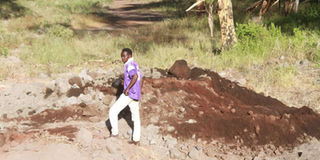
The report reveals that over 200 families live in fear, their lives upended by an oil spill that occurred nearly a decade ago. 

The Senate Energy Committee has finally stepped in to help resolve this environmental disaster turned human tragedy. But for many, the intervention may be too little, too late.

The fact-finding mission confirmed that at least 242 households are grappling with the long-term effects of the oil spill facing serious health risks from contaminated water and soil.

Makueni County revives case against KPC over 2015 Thange River oil spill

Committee Chairperson Senator Oburu Odinga stated that the spillage had devastated both soil and water and urged swift collaboration between the Makueni County Government, the National Environment Management Authority (Nema), and the Kenya Pipeline Company (KPC) to resolve the issue.

“This is not the first time the issue is being discussed in parliament with nothing much to show a decade later as the residents continue battling cancer illnesses and huge medical expenses linked to lead and benzene contamination- two dangerous chemicals found in crude oil- in their water and soil,” the report states.

In June 2015, the KPC’s equipment failed and spilled thousands of litres of crude oil into River Thange where families relied on water for drinking, cooking, and farming.

Senators dispatched by then-Speaker Ekwee Ethuro investigated the pollution, producing a damning report.

But 10 years on, residents continue to face devastating health complications, mounting medical bills, and frequent funerals, Makueni Governor Mutula Kilonzo Junior told the committee.

Mr Kilonzo added that the contamination did not just affect those who were alive in 2015 as children born after the spill are also suffering, overwhelming the county with medical and funeral expenses.

“We are tired of spending large sums on medication and burials. The oil spill did not just harm those present then, it’s still killing children born long after the disaster,” the governor said.

Scientific findings from the area revealed alarmingly high levels of benzene, a chemical strongly linked to cancer, in the water and soil.

Kakamega Senator Boni Khalwale, a medic turned legislator, explained that benzene is highly resistant to treatment. If it remains in the body for even a year, it can penetrate bone marrow and trigger various cancers.

Today, 242 households live with the consequences as their water remains contaminated, their soil is toxic and their bodies are paying the price.

“What the residents need is not another investigation or report. They need clean water, safe soil, medical care, and accountability from those responsible,” said Governor Kilonzo.

He urged adequate compensation for victims to ease their prolonged suffering. In response, KPC Managing Director Joe Sang stated that KPC has so far given Sh38 million to the affected families and an additional Sh324 million in general support. He added that the company also dug trenches to stop the further spread of the oil.

“KPC has done everything within its ability to address the concerns raised by Thange residents. We remain open to further engagement with stakeholders as guided by the Senate,” said Mr Sang.

Nema Director General Mamo Mamo called for systematic pollution control strategies, including regular monitoring of soil and water in the affected areas.

Mr Mamo told the senate committee that KPC was granted partial decommissioning based on expert reviews.

Makueni Senator Daniel Maanzo criticised KPC’s leadership for not taking the crisis seriously.

He noted that the managing director failed to attend recent public participation forums organised by the committee, despite the severity of the situation.

“It is unfortunate that KPC seems not to treat this issue with the seriousness it deserves. The director’s absence during the committee’s visit despite a decade of suffering was disheartening,” Senator Maanzo said.