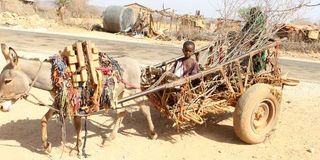
Mandera County is currently battling an acute malnutrition among children under six years, months after the end of a dry spell that left a trail of environmental destruction.
The most affected areas in the county include Mandera North (Rhamu), Banisa and Mandera South (Elwak).
A recent report by the Integrated Food Security Phase Classification (IPC) revealed an Extremely Critical acute malnutrition (IPC AMN Phase 5) situation in Mandera County.
At Rhamu Sub-County Hospital, Medical Superintendent Abdirashid Noor said the facility had admitted at least 60 children in a month.
“We have dealt with a serious situation in the past one month but it has so far calmed. Of the sixty, at the moment we have about nine still hospitalized,” Mr Noor said by phone.
While admitting that the facility has recorded some deaths, the Rhamu Sub-County Hospital medical superintendent referred us to the Mandera County Director of Medical services for details on deaths.
“We have had some deaths due to malnutrition but that information is available at the County Director of Health office. I cannot share the same due to sensitivity and protocol issues,” he said.
The Mandera County Director of Health could not be reached for a comment. Our efforts to reach the county minister for health Mumtaza Bishar Musa were futile as she did not pick our calls nor reply to our text messages seeking more information on the health situation in the county.
According to Dr Noor, most of the children with malnutrition admitted at the Rhamu health facility come from villages far away from the sub county health facility.
“Most of these cases come from very far away villages reeling from drought effects. They are brought in the facility when their situation has worsened making it difficult for our medical staff to save them,” Dr Noor said.
According to estimates, 86,360 children aged 6-59 months and 17,064 pregnant and breastfeeding women are estimated to be acutely malnourished and require treatment for acute malnutrition in Mandera.
An Integrated Phase Classification for Acute Malnutrition (IPC AMN) analysis conducted in Feb 2026, showed the county is in an extremely critical phase (IPC AMN Phase 5 - GAM WHZ 30.0 percent and above), a situation that remained the same in March to May.
IPC AMN Phase 5, is the most severe and life-threatening level of malnutrition, with a very high risk of death, amid widespread outbreaks of dysentery, cholera, watery diarrhea and measles.
Malnutrition related hospital admissions in 2026 have remained consistently higher than those recorded during the corresponding period in 2025, with a notable surge in May largely attributable to the intensive mass screening exercise conducted during the month.
In 2025, January to May admission were 3419 while in 2026 January to May had recorded 6457.
Moderate Acute Malnutrition (MAM) admissions in 2026 have remained lower (9711) than those recorded during the corresponding period in 2025, (10,056) largely due to the prolonged stock-out of MAM commodities, which affected programme enrolment.
Admissions of Pregnant and Breastfeeding Women in 2026 have remained lower than those recorded during the corresponding period in 2025, mainly due to the prolonged stock-out of MAM commodities, which limited enrolment and continuity of nutritional support services.
Limited outreach services
Limited implementation of integrated outreach services reduced access to early screening, referral, and treatment for vulnerable population, according to Mandera County Department of Nutrition.
Poor community health seeking behavior, chronic household food insecurity and cross-border case referrals remain the main challenges in fighting malnutrition in the devolved unit.
The county health officials have recommended a blanket supplementary feeding and general food distribution.
The situation is linked to prolonged drought, poor dietary diversity, low milk availability, and a high disease burden—including outbreaks of cholera, measles, mpox, and kalaazar—combined with weakened health and nutrition services due to reduced humanitarian funding.
These severe outcomes are driven by below average and erratic October–December 2025 rains, which caused widespread crop failure, poor pasture regeneration, and inadequate recovery of water sources.