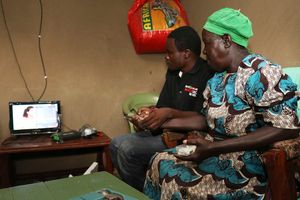
When Lynder Otieno joined university, she quickly realised that her feature phone would not serve her well in an era where assignments, lectures and peer discussions happened on WhatsApp.
Coming from a humble background, she could not afford a smartphone in cash. Her only option was “lipa mdogo mdogo” — a flexible payment plan offered by mobile phone outlets. She deposited Sh3,000 and agreed to clear the balance in daily instalments of Sh80.
But what began as a major convenience soon turned into a nightmare. By the end of the two-year repayment period, Ms Otieno had spent nearly Sh50,000 on a phone worth Sh11,000.
“The moment I cleared the loan, the phone went off and could not be repaired. My efforts to reach the company were futile,” she recalled.
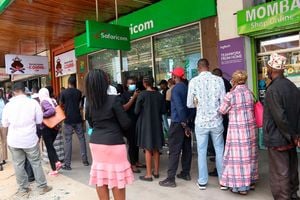
Her story mirrors that of thousands of Kenyans who have embraced the “lipa mdogo mdogo” trend to buy electronics, motorbikes, furniture and even land. While many praise the system for making essentials affordable, others feel short-changed, claiming traders have been exploiting their desperation.
In Mombasa, Ruth Musasya narrated her ordeal. She bought a phone under the scheme after paying Sh3,000 upfront and Sh65 daily for two years.
“Despite paying religiously, my balance never seemed to reduce. Whenever I asked for a statement, they would say the head office in Nyali had it but never gave me the location,” she said. She cleared the loan but lost trust in the process.
Melvin Olale at Nyali Centre, Mombasa, on September 1, 2025. He says he bought a phone worth Sh23,000 through a lipa mdogo mdogo plan but ended up paying over Sh50,000.
Photo credit: Mishi Gongo | Nation Media Group
“They told me that that option was only available for motorbikes and tuk-tuks, yet I was tired of paying weekly instalments,” she said.
For Denis Omondi, a boda boda operator in Mombasa, “lipa mdogo mdogo” seemed like the perfect route to expand his delivery business. He deposited Sh33,000 for a motorbike and agreed to pay Sh3,032 weekly for two years. With only three weeks left to complete his loan, his troubles began.
“They called, saying my tracker was faulty. I went to their office twice but no one attended to me. Then one day, my assistant parked outside a client’s house to deliver a package, when he came out, he found the bike missing,” Mr Omondi said.
Despite reporting the theft to the police and the supplier, no action was taken. He threatened to sue the company for failing to follow up after two weeks without a response.
“It is only after I threatened to go to court that they offered me a second-hand bike on condition that I continue paying instalments,” he told the Nation.
But when he went to collect the bike from the Mombasa office, he was told no such directive had been received. Instead, he was advised to apply for a new bike. Frustrated, he abandoned the deal.
“They zero in on people from rural and informal settlements who may not understand the fine print. Unfortunately, no one has filed a formal complaint. We urge people to be cautious,” he said.
Still, not all experiences are negative. For some, the scheme is a lifeline. With the economy battered by high costs, many Kenyans can no longer buy goods in cash. Traders, eager to push sales, have introduced flexible models from “lipa mdogo mdogo ” to chamas where customers pool contributions and acquire goods in turns.
Bahati Mwakoi, who runs a boutique in Mombasa, says her clients use group savings to buy expensive items like abaya,a traditional garment worn by Muslim women.
“If an abaya costs Sh6,000, I group them. Each pays Sh1,000 weekly or monthly and every week one person takes home the abaya ,” she said.
For traders, the payment model is both an opportunity and a risk. Abdulhakim Hamid, an electronics dealer, avoids it altogether.
“I only sell in cash. Lipa mdogo mdogo can be exploitative to customers and risky for us if people default,” he said.
Another trader, Anthony Murimi, said he has devised a safer method—customers pay in instalments while the item remains in the shop.
“Once they complete the payments, they collect the item. If they fail, I refund half their money to cushion the business,” he explained.
Financial experts say “lipa mdogo mdogo” reflects a deeper economic reality. With inflation shrinking household incomes, credit schemes have become the only option for millions.
“The model has enabled access to goods, but the lack of regulation leaves consumers vulnerable. We need stricter oversight on interest rates, hidden charges and tracking devices used on motorbikes,” said Lilian Atieno, a financial analyst.
The Central Bank of Kenya has previously raised concerns about unregulated credit schemes that trap citizens in endless repayments.
But still, the demand continues to grow.