Forensic analysis of a mobile phone stolen from Dutch tycoon Herman Rouwenhorst has placed the prime suspect at the scene of his brutal murder on the night of June 3, 2021, at his home in Shanzu, Mombasa.
Investigations revealed that during the attack that left Rouwenhorst and his watchman, Evans Pole Bokoro, dead, a handset – a RealMe C11 – was stolen from the house. The phone belonged to Rouwenhorst’s wife and had originally been paired with two SIM cards belonging to her and their daughter.
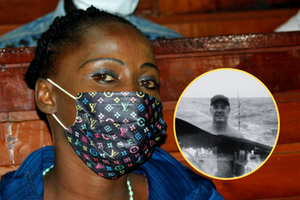
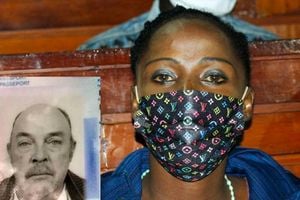
Riziki Cherono Ali who is facing charges of killing her husband, Dutch national Herman Rouwenhorst.
Photo credit: File | Nation
According to forensic data obtained by detectives and tabled before the High Court in Mombasa, the stolen device, identified by IMEI 868041050178330, was later paired with a new SIM card on June 4, 2021, between 1.11pm and 1.46pm. The number was registered under the name Mohamed Khalid.
Further analysis, however, linked the SIM card and handset usage to a man known by several aliases – Timothy Omondi Ngowe, Rashid, Tony Ochieng, and Mohamed Khalid – identified as the prime suspect in the killing. “Using the stolen phone, the suspect was found to have communicated with two women, Mary Ambani and Mercy Masika,” Chief Inspector Raphael Wanjohi told the court.
The officer further disclosed that investigators established constant communication between Ngowe and Ambani before, during, and after the murder, suggesting coordination or prior knowledge of the attack.
Detectives concluded that Ngowe was present at the crime scene on the night of the murder and the following day, based on geolocation and device pairing data.
The forensic findings have strengthened the prosecution’s case, revealing a clear communication link among the alleged planners of the attack and murder of the Dutch businessman and his guard.
Mr Wanjohi produced the forensic report while testifying in a case in which the businessman’s widow, Riziki Ali Cherono, and Ngowe are charged with the murder of the Dutchman. The two are alleged to have killed their victims on June 4, 2021, at Rocco Apartments in Shanzu.
While being guided by Prosecution Counsel Ngiri Wangui, Mr Wanjohi explained why he narrowed down on the deceased’s widow as a prime suspect only a few days after the killing.
“During our interview with Cherono about the circumstances of the murder, she showed suspicious character traits such as avoiding eye contact and smoking cigarettes whenever asked about the deceased. She never answered questions directly. Those were clear signs she was hiding something,” said Wanjohi.
Detectives at Roco Apartment in Shanzu, Mombasa where Dutch National Herman Rouwenhorst was brutally murdered in 2021.
Photo credit: File | Nation
He told Justice Wendy Micheni that Cherono was inside the house when her husband was killed but remained evasive throughout interrogation.
“The deceased died due to head injuries and strangulation. After the post-mortem, we made a decision to charge Cherono with murder. We did phone analysis, and I was convinced she knew what happened to the deceased on the fateful night,” he added.
Cherono claimed that her phone had been stolen during the attack. Investigators, however, found that she switched to a new number on June 4, 2021, after the murder. Her known phone line had been switched off the previous evening, June 3, 2021, at 6.33pm in the Bamburi area.
The same line had been in communication with another number registered under Mary Ambani Nekesa. Ambani’s number, in turn, linked to another registered under Mohamed Khalid, which had been paired with yet another number used to call a subscriber 12 times.
Detectives established that this number was in constant contact with Ambani on the night of the murder. The SIM card had been registered on May 30, 2021, and became inactive just two days after the killing. Another number, registered in the name of Tony Ochieng, was also used in the communication chain.
In July, after extensive analysis, investigators traced the stolen phone to a house in Kiembeni, where it was recovered. The house belonged to Ngowe and Mercy Masika.
An Airtel line in question was found inserted in an Infinix phone also recovered from Ngowe’s newly constructed house. Upon examining the devices, detectives concluded that Ngowe was the person they had been searching for. It also became apparent that the RealMe phone stolen during the murder had at one point been paired with the same Airtel line.
“What was observed during the analysis was that the frequency and traffic flow between Ambani and Ngowe was extremely high on the night of June 3, 2021, and the morning of June 4, 2021, after the incident,” said Wanjohi.
During interrogation, Ambani admitted that she had used a Tecno phone bought specifically for the purpose and later disposed of it immediately after the murder, explaining why it was never recovered.
Investigations also revealed that the ID card belonging to Tony Ochieng had been stolen in Nairobi when his house was broken into. Ngowe then allegedly used the stolen ID to register Airtel lines in the name of Tony Ochieng to conceal his identity.
It was this Airtel line that continued to pick network signals after the murder, leading detectives directly to Ngowe’s location and subsequent arrest.
Officers also discovered that Ngowe frequently used false and fictitious names to disguise his movements and identity. However, the confession by Ambani of her involvement in the planning of the murder ultimately exposed him.
Ambani later narrated to the police, and to the court, how she helped Ngowe gain access to the victim’s home on the night of the murder. She further told investigators that Cherono had planned the killing of her husband during a birthday party held before the fatal night.
According to her statement, Cherono facilitated her entry into the house before later allowing Ngowe in, who then executed the murder.