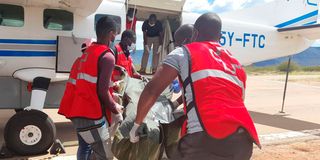
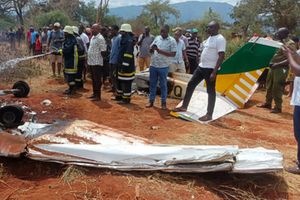
On the evening of May 31, 2021, a Cessna 172N aircraft, registration 5Y-CFE, tragically crashed into Vuria Hills near Mwangeka Caves in Ndumbinvi, Taita Taveta County, killing both the pilot and her lone passenger.
The ill-fated aircraft was operated by Flight Training Centre (FTC), a Nairobi-based flying school. On board were Ms Esther Njeri Kamande (39), a licensed commercial pilot and flight instructor with over 1,127 flying hours, and Dr Athman Kasuka Lugogo (35), a medical doctor attached to the Makueni County Referral Hospital.
This journey to Mombasa to impart flying lessons to students was initially scheduled for May 28, but it was rescheduled as the aircraft maintenance had not been completed.
However, what has since emerged from court documents and judicial proceedings in a compensation suit filed by Dr Lugogo’s family against FTC Ltd and Mombasa Aviation Training Institute (MATI) Ltd, paints a disturbing picture: Dr Lugogo was not authorised to be on the aircraft, and the instructor may have used the training flight for a covert getaway.
Documents also show how Ms Kamande, a flight instructor with flying experience of 1c,127.06 hours changed the flight plan without her employer's knowledge, and ended up dead in the foggy Vuria hills.
According to documents filed at the High Court in Mombasa and a detailed witness testimony by Captain Godwin Wachira Gichuhi, director of Flight Training Centre, Ms Kamande was assigned to travel to Mombasa on May 31, to conduct flight lessons at the FTC’s Mombasa branch.
But on the day of the flight, the deceased misreported the course of the aircraft from Wilson Airport to Mombasa and diverted or created another route to Taita Hills air strip, for her own leisure, which was out of scope of the employment with the firm.
According to Capt Wachira, the necessary preparations, including accommodation arrangements for Ms Kamande, were communicated to the Mombasa office.
However, unknown to her employer, Ms Kamande filed a different flight plan with the Kenya Civil Aviation Authority (KCAA). Instead of Mombasa, her recorded destination was Taita Hills Game Lodge airstrip, with an alternative landing site at Amboseli National Park airstrip in case of an emergency.
She was to depart Wilson Airport at 5.30pm, a time that guaranteed she would be attempting to land in darkness at a poorly equipped rural airstrip, which lacked proper night landing facilities.
“The deviation was discovered only after the crash, when concerns were raised about her failure to arrive in Mombasa and her unavailability on phone,” Capt Wachira told High Court Judge Florence Macharia.
Investigations revealed that she had crashed at Vuria Hills, hours after takeoff. What shocked investigators dispatched to the scene was the presence of Dr Lugogo—who according to FTC, was not part of the official flight plan—on board the aircraft.
Capt Wachira testified that Dr Lugogo had once been a student at FTC, having joined the school in December 2016. He later abandoned his pilot training in December 2017, and had neither a valid student licence nor Kenya Airports Authority security pass nor air ticket to enable him access the air side of the Wilson Airport at the time of the flight. Therefore, his access to the aircraft was unauthorised.
“It still remains unclear how Dr Lugogo boarded the aircraft, but everything points to the fact that he was sneaked in by his friend, Ms Kamande, passing him as a student,” he said
According to the witness, the motivation behind this deceit was allegedly personal; the two had become friends since their time at the flying school, and had planned a private visit at Taita Hills Game Lodge.
He stated that this covert plan was concealed from the management and that the aircraft was never intended for this unauthorised journey but for training purposes only.
“It is regrettable that the pilot opted to conceal the deviation from the company's authorised flight plan,” he said, emphasising that the instructor did not act within the scope of her employment.
The court records show that investigations revealed that Dr Lugogo had booked a night’s stay at Taita Hills Hotel with a companion.
“It is clear that he wished to spend the night with his companion, as the flight plan was to land them at the lodge,” the witness said in his court papers.
Capt Wachira told the court that if the KCAA Briefing Officer at Wilson Airport was observant and keen on the information relating to the timings of the flight as indicated in the Flight Plan Report of the day, he would not have allowed her take off, to the Taita Hills Airstrip, as the aircraft was not equipped for night landing.
Also, the court heard that no distress signal was sent during the flight, and the aircraft’s Emergency Location Transmitter (ELT) only activated upon impact, aiding rescuers in locating the wreckage.
According to the KCAA flight plan retrieved after the crash, the departure time, destination, and emergency alternatives were clearly outlined. FTC maintains that Ms Kamande deliberately used the flight for personal leisure.
“The instructor thus was not using the aircraft during and around the time of the crash, for the authorised business of the company and ,therefore, was not acting in the course of employment of the firm , but was out for her own pleasure,” the Captain said.
In court, FTC has distanced itself from liability, stating that the aircraft was operated for training purposes only and was not licensed to carry fare-paying passengers.
FTC further asserted that Kamande had no authority to change the flight plan or carry unauthorised individuals. As such, the company denied any vicarious liability for her actions, describing Dr Lugogo as a trespasser on the aircraft.
Through Gathara Mahinda & Co. Advocates, FTC highlighted that Dr Lugogo had signed an indemnity during his time as a student pilot, discharging the institution from any liability arising from his presence on its premises or use of its facilities.
"Without doubt, the journey created to Taita Hills Hotel was meant for the instructor to enjoy pleasurable moments, and therefore, FTC cannot be held to be vicariously liable for acts of the instructor," it said.
In the compensation suit filed by his father and brother—Christopher Khalidi and Khamisi Benjira—through Mutuku Wambua &Associate Advocates, they claim that the aircraft was poorly managed and piloted, leading to the crash that killed the 35-year-old medic.
They argue that Dr Lugogo, a senior medical officer at Makueni County Referral Hospital with a good salary, had a promising future cut short. His estate, citing the Carriage by Air Act, the Fatal Accidents Act, and the Law Reform Act, accuses the defendants of failing to ensure the aircraft’s safety and control, allowing an unauthorised passenger on board, and neglecting proper precautions.
They are seeking general and special damages, including costs incurred obtaining legal documents and pursuing the case after the defendants failed to admit liability despite a demand and notice of intention to sue.
They have sued FTC ltd as the operator of the aircraft and MATI Ltd as the registered owner of the ill-fated plane.
Through Wangui Kuria & Co. Advocates, MATI has strongly denied liability for the aircraft’s crash.
In its defence, MATI admits owning the aircraft but clarifies it had leased it to FTC Ltd, under a formal agreement. MATI states that FTC assumed full responsibility for the aircraft’s use, including training and operation, and was to indemnify MATI from any related claims.
MATI disputes that Dr Lugogo was a passenger aboard the flight, demanding strict proof of this claim. It further denies any negligence on its part, arguing that the crash was caused solely or substantially by the deceased and FTC. The institute alleges the deceased defied safety protocols, distracted the person in control, and permitted unauthorised access to the aircraft.
It also challenges the applicability of legal arguments advanced by the plaintiffs, implying the deceased accepted the risks involved. MATI has rejected claims of negligence, special and general damages, and insists the suit is fatally defective. The institute is seeking full dismissal of the case.