Ramadhan period exposes Mombasa's street families crisis
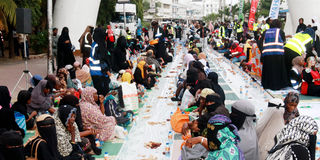
Mombasa residents break fast on the 2nd Friday of the Holy Month of Ramadhan, which was hosted by the County Government at the Elephant Tusks area along the Moi Avenue, in this photo taken on February 27, 2026.

As Muslim faithful concluded their holy month of Ramadhan on Friday last week, a unique challenge emerged.
Throughout the Ramadhan period, many political leaders, corporate organisations and ordinary citizens engaged in philanthropic activities, mainly distributing food and beverages to the less fortunate.
This often happened in the evenings close to iftar hours, with ready-made food. Many distributions of uncooked foodstuffs took place throughout the day at mosques, along the streets and in other designated areas.


It was not lost on locals in Mombasa that the trend led to an influx of street families within the Central Business District, who were certain of getting a decent meal throughout the day. Now that Ramadhan is over and so are the philanthropic activities, the issue has jolted leaders into action.
Over the years, Mombasa, like many other urban areas, has faced a challenge in dealing with street families, who are often blamed for causing disturbance and mugging pedestrians, sometimes violently by stabbing their victims.
Mvita MP Soud Machele, whose constituency bears the brunt of the street families due to its location within the CBD, said the county government has to take urgent action on the increased number of street persons before it gets out of hand.
“We have people who have turned the streets into their homes. We urge the county commissioner and the county government to work together and take these people back to their homes,” he said.
“Ramadhan was a period of giving and now it’s over. We should not let Mombasa lose its appeal of a city where people can move around freely at any time,” he added.
According to the 2018 National Census of Street Families report, Mombasa had 7,529 street persons, representing 16 per cent nationwide, ranking second after Nairobi with 15,337 at 32.9 per cent.
In Mombasa, a significant number of street persons (5,687) were found to be from within the county by birth, while 1,826 had migrated from other counties and neighbouring counties.
Rounded up
Mombasa Governor Abdulswamad Nassir said his administration, together with the local national government administration officers, had already taken up the matter. The governor said 468 street persons were rounded up last week, and it was established that they all had homes of residence.
“We’re aware that not everyone who was showing up to be assisted during Ramadhan was a good person, but we are working together with the county commissioner and others to address the issue,” he said, during the annual Eid Baraza on Sunday.
This is not the first time that concerns have been raised linking charity activities to an influx of street families in Mombasa. In 2024, a feeding programme by a manufacturing company in the region was blamed for causing a security nightmare in the CBD.
Security officers observed that teen gangs, hiding under the guise of seeking food aid, were mugging pedestrians along the streets. This led to a suspension of the programme.
Follow our WhatsApp channel for breaking news updates and more stories like this.